Kuala Lumpur and Malacca pair well for a short, satisfying Malaysian trip, best taken May to July or December when rainfall is lower. Direct flights from Melbourne, Sydney, Brisbane and Perth take around eight hours, with a comfortable two-hour Aeroline coach linking the two cities. The defining highlight is KL's hawker food culture set against Malacca's UNESCO-listed colonial streets. Mobility is moderate — footpaths are patchy and some terrain uneven, but flat riverside walks and cheap Grab rides keep both cities manageable for older and solo travellers.
Why this pairing works so well for travellers over 50
Malaysia is one of those rare destinations that rewards travellers who prefer substance over spectacle. It has real food, a layered colonial history and a population that is, on the whole, genuinely hospitable to older visitors travelling alone. Kuala Lumpur handles the city brief — modern, air-conditioned, surprisingly walkable in patches — while Malacca, two hours south, delivers the kind of slow heritage streets that justify the whole journey.
For an Italian-Australian traveller who has spent decades navigating European cities, there's something pleasingly familiar about Malacca's Portuguese and Dutch colonial quarter, and something thrillingly different about KL's Malay-Chinese-Indian cultural layering. The food alone justifies the flight. And unlike many Southeast Asian cities, both destinations have enough mid-range comfort infrastructure — reliable hotels, Grab taxis, English widely spoken — that solo travel feels genuinely manageable rather than just theoretically possible.
The practical case is strong too. Direct flights from Melbourne, Sydney, Brisbane and Perth to Kuala Lumpur International Airport run to around eight hours, which is long but not brutal. There's no significant stopover to negotiate. Arriving into KLIA, clearing immigration and reaching your hotel in the city via the KLIA Ekspres train takes roughly an hour and a half — straightforward enough after a long flight, and a good reason to book your first night close to the city centre and do very little on arrival day.
Getting there: flights, jet lag and that first recovery night
Direct services to Kuala Lumpur operate from Melbourne, Sydney, Brisbane and Perth on Malaysia Airlines and AirAsia X, with journey times of roughly seven and a half to nine hours depending on the city. From Adelaide, a brief stopover in KL or Singapore is typical — confirm routing when booking. The time difference between Malaysia and eastern Australia is between two and three hours behind, depending on daylight saving, which means jet lag is relatively mild by long-haul standards. Most travellers find they adjust within a day.
That said, arriving tired into tropical heat and humidity is no one's finest moment. Building a genuine recovery night into the itinerary — arriving, checking in, eating something simple nearby, sleeping — is not a concession to age; it's the difference between enjoying the first full day and dragging through it. Book a hotel close to the city centre for the KL leg rather than out near the airport, and let the KLIA Ekspres do the work.
Travel insurance is non-negotiable and deserves careful attention before booking. Policies vary significantly in how they handle pre-existing conditions, and the fine print matters. Compare options through a reputable Australian broker and ensure the policy covers medical evacuation — Malaysian private hospitals are generally good, but the option to return home if needed is worth the premium.
Kuala Lumpur: what actually rewards the time
KL is a city that can feel overwhelming on a map and surprisingly manageable on the ground. The key is resisting the urge to cover it all. Spend a morning at Merdeka Square — the colonial-era Dataran Merdeka, flanked by the Sultan Abdul Samad Building with its copper domes — and you'll understand something about Malaysian identity and the post-independence era that no guidebook précis quite captures. The square itself is flat, shaded in parts and easy to walk around at your own pace.
The city's food courts are a genuine highlight and one of the great affordable pleasures of Malaysian travel. Jalan Alor in Bukit Bintang is the well-known option — busy in the evenings, with open-air tables and a long run of hawker stalls covering everything from char kway teow to satay. For a slightly calmer experience, the food courts inside Pavilion KL or Suria KLCC shopping centres offer the same hawker variety in air-conditioned comfort, which matters more than it sounds when the humidity climbs. A full hawker meal rarely costs more than a few Australian dollars.
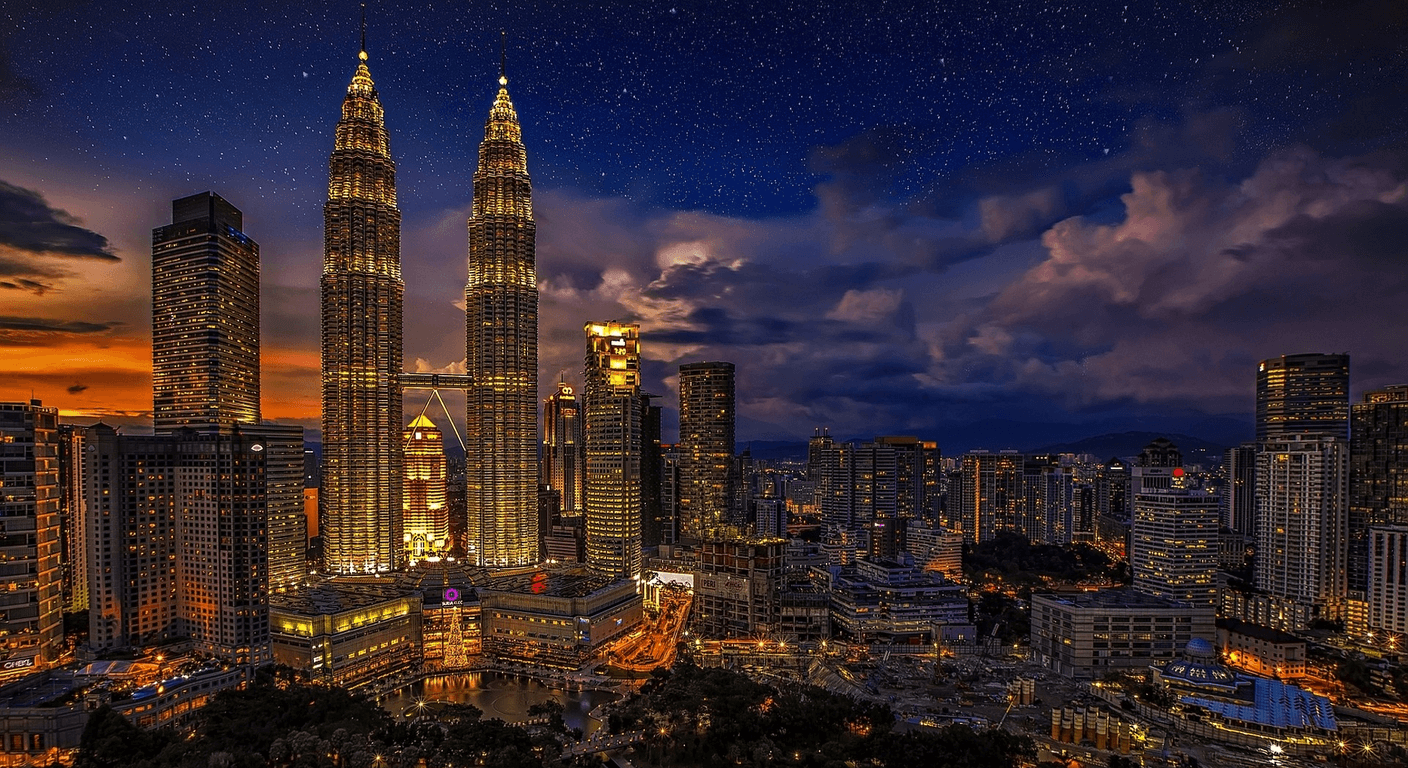
The Petronas Twin Towers are visible from much of the city and worth seeing from below at Suria KLCC, even if the observation deck visit feels optional. More interesting for the architecturally curious is the Masjid Negara — the national mosque, completed in 1965 — and the nearby Islamic Arts Museum, which has a genuinely impressive permanent collection and is well air-conditioned. Allow two hours there without rushing. The KL City Gallery near Merdeka Square is a useful orientation stop and free to enter.
Batu Caves: going with clear eyes
Batu Caves sits about 13 kilometres north of the city centre and is one of KL's most photographed landmarks — a dramatic limestone outcrop containing a series of cave temples, accessed by 272 steep concrete stairs painted in vivid colours. The stairs are the honest part of any conversation about this site. They are steep, uneven in places and can be slippery. There's no lift. For travellers with knee concerns or limited stamina, this is a genuine consideration rather than a minor footnote.
That said, the approach to the caves — the colourful gateway, the large golden statue of Lord Murugan at the base, the shrines and smaller cave temples accessible at ground level — is interesting in its own right and requires no stair climbing. Many visitors find that spending time at the base, watching pilgrims, observing the macaque monkeys with appropriate caution and taking in the scale of the limestone formation, is a satisfying visit without the ascent. Go early — by 8am if possible — before the heat and the coach groups arrive together.
Getting there by Grab is simple and takes around 20–25 minutes from the city centre. The KTM Komuter train also stops at Batu Caves station, a short walk from the site, if you're comfortable with the local rail system. Either way, confirm the return Grab pickup point before you go in — mobile signal inside the caves is variable.
The coach south to Malacca: how it works
The journey from KL to Malacca is one of the more pleasant transit experiences in this part of the world. Aeroline operates a premium coach service from KL Sentral and the Corus Hotel terminus, with assigned seating, air-conditioning and a journey of around two to two and a half hours depending on traffic. The fare is indicative at around AUD 15–25 one way — confirm current pricing and schedules directly with the operator before booking, as timetables change seasonally.
Budget buses on the same route are cheaper but less comfortable and worth skipping. The journey itself is unremarkable — Malaysian highway and oil palm plantation — but that's fine. It's transit, not sightseeing. Arrive at TF Value Mart terminal in Malacca and take a Grab to your hotel from there. The whole process is straightforward and manageable solo.
Pack light for this leg. Malacca's heritage hotels in the Jonker Street and riverside precinct tend to have character and charm in inverse proportion to their lift availability — check before booking if stairs are a concern. Several guesthouses in the Dutch Quarter have ground-floor or lift-accessible rooms; it's worth confirming directly with the property.
Malacca: walking the UNESCO streets at your own pace
Malacca earned its UNESCO World Heritage listing in 2008 alongside George Town in Penang, and the recognition is deserved. The historic core — a compact area centred on the Dutch Stadthuys, St Paul's Hill, the remains of the Portuguese A Famosa fort and the Jonker Street shophouse strip — tells five centuries of colonial history in a way that's genuinely legible on foot. Portuguese, Dutch, British and Chinese layers are all visible in the architecture, and the Peranakan (Straits Chinese) culture that emerged from centuries of intermarriage gives the place a cultural identity found nowhere else quite like this.
The terrain around St Paul's Hill involves some gentle climbing on uneven stone paths, and the Stadthuys square is cobbled. Neither is difficult, but both reward taking time rather than rushing. The riverside walk along the Melaka River — particularly the stretch between the road bridges in the evenings, when the shophouses are lit and the tourist trishaw drivers are out in force — is flat and easy. The trishaws are emphatically tourist entertainment rather than practical transport, decorated to an almost competitive degree of excess. They are, in their way, very Malacca.
Jonker Street on a Friday or Saturday night becomes a pedestrian market, lively without being chaotic, and a good place to try Malaccan specialities: chicken rice balls, cendol, Nyonya laksa and the slightly strange but oddly compelling durian puffs. During the week, the same street is quieter, the shophouse museums and antique shops easier to browse, and the whole experience considerably more relaxed. Both versions have merit depending on your preference for atmosphere versus ease.
Practical matters: heat, footpaths, money and staying safe solo
Malaysia is hot and humid year-round. Temperatures in KL and Malacca typically sit between 28 and 34 degrees Celsius, with humidity that makes the real-feel temperature higher. The best months for travelling are May to July and December, when rainfall is lower, though no month is entirely dry. Plan outdoor sightseeing for mornings, retreat to air-conditioned museums or cafés through the middle of the day, and come back out in the late afternoon. This isn't lazy — it's the local rhythm.
Footpaths in both cities are the most honest challenge for older travellers. They exist, and then they don't, and then they're occupied by a motorbike, and then there's a step where you weren't expecting one. This is not a reason to avoid either city; it's a reason to download the Grab app before you leave Australia and use it without guilt. Rides across central KL rarely cost more than AUD 5–8. In Malacca, where distances are shorter, even less. The app works on an Australian credit card and the fare is displayed before you confirm — no negotiation, no ambiguity.
Solo female travel in both cities is generally straightforward. KL and Malacca are conservative Muslim-majority destinations and dressing modestly — covered shoulders and knees in most situations — is both respectful and practical. Entrance to mosques requires a headscarf; some sites provide them. Malaysia uses the ringgit (MYR); as a rough guide, AUD 1 buys around 3 ringgit, though confirm current exchange rates before travel. ATMs are plentiful in both cities and Visa and Mastercard are widely accepted in hotels and larger restaurants. Confirm entry requirements and any current travel advisories on smartraveller.gov.au well before departure.
Quick planning guide
| Ideal pace | Slow-paced, split evenly between the two cities |
|---|---|
| Best months | May to July and December, when rainfall is lower |
| Suggested stay | A few days in each city, enough to walk at your own pace |
| Mobility level | Moderate — patchy footpaths and some uneven, stepped terrain, offset by flat sections and easy Grab access |
| Cost level | Budget-friendly — hawker meals, coach fares and taxis are all inexpensive |
| Comfort level | Comfortable mid-range hotels and plenty of air-conditioned retreats from the heat |
| Best for | Older travellers, solo travellers, and those who prefer food and heritage over spectacle |
| Main planning consideration | Footpath quality and Batu Caves' 272 stairs — plan around both using Grab rides and ground-level options |
Key takeaways
- Direct flights from most Australian capitals to Kuala Lumpur run around eight hours — one of Southeast Asia's more manageable long-haul routes.
- A comfortable Aeroline coach connects KL and Malacca in roughly two hours, making the two-centre itinerary easy to self-manage.
- Batu Caves' 272 stairs are steep and uneven — the site is still worth visiting at ground level for travellers who skip the climb.
- Grab ride-hailing is cheap, reliable and removes most of the footpath-quality problem in both cities — set up the app before leaving Australia.
- Malacca's UNESCO heritage core is compact and walkable in the mornings; the riverside strip and Jonker Street are flat and easy.
- Confirm current visa requirements, entry conditions and travel insurance cover for pre-existing conditions before booking — smartraveller.gov.au is the authoritative starting point.
Recommended partners and links
Indicative prices only — always confirm with the operator before booking.
Frequently asked questions
Do Australians need a visa to visit Malaysia?
Australian passport holders have generally been able to enter Malaysia visa-free for short stays, but entry requirements can change. Confirm current conditions on smartraveller.gov.au and the official Malaysian immigration website before booking — do not rely on information that may be out of date.
How long should you spend in Kuala Lumpur and Malacca combined?
Seven nights is a comfortable minimum — four nights in KL and two to three nights in Malacca. This allows a genuine recovery night on arrival, time to pace sightseeing in the heat and a slow exploration of Malacca's heritage streets without feeling rushed.
Is Batu Caves accessible for older travellers with knee or mobility concerns?
The main cave temple requires climbing 272 steep, uneven stairs and there is no lift. Travellers with knee problems or limited stamina can still visit the dramatic entrance area, ground-level shrines and smaller cave temples without climbing. Going early in the morning reduces heat and crowds significantly.
What is the best time of year to visit KL and Malacca?
May to July and December tend to have lower rainfall and are generally the most comfortable months. Malaysia is tropical and humid year-round, so no period is entirely dry — plan outdoor sightseeing for mornings and use air-conditioned spaces in the middle of the day regardless of when you travel.
How does Grab work in Malaysia and is it safe for solo travellers?
Grab is a ride-hailing app similar to Uber, widely used across Malaysia. You book and pay through the app using a credit card, the fare is shown before you confirm, and the driver's details and route are tracked. It is the most practical and transparent transport option for solo travellers navigating both KL and Malacca. Download and set up the app on an Australian credit card before you leave home.