Liffey Falls State Reserve, on the southern face of Tasmania's Great Western Tiers, is best visited October to April, with a half-day enough for the 45-minute return walk from the upper car park. The highlight is a series of tiered waterfalls through cool temperate rainforest of myrtle beech and sassafras. Steps and slopes make the track Moderate, not Easy, and unsuitable for wheelchairs. Entry is free, reached via a narrow gravel road roughly 35 minutes from Deloraine, with no flight needed.
Why Liffey Falls Rewards the Detour
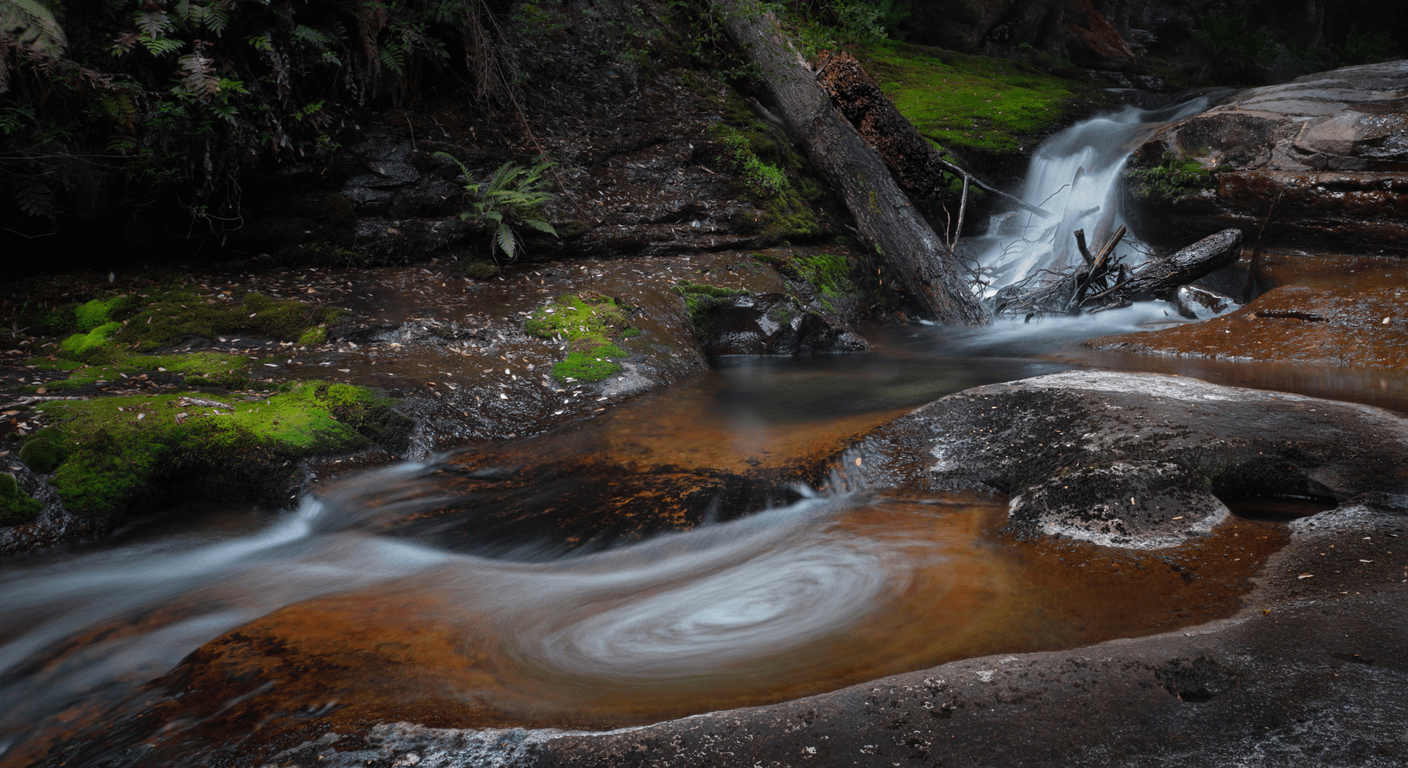
There's a particular kind of Tasmanian forest that feels older than anything you can name — and Liffey Falls sits right inside it. The reserve protects a section of cool temperate rainforest on the southern flank of the Great Western Tiers, where myrtle beech and sassafras grow thick and the light arrives in green, filtered fragments. The falls themselves drop in a series of tiers rather than a single dramatic plunge, which means you encounter them gradually, one level at a time, as the track descends alongside the Liffey River.
For travellers who've done the obvious Tasmanian circuits — Cradle Mountain, Wineglass Bay, Russell Falls — Liffey offers something genuinely different in character. It's quieter, it's free, and the approach through the Liffey Valley farmland gives the whole experience a slow, unhurried rhythm that suits a relaxed day out. The kind of place you describe to friends over dinner rather than on social media.
Getting There: The Gravel Road Reality
From Deloraine, allow around 35 minutes via the Liffey Valley Road. The route passes through pastoral country before the sealed road gives way to a narrow gravel track for the final section into the reserve. This is the honest part: the gravel road is winding, single-lane in places, and not forgiving of impatience. Take it slowly, give way generously, and you'll be fine. After significant rain, the road can become slippery and potholed — check road conditions via the Transport Tasmania website before you leave.
There are two car parks. The upper car park is the practical choice for most visitors over 50 — the walk to the falls from here is around 45 minutes return, and it avoids the longer lower circuit. The lower car park adds considerable distance and a steeper return climb. Parking is free. There are basic toilet facilities at the upper car park; confirm current availability with Parks Tasmania before you go.
From Launceston, the drive is roughly an hour, making a comfortable half-day loop possible — perhaps combining the falls with lunch in Deloraine on the return. Deloraine itself is an appealing town with good cafes, a weekend market, and the Yarns Artwork in Silk, a textile installation well worth seeing if the doors are open.
What the Walk Actually Involves
From the upper car park, the formed track descends through the forest to the falls and back — roughly 45 minutes return at an easy pace, which is the right pace here. The surface is compacted gravel and earth with some timber steps and boardwalk sections. There are slopes. Nothing is particularly steep, but the descent to the lower falls requires the same effort in reverse on the return. Trekking poles are a sensible companion.
The track is not suitable for wheelchairs or mobility scooters. Walkers with knee concerns should take it steadily on the descent — the steps are well-constructed but uneven ground is unavoidable in a rainforest reserve. Solid, closed-toe shoes with grip are essential; the track can be slippery even in dry weather where tree roots cross the path.
What rewards the effort is the sequence of the falls themselves. You reach the upper cascade first, then continue down to the main falls — the largest and most photogenic tier — before the track returns you uphill through the same cathedral of ferns and moss-covered stone. Give yourself time to stop. The forest is the point, not just the waterfalls.
The Forest Itself: What You're Actually Walking Through
Cool temperate rainforest in Tasmania is a specific, protected thing. At Liffey, the dominant trees are myrtle beech — smooth-barked, slow-growing, some of them centuries old — alongside sassafras with its distinctive anise scent when leaves are crushed. Tree ferns arch over the track in places, their fronds filtering the light into something soft and green. After rain, the moss on every surface glows.
For anyone arriving from Victoria or the mainland, the scale of the ferns and the density of the understorey tends to surprise. This is not the dry sclerophyll bush most Australians grew up with. It's closer to something from the Gondwana era — which, technically, it is. The Great Western Tiers above act as a weather barrier, catching moisture from the north and channelling it into these southern gullies. The Liffey River is the result.
Bird life in the reserve includes green rosella, black currawong, and the occasional Tasmanian scrubwren. Platypus have been spotted in the river pools, though sightings are never guaranteed. Early morning visits offer the best chance of both quiet and wildlife.
Making a Full Day of It
Liffey Falls works best as part of a wider day rather than a standalone drive. Deloraine is the natural anchor — it's a handsome town on the Meander River with a good main street, the Empire Hotel for lunch, and the Yarns Artwork in Silk at the Deloraine Folk Museum (check opening hours before visiting). The town has a farmers' market on the first Saturday of each month that's genuinely local rather than tourist-facing.
Mole Creek is roughly 20 minutes in the opposite direction and offers Trowunna Wildlife Sanctuary (a reliable spot for wombats and Tasmanian devils) and the cave systems at Marakoopa Cave — guided tours operate through Parks Tasmania, with some tours better suited to steady walkers than others. Confirm accessibility and tour times before booking.
If you're based in Launceston, the full loop — Launceston to Liffey Falls, then Deloraine for lunch, then back via the Bass Highway — is a satisfying day without feeling rushed. Allow around six hours door to door, including an hour at the falls and a proper lunch stop.
Practical Matters: Seasons, Conditions and What to Bring
October through April is the recommended window. Spring brings new growth and reasonable temperatures; summer days are long and the light is good for photography. Autumn turns the myrtle beech — the leaves go gold and rust in a way that surprises most visitors who associate autumn colour with deciduous European trees. Winter is cold, the road is more prone to damage, and the short days compress your window.
Pack layers regardless of the forecast. The forest is cooler than the surrounding farmland, and the temperature drops noticeably once you're under the canopy. A light waterproof is sensible — Tasmanian weather changes its mind without much notice. Bring water and a snack; there are no facilities on the track. Insect repellent is worth carrying from November to March.
Mobile phone coverage in the reserve is unreliable — download the offline map for the area before you leave, or pick up a printed park notes sheet from the Deloraine Visitor Information Centre. Let someone know your plan if you're travelling solo.
Where to Stay Nearby
Deloraine has several well-regarded accommodation options — boutique guesthouses, self-contained cottages, and a handful of B&Bs that cater well to couples looking for comfort over convenience. Prices are generally more modest than Launceston or Hobart. Indicative rates for a quality guesthouse room run around $160–$220 per night; confirm current pricing directly with properties.
Launceston offers a wider range of hotels and restaurants and makes a practical base for exploring the Central Highlands, Tamar Valley, and the east coast in sequence. The drive from Launceston to Liffey Falls is comfortable in under an hour. For those on a longer Tasmanian loop, Deloraine itself is worth a night — it slows the pace in a way the itinerary often needs.
Quick planning guide
| Ideal pace | Slow and unhurried |
|---|---|
| Best months | October to April |
| Suggested stay | Half-day, or a full day combined with Deloraine and Mole Creek |
| Mobility level | Moderate — formed track with steps and slopes, not wheelchair or scooter accessible |
| Cost level | Budget-friendly — free entry and free parking |
| Comfort level | Casual — solid closed-toe shoes and layers recommended |
| Best for | Nature lovers and travellers wanting a quiet, uncrowded rainforest walk |
| Main planning consideration | The final approach is a narrow gravel road that can become slippery after rain — check conditions before setting out |
Key takeaways
- Liffey Falls is free to enter and reached in roughly 35 minutes from Deloraine via a narrow gravel road — drive slowly and check road conditions after rain.
- The walk from the upper car park is around 45 minutes return on a formed track with steps and slopes — steady, not strenuous, but not suitable for wheelchairs.
- The falls drop in tiers through cool temperate rainforest of myrtle beech and sassafras — one of the most intact forest environments in northern Tasmania.
- October to April is the best window; autumn adds myrtle beech colour that genuinely surprises visitors expecting only European-style autumn foliage.
- Combine Liffey Falls with Deloraine for lunch and the Yarns Artwork in Silk, or extend the day to Mole Creek's Trowunna Wildlife Sanctuary.
- Mobile coverage is unreliable in the reserve — download an offline map and check Parks Tasmania's website for current track conditions before departing.
Recommended partners and links
Indicative prices only — always confirm with the operator before booking.
Frequently asked questions
Is there an entry fee for Liffey Falls State Reserve?
No. Liffey Falls State Reserve is free to enter and there is no booking required. Parking at both car parks is also free. Confirm current conditions at the Parks Tasmania website before you visit.
Is the Liffey Falls walk suitable for seniors or travellers with mobility concerns?
The walk from the upper car park is around 45 minutes return on a formed gravel and earth track with timber steps and some slopes. It is rated Moderate — manageable for most reasonably active walkers, but not suitable for wheelchairs or those with significant knee or balance issues. Trekking poles and grip-soled shoes are recommended.
What is the road to Liffey Falls like?
The final section of the access road is a narrow, winding gravel road. It is driveable in a standard vehicle but requires patience and care. After heavy rain it can become slippery and potholed. Check road conditions via the Transport Tasmania website before departing, particularly in winter or after storms.
What is the best time of year to visit Liffey Falls?
October to April offers the most reliable conditions. Spring brings lush new growth; autumn (March–April) adds golden myrtle beech colour. Summer days are long and generally dry. Winter visits are possible but the days are short, the road is more vulnerable to weather damage, and temperatures in the forest are genuinely cold.
How far is Liffey Falls from Launceston?
From Launceston, Liffey Falls is approximately one hour's drive, depending on the route taken. A comfortable day trip from Launceston is easily achievable, with time for the walk and lunch in Deloraine on the return.