Lord Howe Island, a UNESCO World Heritage site around 700 kilometres east of Port Macquarie, caps visitor numbers at roughly 400 at any one time, keeping its lagoon and beaches quiet even in peak periods. Shoulder seasons — April to May and September to October — offer the most settled weather, and about a week suits most itineraries. The lagoon snorkelling and Ned's Beach fish feeding are the defining, low-effort highlights, making the island Easy to Moderate for mobility. Access is by QantasLink turboprop from Sydney or Brisbane, with limited seats making early booking essential.
What Makes Lord Howe Island Different From Every Other Australian Island?
The short answer is the cap. Under NSW legislation, no more than around 400 tourists may be on Lord Howe Island at any one time. That single rule shapes everything: the beaches are quiet on a Tuesday afternoon, the walking tracks feel like your own, and the lagoon — one of the world's southernmost coral lagoons — is not fighting for space with jet-ski operators or floating pontoons. For a group of friends travelling together, this is the difference between a holiday that restores you and one that exhausts you.
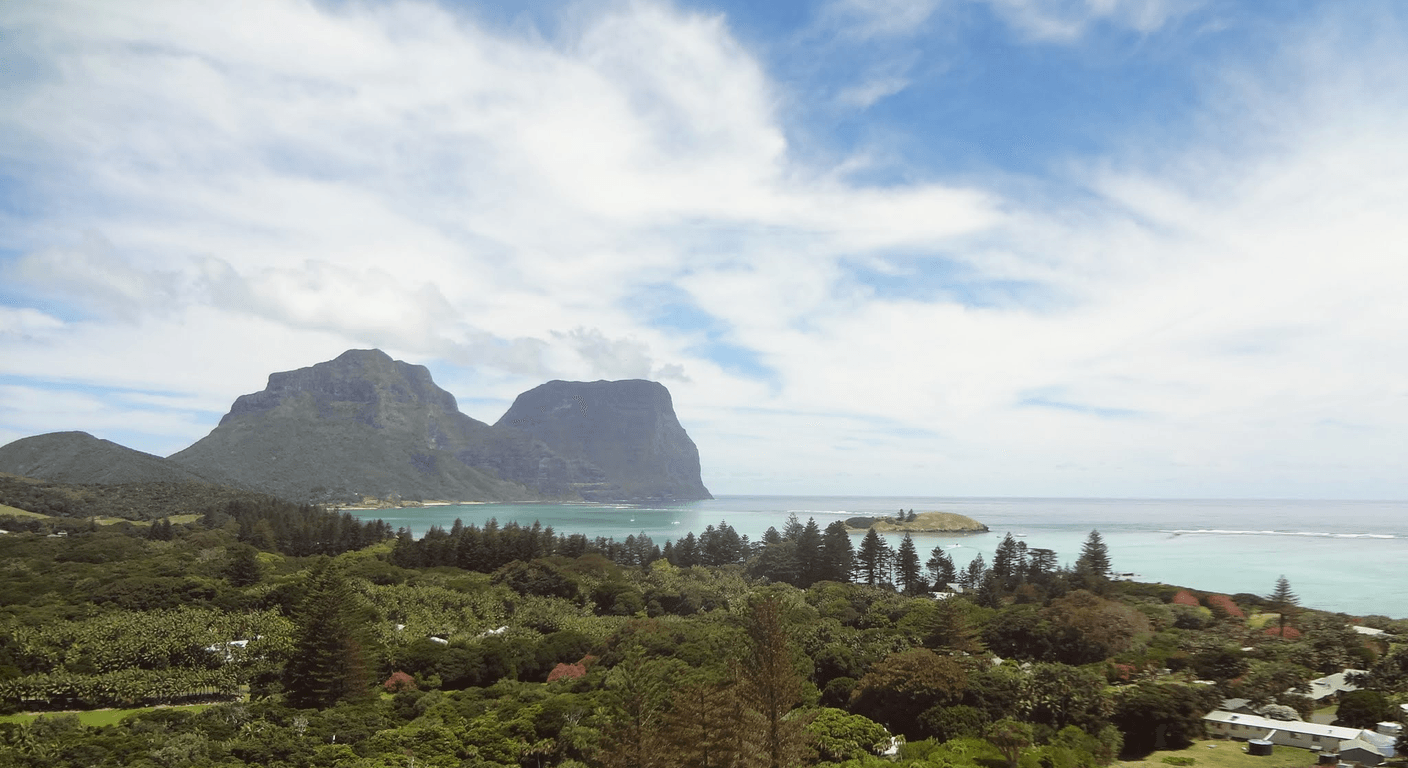
Lord Howe was listed as a UNESCO World Heritage Area in 1982, recognised for its volcanic geology, its endemic bird and plant species, and the extraordinary marine environment of its lagoon. The island is roughly 11 kilometres long and at its widest about 2.8 kilometres across, which means you are never far from water, forest, or the silhouette of the two great southern peaks — Mount Lidgbird and Mount Gower — that anchor the skyline. Almost 75 per cent of the island is protected as permanent park reserve.
What surprises most first-time visitors is how genuinely low-key the infrastructure is. The main settlement has a small general store, a handful of restaurants and cafes, and a cluster of self-contained lodges and guesthouses. There is no traffic to speak of — most locals and visitors get around by bicycle or on foot. Mobile coverage has improved in recent years but remains limited in parts of the island, and that, too, turns out to be less of an inconvenience than expected.
Getting There: Flights From Sydney and Brisbane
Lord Howe Island is served by QantasLink (operating as Eastern Australia Airlines on this route) with flights from Sydney and Brisbane. The Sydney flight takes roughly two hours; Brisbane is a little longer. The runway on the island is short and the aircraft are turboprops, so the approach — low over the lagoon, between the peaks — is one of those arrivals that people talk about long after the trip. Seat availability is genuinely constrained, and this is not a marketing phrase: the aircraft are small and there are limited services per week.
Indicative return airfares from Sydney sit roughly in the $700–$1,400 range per person at the time of writing, though prices move considerably with season, timing of booking, and availability. Flights from Brisbane tend to be priced similarly or slightly higher. These figures are indicative only — confirm current fares directly with Qantas at qantas.com before planning your budget. The island's visitor cap means that when accommodation books out, there is little point holding a seat, so it makes sense to research lodging and flights together rather than in sequence.
Travellers based in regional Victoria — say, the Ballarat, Bendigo, or Shepparton corridors — will typically connect through Melbourne Tullamarine to Sydney, then continue to Lord Howe. That adds a leg to the journey but is straightforward, and the total travel day is manageable. If your group has anyone with a hip replacement or a knee that objects to long periods of sitting, build in a comfortable overnight in Sydney on the way home rather than rushing back.
How Accessible Is Lord Howe Island for Travellers Over 60?
Honest answer: it depends entirely on what you want to do. The flat central part of the island — the lagoon foreshore, the main settlement, Ned's Beach, the golf course area — is accessible to most people who can walk a kilometre or two on level ground at a comfortable pace. The island's unsealed paths and roads are firm and generally manageable on a standard hire bicycle, and most lodges sit within easy cycling distance of the lagoon and beach areas. Flat walking distances are not taxing.
The lagoon snorkelling is an area where Lord Howe Island genuinely rewards older travellers. You wade in from the beach at Lagoon Beach or Old Settlement Beach, the water is warm and clear, and the coral is close to shore. You do not need to swim far or hard — the marine life comes to you. Visibility in the lagoon is typically excellent. Snorkel gear is available for hire through most lodges and several operators; confirm current hire costs with your accommodation or a local operator.
Where the island asks more of you is on the walking tracks beyond the flat. The Transit Hill walk (around 1.5 kilometres return, modest elevation) is well within reach for most fit over-60 travellers and gives good views over the lagoon. Malabar Hill and the northern walks are steeper but rewarding. Mount Gower — covered separately below — is a different proposition entirely. Travellers with significant mobility limitations, balance concerns, or heart or respiratory conditions should be candid with themselves and with any guide before committing to the harder tracks. The island has medical facilities but they are limited, and medical evacuation is a serious undertaking.
The Lagoon, Ned's Beach, and the Gentle Side of the Island
The lagoon is the centrepiece of a Lord Howe Island visit for most travellers over 50, and it earns its reputation. Enclosed by the reef on the western side of the island, the lagoon's calm, clear water sits between roughly 20 and 23 degrees Celsius for much of the year, making it comfortable for extended snorkelling without a wetsuit in the warmer months. The coral is genuinely healthy by Australian reef standards, and the fish life — including the endemic Lord Howe Island double-header wrasse and various species of butterflyfish — is varied and approachable.
Ned's Beach, on the eastern side of the island, is famous for something different: the fish feeding. Mullet, kingfish, and other species have been fed by hand at Ned's Beach for decades, and they approach the shore in numbers that are, frankly, startling the first time you see it. You stand ankle-deep in clear water with a handful of bread or pellets and the fish jostle around your feet and legs. It is one of those experiences that does not require any physical effort, works for all ages and mobility levels, and is simply delightful. Buckets of feed are available at the beach kiosk; confirm current pricing with the operator.
Beyond the lagoon and Ned's Beach, the island offers glass-bottom boat tours of the reef, guided snorkelling tours for those who want company and direction in the water, stand-up paddleboarding in the lagoon (conditions permitting), and a nine-hole golf course that doubles as one of the more scenic places to have a relaxed game in Australia. The social rhythm of the island — breakfast at the lodge, a morning on the lagoon, lunch somewhere simple, an afternoon walk or bike ride, sundowners with the group — suits a travelling group of women in their mid-60s particularly well.
Mount Gower: What You Need to Know Before You Commit
Mount Gower is 875 metres above sea level and the highest point on Lord Howe Island. The climb is only possible with a licensed guide — this is a legal requirement, not a suggestion — and the track involves rope-assisted sections, scrambling over wet rock, and a round trip of roughly eight to nine hours. The guide requirement exists for good reasons: the terrain is genuinely technical in places, the cloud forest near the summit is ecologically sensitive, and the consequences of a fall or injury on the upper sections are serious.
For fit, active travellers in their 60s with solid hiking experience and no significant joint or cardiac issues, Mount Gower is a deeply rewarding day. The cloud forest near the summit is unlike anything in mainland Australia, and the views — on a clear day — take in the full length of the island and out to the Admiralty Islands to the north. But it is not a walk to attempt because everyone else is doing it or because it appears on a list. If your group includes someone who is not a confident hiker, or who has had recent surgery or a health event, that person should plan a different day and not feel any pressure about it.
Guided Mount Gower climbs are available through licensed operators on the island; indicative costs are roughly $150–$200 per person at the time of writing, though confirm current pricing and availability directly with operators via lordhoweisland.info. Numbers per group are limited. The start time is early. Wear proper trail shoes, carry more water than you think you need, and take a light rain layer regardless of the morning forecast.
What Does Lord Howe Island Cost, and Is It Worth the Premium?
Lord Howe Island is an expensive destination by Australian standards, and it is worth being direct about that rather than glossing over it. Accommodation across the island ranges from self-contained units and guesthouses through to more comfortable lodge-style properties; indicative nightly rates per person range from around $250 at the modest end to $600 or more at the upper end of the market, and most properties require a minimum stay. Meals at island restaurants are priced to reflect the cost of getting food to a remote island — a main course at dinner will often sit in the $35–$55 range. These are indicative figures only; confirm current pricing directly with operators.
The total cost of a week on Lord Howe Island — flights, accommodation, meals, activities, and gear hire — for a group of four travelling from regional Victoria will likely land somewhere between $3,500 and $6,000 per person depending on choices made. That is a significant outlay. What it buys is a level of natural environment, quietness, and quality of experience that is genuinely rare in Australia or anywhere. Travellers who have done it tend to describe it as one of those trips they wish they had done earlier rather than later.
A practical note on timing: the island is at its busiest and most expensive during NSW and Queensland school holidays, particularly the summer period around December and January. The shoulder seasons — April to May and September to October — offer more settled weather on average, lower prices at some properties, and slightly better flight availability. The island receives rainfall year-round, so packing a compact waterproof layer is sensible regardless of when you travel.
Practical Tips for Planning a Group Trip to Lord Howe Island
Because the visitor cap means accommodation and flights fill in tandem, the most important practical step is to begin researching both at the same time, ideally six to twelve months ahead for peak-season travel and three to six months ahead for shoulder season. The Lord Howe Island Tourism website at lordhoweisland.info is the clearest starting point — it lists accommodation options by category and links through to operator booking pages. The Lord Howe Island Board at lhib.nsw.gov.au provides regulatory and visitor information including the island's biosecurity requirements, which are strict and important to read before you pack.
Biosecurity on Lord Howe is not a formality. The island has one of the world's most significant eradication programmes following the near-extinction of native species by introduced rodents, and visitors are required to declare and submit to inspection of food, plant material, and certain other items. Your luggage will be inspected on arrival. The process is orderly and the staff are courteous, but it adds a step to arrival that is worth knowing about in advance.
For a group of friends travelling together, self-contained accommodation tends to work well — it gives you a shared kitchen for breakfasts and simple suppers, cuts overall food costs, and means you have a comfortable base to return to after a day on the water or the walking tracks. Hire bicycles are available through most lodges or from hire operators on the island; a basic step-through or hybrid bicycle suits the terrain and is manageable for most older travellers. If anyone in your group is not confident on a bike, the island is walkable at a gentle pace, and some operators offer golf buggy transfers for those who need them — confirm current availability with your lodge.
Quick planning guide
| Ideal pace | Slow-paced and relaxed |
|---|---|
| Best months | April–May and September–October (shoulder seasons, more settled weather) |
| Suggested stay | About a week |
| Mobility level | Easy on the flat lagoon and settlement areas; Moderate to Active if attempting Mount Gower |
| Cost level | Premium |
| Comfort level | Comfortable, low-key lodges and guesthouses |
| Best for | Older travellers and groups wanting a quiet, uncrowded nature-focused escape |
| Main planning consideration | Book flights and accommodation together well ahead, as the 400-person visitor cap means both fill in tandem |
Key takeaways
- Lord Howe Island legally limits visitors to around 400 at any one time, which is the single biggest reason the experience feels so different from other Australian island destinations.
- Flights operate from Sydney and Brisbane via QantasLink, with indicative return fares roughly in the $700–$1,400 range per person — confirm current fares at qantas.com.
- The lagoon and Ned's Beach fish feeding are accessible to most travellers over 60 with average mobility; Mount Gower is a serious guided climb of eight to nine hours and is not for everyone.
- Accommodation and flights should be researched together and well ahead — the visitor cap means both fill at the same time, particularly in school-holiday windows.
- A week on Lord Howe Island is a premium outlay, with total per-person costs indicatively in the $3,500–$6,000 range from regional Victoria; confirm all current prices directly with operators.
- Lord Howe's biosecurity requirements are strict and legally enforced — read the Lord Howe Island Board's visitor guidelines at lhib.nsw.gov.au before you pack.
Recommended partners and links
Indicative prices only — always confirm with the operator before booking.
Frequently asked questions
How far in advance do you need to book Lord Howe Island?
For travel during NSW and Queensland school holidays, researching accommodation and flights six to twelve months ahead is sensible. In shoulder seasons — April to May and September to October — three to six months ahead is generally sufficient, though popular lodge properties can still fill early. The island's legal visitor cap means accommodation and flight availability are linked; when one fills, the other typically follows.
Is Lord Howe Island suitable for travellers in their 60s and 70s?
Yes, for most activities. The flat central areas, lagoon beaches, and Ned's Beach fish feeding are accessible to travellers with average mobility. Snorkelling in the lagoon requires basic swimming ability and comfort in open water but no particular fitness. The harder walking tracks, including Mount Gower, require solid hiking fitness and are not appropriate for travellers with significant joint, balance, or cardiac issues. Be honest with yourself and your guide about your physical condition before committing to any strenuous activity.
Can you get around Lord Howe Island without a car?
Yes, and that is the norm. Most visitors hire bicycles from their lodge or a local operator, and the island's flat central section is very manageable on a step-through hire bike. Walking is also practical for shorter distances. There are no public buses. Some operators and lodges offer transfers for guests with mobility needs — confirm availability directly with your accommodation before you arrive.
What is the best time of year to visit Lord Howe Island?
The shoulder seasons — April to May and September to October — are generally considered the most comfortable for older travellers. Temperatures are mild, rainfall is lower on average than the wetter winter months, and crowds are lighter than during summer school holidays. The lagoon water temperature is warmest from December to March, which suits snorkelling, but this period is also the busiest and most expensive. The island receives some rainfall year-round, so packing a waterproof layer is always worthwhile.
Do you need a guide to climb Mount Gower on Lord Howe Island?
Yes. A licensed guide is legally required to climb Mount Gower — you cannot do the upper section independently. The requirement exists because the terrain is technically demanding and the cloud forest near the summit is ecologically sensitive. Guided climbs are available through licensed operators on the island; indicative costs are roughly $150–$200 per person, though confirm current pricing and availability directly with operators via lordhoweisland.info.