Luang Prabang, Laos's UNESCO-listed temple town on the Mekong, suits November-to-February visits, when humidity eases and skies stay clear. Allow several unhurried days to explore the flat, compact peninsula on foot — temples, the Royal Palace Museum and a half-day trip to Kuang Si Falls. The defining highlight is the dawn alms procession, watched quietly from a distance. Mobility is moderate; access from Victoria means flying via Bangkok or taking the Vientiane–Luang Prabang railway.
Getting There from Victoria — and Giving Yourself a Day to Land
From Melbourne, the most common routing goes Melbourne to Bangkok (around nine hours), then Bangkok to Luang Prabang on a direct service of roughly two hours. Total door-to-door time is typically fourteen to eighteen hours depending on the connection. Bangkok's Suvarnabhumi is a manageable transit airport for older travellers — decent seating, accessible facilities, and plenty of food options during a layover. Confirm current airline schedules and any transit visa requirements with your carrier well before departure.
The single most useful piece of advice for a 69-year-old flying from Victoria: build in an arrival day that is purely for landing, showering, and sleeping. Jet lag going northwest from Australia tends to hit the early-morning hours hardest. Luang Prabang's signal attraction — the dawn alms procession — begins around 5.30am. Attempting it on your first full morning, running on three hours of broken sleep, is a recipe for grumpiness and poor judgement. Give yourself one quiet day first. The monks will still be there.
An increasingly appealing alternative for those who want to see more of Laos: fly into Vientiane and take the Laos–China Railway north to Luang Prabang. The journey takes around two hours on a modern, air-conditioned train through limestone karst country, and it's one of the more pleasurable rail rides in Southeast Asia. Confirm current timetables and booking options through the official Lao Railways channels before finalising plans.
Visa and Entry — Always Check Smartraveller First
Laos has offered visa-on-arrival and e-visa options for Australian passport holders in recent years, but entry requirements can shift without much fanfare. The authoritative source is smartraveller.gov.au — check it before you book flights, again a month out, and once more a week before departure. The Australian Government's travel advice for Laos also covers health considerations, local laws, and the areas where caution is warranted.
Travel insurance deserves the same attention. A policy that covers pre-existing medical conditions is not optional at 69 — it's the difference between a manageable incident and a financial catastrophe. Read the product disclosure statement before purchasing, not after. Cover-More, NIB, and Allianz are among the Australian providers with dedicated senior traveller products, but compare carefully. Medical evacuation from Laos to Thailand for serious conditions can cost tens of thousands of dollars without cover.
The Town Itself — How Luang Prabang Actually Works
The UNESCO-listed old town occupies a narrow peninsula roughly two kilometres long and four hundred metres wide at its broadest. Almost everything of significance — Wat Xieng Thong, the Royal Palace Museum, the night market on Sisavangvong Road, the Mekong riverfront — is reachable on foot. For a solo traveller who prefers to set his own pace, this is the appeal. No tour bus required. No negotiating with tuk-tuk drivers for every movement, though they're available and affordable if the legs need a rest.
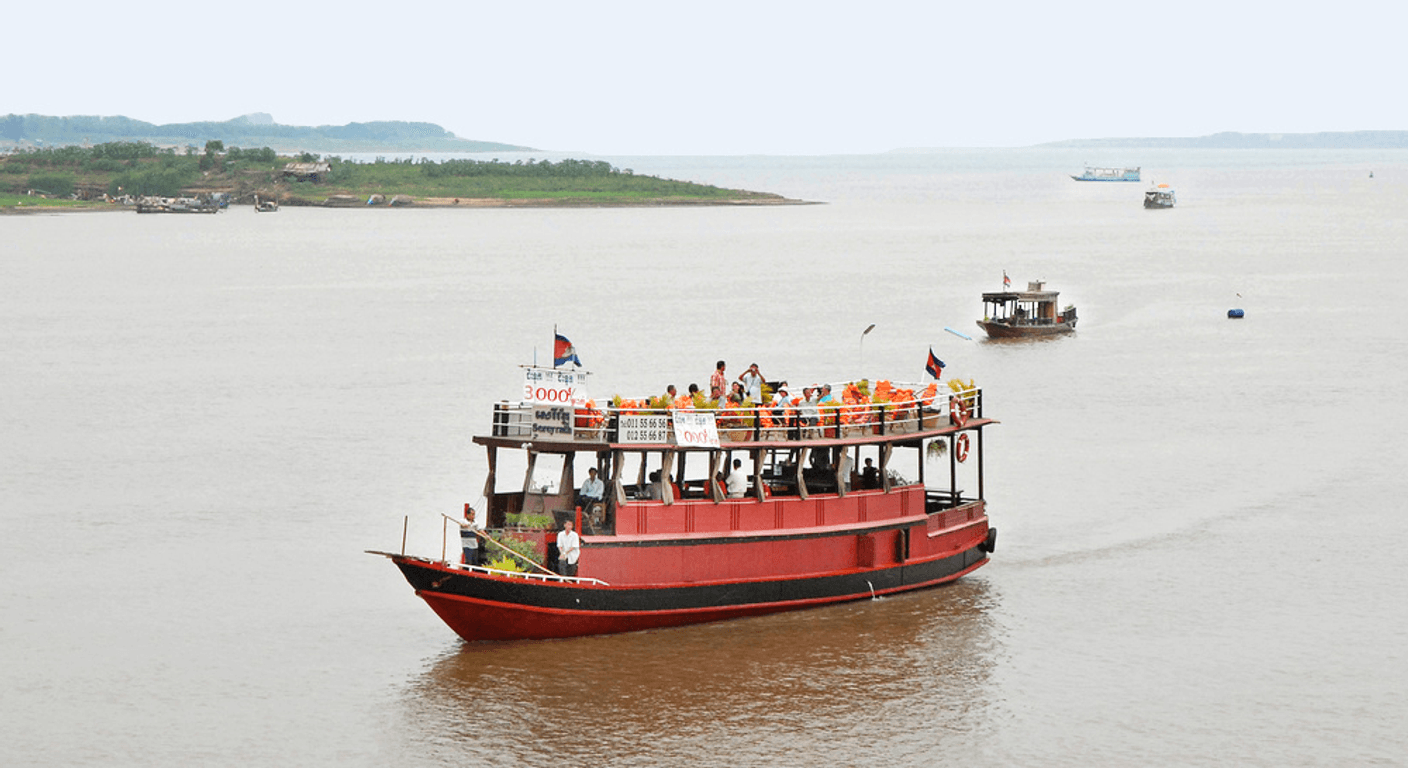
The main street runs the spine of the peninsula and is largely flat. Temple courtyards involve steps — some steep, some uneven — and footwear comes off at every entrance, so slip-on shoes with a firm sole are worth packing. The riverfront paths along both the Mekong and the Nam Khan sides are good for an evening walk, with wooden restaurants and guesthouses strung along the bank. At dusk, the light on the Mekong does something unhurried and particular that's difficult to describe accurately in advance.
Tuk-tuks and shared songthaews (covered pick-up trucks) handle the routes beyond the peninsula — to Kuang Si Falls, to the Pak Ou Caves, or to the organic farm experiences that have developed outside town. Negotiate the fare before you get in; prices are low by Australian standards. A solo traveller should expect to pay slightly more than a couple splitting the cost, but it's rarely painful.
The Alms Procession — How to Watch It Without Being the Problem
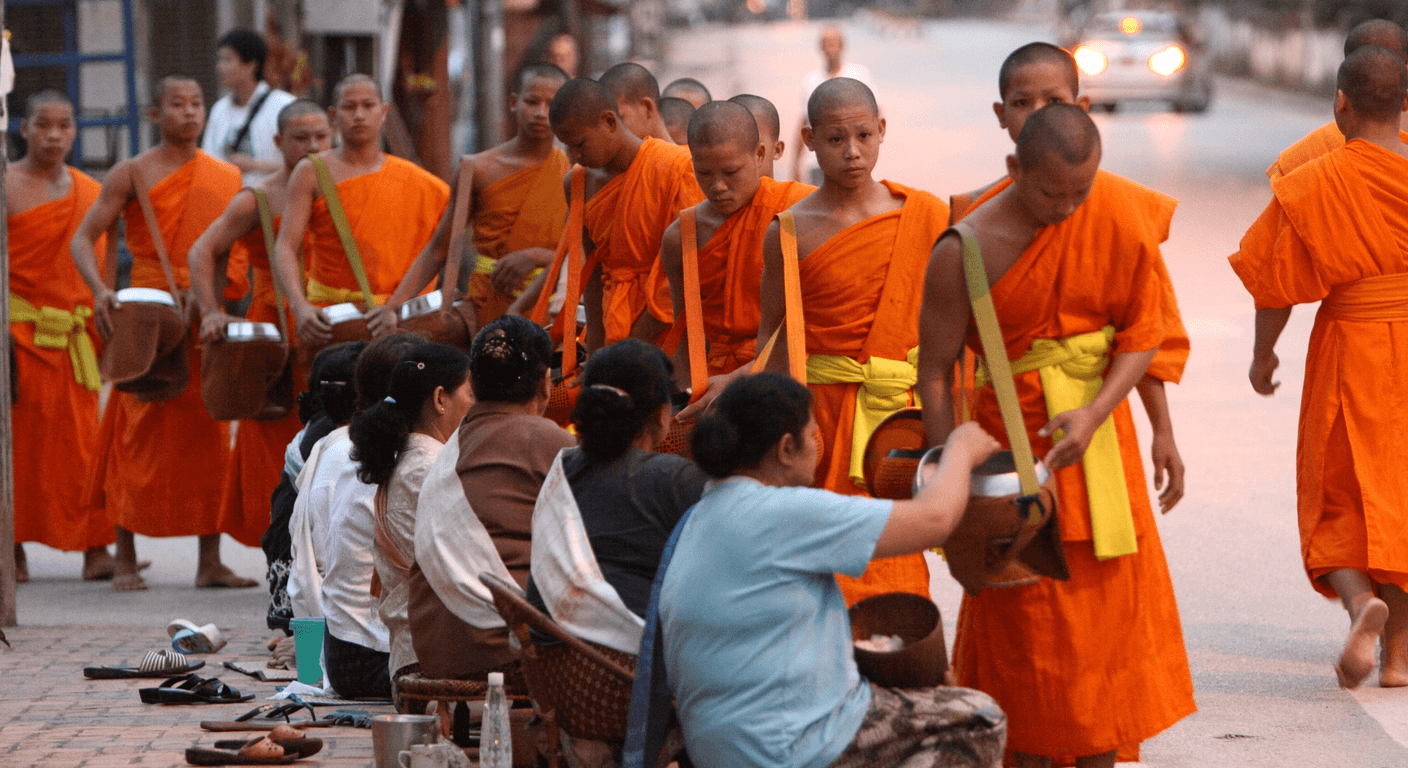
Each morning before sunrise, saffron-robed monks walk in silent procession through the old town streets to receive offerings of sticky rice from lay people kneeling at the roadside. It's one of the oldest continuous daily rituals in Theravada Buddhism, and it happens rain or shine. It is not a performance. It is not staged for tourism. This distinction matters.
The right approach is simple: stand well back from the procession route, speak in a whisper or not at all, keep camera flash off and lenses at a respectful distance, and do not approach or touch the monks. Several guesthouses brief their guests on this, and a few local organisations — including the Luang Prabang Tourism office — have published conduct guidelines worth reading before you go. Do not purchase sticky rice from street vendors to make offerings yourself; this practice has been criticised by the monastic community as disruptive and, in some cases, the rice sold is unsuitable.
The procession typically moves along Sakkaline Road in the early morning dark, finishing before full light. Watching quietly from a distance — even from a guesthouse balcony above the street — is both sufficient and appropriate. The experience of witnessing something ancient and entirely indifferent to your presence is, in its own way, more affecting than getting close.
Temples and Slow Afternoons — Pacing the Peninsula
Wat Xieng Thong, at the northern tip of the peninsula, is the temple most visitors remember longest. Built in 1560, its low-sweeping rooflines nearly touch the ground, and the rear wall carries a glass mosaic Tree of Life in deep red and gold. It's a ten-minute walk from the main market area and well worth the temple entry fee — confirm current costs on arrival, as they change periodically. Early morning, before the day tours arrive, it's nearly empty.
The Royal Palace Museum — the former home of the Lao royal family, converted to a museum after 1975 — sits central on the main road and takes two to three hours at a comfortable pace. Shoes off at the door; the floors are cool marble. The collection of royal regalia, gifts from foreign governments, and the preserved throne room are quietly extraordinary without being grandiose. Photography inside is restricted in sections; follow the signage.
A practical rhythm for the dry-season traveller: rise early for the alms procession or a temple walk before the heat builds, return for breakfast, rest through the hottest midday hours (roughly 11am to 2pm), then explore again in the late afternoon. This is not laziness — it's how the locals live, and it makes physiological sense when you're in a climate where 32 degrees and high humidity is a standard Tuesday.
Kuang Si Falls — the Half-Day Worth Doing
Roughly 30 kilometres south of town, Kuang Si is a series of tiered limestone pools and cascades in a forested national park. The water is a particular shade of turquoise that looks improbable in photographs and even more improbable in person. The main falls are a short walk from the carpark — mostly flat path, though uneven underfoot in places. The upper pools require a steeper climb; perfectly worthwhile but take your time.
Swimming is permitted in some of the lower pools, and on a warm morning this is one of the more pleasant things available to a person in Laos. Pack a towel and a change of clothes. A bear rescue centre at the park entrance houses sun bears confiscated from illegal trade — it's worth ten minutes on the way in.
The standard arrangement is a shared songthaew from town, departing around 8am and returning by early afternoon. Several guesthouses can organise this, or you can negotiate directly at the main transport area near the post office. Confirm current entry fees at the park gate. Allow three to four hours total. Going midweek rather than on weekends means fewer people at the pools — Luang Prabang draws both international and domestic Lao tourists, and Kuang Si is popular with both.
Eating, Sleeping, and the Comfortable Solo Experience
Luang Prabang has matured considerably as a destination, and the range of accommodation now suits the traveller who wants quality without excess. Boutique guesthouses in restored French-colonial buildings along the main peninsula road offer private rooms with air-conditioning, reliable hot water, and good wifi — around AUD 60 to 130 per night indicatively, though prices shift seasonally and should be confirmed before booking. A solo room supplement applies at most properties; factor this in.
The restaurant scene is genuinely good. Lao food — laap (a minced meat salad with herbs), or mok pa (fish steamed in banana leaf) — is worth seeking out beyond the tourist-oriented menus. Several restaurants along the Mekong riverfront serve Lao and French-influenced food in open-air settings that are very pleasant in the cool-season evenings. The night market on Sisavangvong Road is manageable on foot and worth a wander for crafts and textiles, even if you buy nothing.
Travelling solo as a man in his late sixties, Luang Prabang presents very few social difficulties. The town is safe, locals are genuinely friendly without being pushy, and the solo traveller at a riverside restaurant with a cold Beer Lao and a book is not a curiosity — it's a recognised archetype. Tipping is appreciated but not expected; a small amount in local kip acknowledges good service without creating awkwardness.
Quick planning guide
| Ideal pace | Slow-paced and unhurried, with a rest day built in on arrival |
|---|---|
| Best months | November to February, for lower humidity and clear skies |
| Suggested stay | Several days to cover the peninsula, temples and a Kuang Si half-day |
| Mobility level | Moderate — mostly flat streets, but temple steps and a steeper climb at Kuang Si's upper pools |
| Cost level | Mid-range — guesthouses around AUD 60–130 per night, plus a solo room supplement |
| Comfort level | Comfortable — boutique guesthouses, reliable hot water and wifi, good food |
| Best for | Solo over-50 travellers who prefer a slow, self-paced walking itinerary |
| Main planning consideration | Check entry requirements on smartraveller.gov.au and arrange travel insurance covering pre-existing conditions before booking |
Key takeaways
- Luang Prabang's old town is flat, walkable, and compact — two kilometres of peninsula covers the essential temples, the night market, and both riverfronts.
- The dawn alms procession is a living Buddhist ritual: observe quietly from a distance, no flash, no approach — respectful distance is the only right position.
- November to February is the optimal window for travellers from Australia — lower humidity, manageable temperatures, and clear skies for the Kuang Si half-day.
- Always confirm current Laos entry requirements and travel advisories at smartraveller.gov.au before booking flights.
- Travel insurance covering pre-existing conditions is essential; medical evacuation from Laos without cover can cost tens of thousands of dollars.
- The Laos–China Railway now connects Vientiane to Luang Prabang in around two hours — a scenic and comfortable overland alternative to the short domestic flight.
Recommended partners and links
Indicative prices only — always confirm with the operator before booking.
Frequently asked questions
Do Australians need a visa to enter Laos?
Australian passport holders have generally been eligible for a visa on arrival or an e-visa for Laos, but entry requirements can change. Always confirm current requirements at smartraveller.gov.au before booking flights — this is the Australian Government's official and up-to-date source.
What time does the alms procession happen in Luang Prabang, and where?
The tak bat (alms procession) typically begins around 5.30am and moves along Sakkaline Road in the old town, finishing before full light. Observers should stand well back, keep cameras on silent with no flash, and not attempt to participate by offering rice unless they have proper guidance from a local monastic community.
Is Luang Prabang suitable for travellers with limited mobility?
The old town peninsula is mostly flat and walkable, making it accessible for travellers with moderate fitness. Temple courtyards involve steps of varying steepness, and footwear must be removed at every entrance. Tuk-tuks are available for those who need to rest their legs. The Kuang Si Falls path is uneven in places; the upper pools require a steeper climb that can be skipped without missing the main experience.
How do I get from Melbourne to Luang Prabang?
The most common routing from Melbourne is via Bangkok (roughly nine hours), then a direct Bangkok–Luang Prabang flight of around two hours. Total journey time is typically fourteen to eighteen hours including the connection. An alternative is to fly to Vientiane and take the Laos–China Railway north to Luang Prabang in approximately two hours. Confirm current schedules and airline options before booking.
What is the best time of year to visit Luang Prabang from Australia?
November to February is generally the best period — the cool-dry season brings lower humidity, temperatures in the mid-to-high twenties, and reliable clear days. This aligns well with the Australian summer, making it a practical escape. The wet season (May to October) brings lush greenery but also heavy afternoon rain and significantly higher humidity, which can be tiring for older travellers.