Macau lies about an hour from Hong Kong by high-speed ferry, and its defining highlight is the UNESCO-listed historic centre, where Portuguese colonial churches and Chinese temples share the same lanes. A single day is enough to explore on foot, though cobblestones and gentle inclines make it a moderate walking day. Allow a full hour each way for genuine immigration crossings, and book ferries ahead during October–January or Chinese holidays.
What Kind of Place Is Macau, Really?
Macau is not Hong Kong with a different flag. The two cities share a ferry route and a Pearl River Delta postcode, but the sensibility is distinct. Where Hong Kong is vertical and relentless, Macau is low-rise and unhurried — at least in the parts that matter most to a culturally curious traveller. The historic peninsula, listed as a UNESCO World Heritage Site since 2005, is a walkable cluster of Portuguese-era churches, Qing-dynasty temples, colonial plazas and pastel-painted civic buildings that coexist without apparent irony.
The casino district on Cotai — the reclaimed land strip between the islands of Taipa and Coloane — is a different universe entirely, and for most travellers over 50 who've come for the culture, it's easily ignored. A day in Macau's old town is a day of slow walking, good coffee, egg tarts from the original Lord Stow's Bakery, and the occasional moment of genuine surprise. It rewards the traveller who is happy to wander without a rigid checklist.
For a solo Australian traveller based in Hong Kong for a few days, Macau offers a genuine change of register. The Portuguese influence is not superficial — it shows up in the food, the architecture, the street names and the occasional bilingual sign in Cantonese and Portuguese. That layered colonial history is the real attraction.
The Ferry: How Does It Actually Work?
Two main operators run high-speed ferry services between Hong Kong and Macau: TurboJET, which departs from the Macau Ferry Terminal in Sheung Wan on Hong Kong Island and from the China Ferry Terminal in Tsim Sha Tsui on the Kowloon side; and Cotai Water Jet, which operates from the Hong Kong–Zhuhai–Macao Bridge Hong Kong Port as well as the Taipa Ferry Terminal in Macau. The crossing takes roughly 55 to 70 minutes depending on the route and sea conditions. Both services run frequently throughout the day, including overnight sailings.
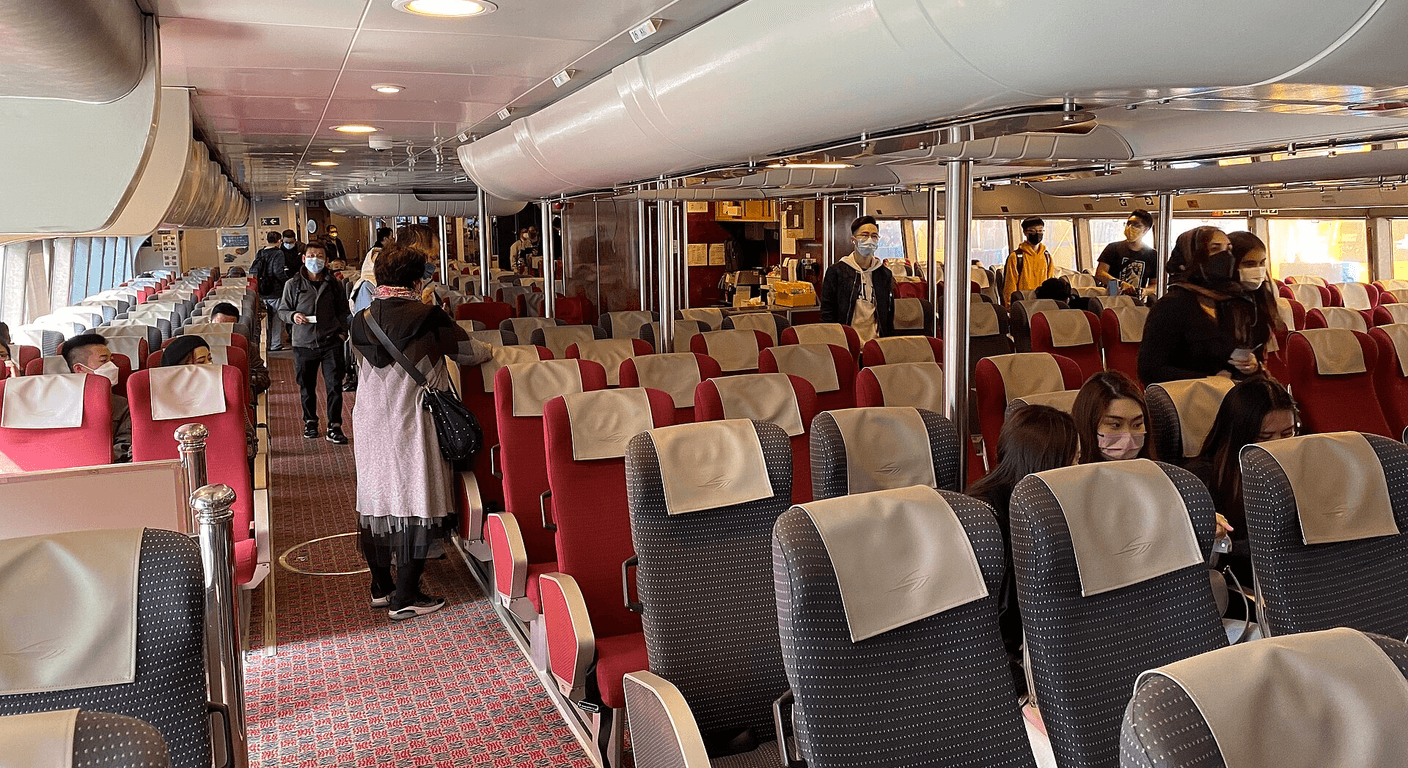
Tickets can be purchased at the terminal on the day, but during Golden Week, Chinese New Year, the Macau Grand Prix in November, and other peak periods, sailings fill up. Book online in advance — both operators have English-language websites and accept international credit cards. Economy class is perfectly comfortable for the crossing: the seats are wide, the cabin is air-conditioned and the journey is smooth on most days. Business class upgrades exist if you prefer a quieter cabin.
One practical note on terminals: the Sheung Wan terminal on Hong Kong Island is connected to the Sheung Wan MTR station, which makes it straightforward to reach from most Hong Kong hotels. On the Macau side, the Outer Harbour terminal is closer to the historic peninsula, while the Taipa terminal puts you closer to the casino strip and Cotai. For a day focused on the old town, the Outer Harbour terminal is the more convenient arrival point — confirm which terminal your chosen service uses when booking.
The Border Crossing: Don't Underestimate It
This is the detail that catches travellers off guard. Macau and Hong Kong are both Special Administrative Regions of China, but they operate separate immigration systems with separate border controls. Crossing from Hong Kong to Macau is a genuine international border crossing in all practical respects. Australian passport holders clear Hong Kong immigration on departure, then clear Macau immigration on arrival — and do it all again in reverse on the way home. Four immigration queues in total for a day trip.
At peak times, each crossing can take 30 to 45 minutes. Build a full hour each way into your planning, not as a worst case but as a realistic allowance. Keep your Australian passport accessible throughout the journey. At the time of writing, Australian passport holders do not require a visa for short stays in either Hong Kong or Macau, but entry conditions can change. Check the current requirements on smartraveller.gov.au before you travel — it's the only source you should rely on for official, up-to-date advice.
Travel insurance is worth a specific mention here. Moving between two jurisdictions in a single day adds a layer of complexity if something goes wrong — a medical issue, a missed return sailing, a lost document. Ensure your policy covers both Hong Kong and Macau, and that any pre-existing conditions are declared and covered. This is standard advice for any international travel, but it's worth stating plainly for a day trip that can feel deceptively casual.
What to Do With a Day in the Old Town
The UNESCO-listed Historic Centre of Macau is compact enough to cover on foot without feeling rushed, provided you start early and don't try to do everything. The Ruins of St Paul's — the fire-ravaged facade of a 17th-century Jesuit church — is the most recognisable image of Macau, and it's worth the climb up the steps for the detail in the carved stonework. Behind the facade, the Museum of Sacred Art and Crypt is free to enter and genuinely interesting. From there, the Fortaleza do Monte sits just above, offering good views across the peninsula.
Senado Square, a short walk downhill, is the civic heart of the old town — a wave-patterned Portuguese mosaic plaza surrounded by painted colonial buildings. It's the kind of place that rewards sitting with a coffee rather than photographing and moving on. The nearby St Dominic's Church, with its ochre baroque facade, is one of the better-preserved colonial churches and takes only 15 minutes to explore properly. A few lanes away, the A-Ma Temple is Macau's oldest, dating to the late 15th century, and the contrast between the incense smoke and the Portuguese street names outside is quietly striking.
For lunch, the area around Rua do Cunha in Taipa Village offers Macanese food — a hybrid cuisine that draws on Portuguese, Chinese, Malay and African influences and is found almost nowhere else. Minchi (a spiced mince dish), caldo verde and Portuguese egg tarts are the staples worth seeking out. Taipa Village is a short taxi or bus ride from the historic peninsula, and it's quieter than the tourist precincts near St Paul's. Lord Stow's Bakery on Coloane is the original source of the egg tart recipe that spread across Asia — it's a bit further out, and realistically a stretch for a tight day, but worth knowing about if you have flexibility.
Logistics for a Luggage-Free Day Trip
Leave your main luggage at your Hong Kong hotel. This is not optional advice — it's the difference between a comfortable day and a cumbersome one. Macau's old town is walkable but the streets are uneven, cobblestoned in sections, and there are gentle but real inclines around the fortress and the St Paul's steps. A small day pack with water, a light rain layer, your passport, travel insurance details, and a portable phone charger is all you need.
Most Hong Kong hotels will hold luggage without charge while you're out for the day — confirm this at check-in. If you're moving hotels that day, left-luggage services are available at both the Sheung Wan and Tsim Sha Tsui ferry terminals. On the Macau side, the Outer Harbour terminal also has left-luggage facilities, though for a day trip you're unlikely to need them.
Taxis in Macau are inexpensive and drivers generally understand destination names in English or on a phone screen. Public buses run to most major areas. The casino resorts all operate free shuttle buses from the ferry terminals — these are legitimate transport options even if you're not staying or gambling, and they cover useful routes to Taipa and Cotai. Google Maps works reliably in Macau for navigation.
Is One Day Enough — Or Should You Stay the Night?
Honestly, one full day is enough to see the historic centre without feeling shortchanged, provided you arrive on an early sailing and leave on a late afternoon or early evening one. The pressure point is the border crossing time on both ends — factor that in and you have a solid six to eight hours on the ground, which is workable. What you won't have is the slower pleasure of Macau at dusk, when the colonial buildings catch the light and the day-trippers have thinned out.
An overnight stay changes the equation considerably. Mid-range hotels on the Macau peninsula are generally less expensive than equivalent Hong Kong accommodation, and staying the night allows you to explore Taipa Village and Coloane at leisure, visit the Macau Museum (closed Mondays — worth checking ahead), and return to Hong Kong on a morning sailing without the time pressure. For a solo traveller with a few extra days in the region, one night in Macau is a genuinely good use of them.
If the day trip format is the right fit — perhaps because your Hong Kong hotel is pre-booked or you're joining a group — go in with realistic expectations and a relaxed attitude to the schedule. Macau rewards the traveller who is comfortable with unplanned detours and spontaneous stops more than the one working through a rigid list. The old town is small enough that getting slightly lost is part of the appeal.
Practical Planning: What to Confirm Before You Go
Entry requirements for both Hong Kong and Macau should be confirmed on smartraveller.gov.au before booking anything. The Australian Government's travel advice pages for both destinations are updated regularly and include visa-free conditions, health requirements, and any current travel advisories. At the time of writing, Australian passport holders enjoy visa-free access to both territories for short stays, but conditions can change without much notice and this guide cannot be treated as a substitute for official advice.
Book ferry tickets online before you travel if you're visiting between October and January, or around any Chinese public holiday. The Macau Grand Prix in November is a particularly busy period for ferry crossings. Both TurboJET and Cotai Water Jet have English-language booking systems. Print or download your ticket confirmation — ferry terminal Wi-Fi can be unreliable at peak times.
Currency in Macau is the Macanese Pataca (MOP), which is pegged to the Hong Kong Dollar at roughly 1.03:1. Hong Kong Dollars are accepted almost everywhere in Macau at close to face value, so there's no urgent need to exchange currency before crossing. Most restaurants, shops and attractions accept credit cards, though smaller street food vendors and market stalls are cash only. Bring a modest amount of HKD and it will serve you adequately across the water.
Quick planning guide
| Ideal pace | Slow, unhurried wandering rather than a checklist itinerary |
|---|---|
| Best months | Comfortable year-round, but book ferries ahead for October–January and Chinese public holidays |
| Suggested stay | One full day, or one night for a more relaxed pace |
| Mobility level | Moderate — cobblestones and gentle inclines around the fortress and St Paul's steps |
| Cost level | Budget-friendly — inexpensive taxis and Macau hotels generally cheaper than Hong Kong |
| Comfort level | Comfortable economy ferry class; casual, low-key walking day |
| Best for | Culturally curious solo travellers over 50 who enjoy wandering without a rigid schedule |
| Main planning consideration | The border crossing is a genuine immigration process — budget a full hour each way |
Key takeaways
- The Hong Kong to Macau ferry takes around an hour and is comfortable in economy class on both TurboJET and Cotai Water Jet.
- Both the Hong Kong and Macau border crossings are real immigration checks — budget a full hour each way, not a few minutes.
- The UNESCO-listed historic centre is walkable in a day, but cobblestones and gentle hills mean moderate fitness is needed.
- Book ferry tickets in advance for October–January travel and any Chinese public holiday period.
- Australian passport holders should confirm current visa-free entry conditions for both Hong Kong and Macau on smartraveller.gov.au before travelling.
- Leaving luggage at your Hong Kong hotel and travelling with a day pack only makes the crossing and the old town walking considerably more comfortable.
Recommended partners and links
Indicative prices only — always confirm with the operator before booking.
Frequently asked questions
Do Australians need a visa to visit Macau on a day trip from Hong Kong?
At the time of writing, Australian passport holders can enter Macau visa-free for short stays. However, entry conditions can change, and the only reliable source for current requirements is smartraveller.gov.au. Check this before booking your ferry.
How long does the ferry from Hong Kong to Macau take?
The high-speed ferry crossing takes approximately 55 to 70 minutes depending on the route and operator. TurboJET departs from Sheung Wan on Hong Kong Island and Tsim Sha Tsui in Kowloon; Cotai Water Jet departs from the Hong Kong–Zhuhai–Macao Bridge Hong Kong Port. Confirm departure terminals when booking.
Is the Macau day trip suitable for travellers with mobility concerns?
The historic centre involves uneven cobblestones and some gentle inclines, particularly around the Ruins of St Paul's and the Fortaleza do Monte. The trip is rated Moderate — manageable for travellers with reasonable fitness and comfortable walking shoes, but not ideal for those with significant mobility limitations or who rely on walking aids.
Should you book the Macau ferry in advance?
Yes, particularly if travelling between October and January, during the Macau Grand Prix in November, or around Chinese public holidays. Both TurboJET and Cotai Water Jet offer online booking in English. On quieter weekdays outside peak season, walk-up tickets are usually available, but booking ahead removes the uncertainty.
Is one day in Macau enough, or is an overnight stay better?
One full day is sufficient to cover the historic centre's highlights without feeling rushed, provided you take an early ferry and return in the late afternoon or evening. An overnight stay allows a slower pace, evening light on the colonial buildings, and time to explore Taipa Village and Coloane — worthwhile if your Hong Kong itinerary has flexibility.
- Macau Government Tourism Office — Official Travel Information
- Smartraveller — Macau Travel Advice (Australian Government)
- Smartraveller — Hong Kong Travel Advice (Australian Government)
- TurboJET Ferry — Hong Kong to Macau Services
- Cotai Water Jet — Ferry Services
- UNESCO — Historic Centre of Macau World Heritage Listing