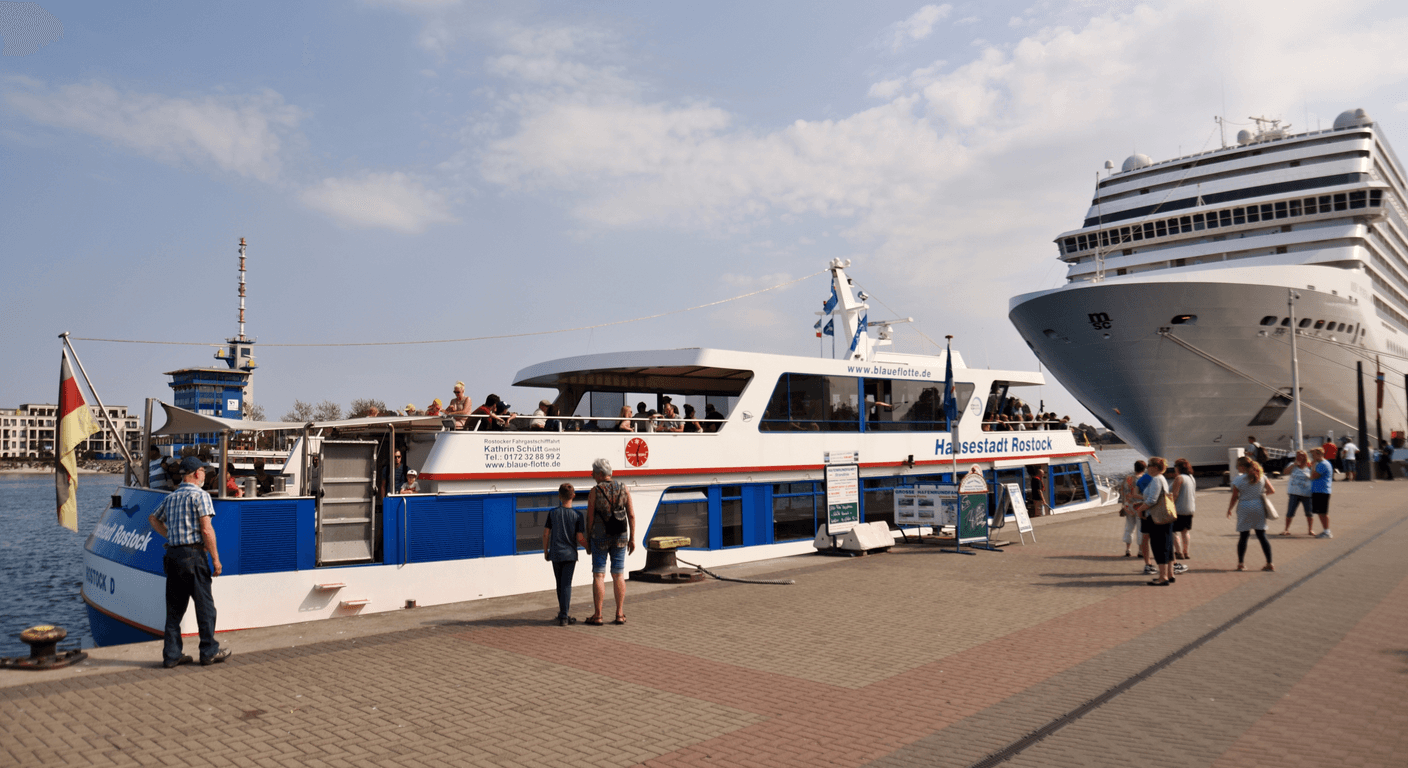
MSC Poesia is a mid-sized ocean liner (around 92,000 gross tonnes, 2,550 passengers) suited to over-50 Australians seeking a European-style cruise experience. She operates seasonal itineraries that have included the Asia-Pacific region; check MSC Cruises Australia for current deployment. Mobility rating: Moderate — lifts throughout, some tender ports. Best months depend on itinerary; confirm current scheduling at msccruises.com/en-au. Fly-to-embarkation logistics from Melbourne, Sydney, Brisbane or Perth add meaningful pre-trip planning.
What kind of ship is MSC Poesia, and who does she suit?
MSC Poesia entered service in 2008 and sits in what the industry calls the mid-size bracket — roughly 92,000 gross tonnes, capacity around 2,550 passengers at double occupancy. That puts her well above a boutique expedition vessel but meaningfully smaller than the 5,000-passenger floating resorts that dominate the brochures. For travellers who find those giants exhausting — the sheer distances between decks, the queuing, the noise — Poesia's scale can feel like a relief.
Her design is European in sensibility: think marble foyers, a multi-deck atrium, formal dining rooms with assigned seating as an option, and a general atmosphere that leans toward the Italian-Mediterranean aesthetic MSC has built its brand around. She's not a party ship. The entertainment is varied without being relentless, and the demographic on board tends to skew older than on, say, a Royal Caribbean mega-ship. That matters when you're choosing a ship.
For the Victorian-based solo traveller or couple who's done the domestic coastal cruise and wants something further afield, Poesia can represent a reasonable step up in ambition without requiring you to fly to Southampton. Whether she's currently deployed on itineraries accessible to Australians is the critical question — and that changes season to season. Check mscruises.com/en-au for current routing before any other planning begins.
Cabin categories on MSC Poesia: what to know before you choose
Poesia offers the standard cruise-industry hierarchy: Interior, Ocean View, Balcony, and Suite grades. For over-50 travellers, a few things matter more than the brochure hierarchy suggests. Interior cabins are genuinely compact — fine for a solo traveller who spends most waking hours elsewhere on the ship, but potentially claustrophobic for a couple on a 14-night itinerary. If the budget allows, the step to an ocean-view or balcony cabin is worth it for longer sailings.
Balcony cabins on Poesia are a practical choice for anyone who values natural light and a place to sit quietly with a coffee at 6 a.m. without waking a cabin-mate or navigating a corridor. The balconies are not large — two chairs and a small table is the realistic picture — but they change the character of a sea day noticeably. Ask specifically about cabin location when booking: midship cabins on lower decks experience less motion in choppy conditions, which matters if you're susceptible to seasickness.
Accessible cabins exist across multiple categories and are designed for wheelchair users and passengers with mobility aids. MSC's official site lists accessible cabin specifications; confirm these directly with MSC Cruises Australia or your travel agent, because the details — turning radius, bathroom rail configuration, shower type — are specific enough to warrant a phone call rather than a web assumption. The number of accessible cabins is limited; book well ahead if this applies to you.
The honest picture on solo traveller pricing
MSC Cruises does apply a single supplement on solo cabin occupancy — historically in the range of 50 to 100 per cent of the per-person twin-share fare, depending on the cabin category and sailing. That's an industry-wide reality, not unique to MSC, but it's still worth naming plainly: a solo traveller in a balcony cabin can end up paying roughly what a couple pays to share the same space. That stings.
MSC has, at various times, offered solo-specific promotions that reduce or waive the single supplement on selected sailings and cabin grades. These are worth hunting for — sign up for MSC's Australian newsletter or ask a cruise specialist to flag them. Cruise Traveller and iCruise both have staff who track these offers. Whether a share-match programme (where solo travellers are paired with a same-gender stranger) is available on specific Poesia sailings is something to confirm directly with MSC; it's not a standing feature on all itineraries.
The blunt editorial position here: operators that charge a 100 per cent single supplement are penalising solo mature travellers, and it's worth saying so. A 50 per cent supplement is more defensible. If Poesia's current solo pricing feels punishing on a particular sailing, compare it against lines like Saga Cruises or Viking, which have made solo-friendly pricing a deliberate part of their offer to the over-50 market.
Dining on board: what the European style actually means in practice
MSC Poesia has a main dining room with two sittings — early (around 6:00–6:30 p.m.) and late (around 8:30 p.m.) — plus a buffet restaurant (the Sahara Café, open most of the day), a number of speciality restaurants at additional charge, and a pool-deck grill for casual lunches. The main dining room is the social spine of the ship. Assigned seating with a fixed table for the voyage is the default on many MSC sailings, which some over-50 travellers love (you get to know your table companions across a fortnight) and others find constraining.
The cuisine reflects MSC's Italian ownership — pasta, risotto and Mediterranean flavours are done well. The buffet is substantial, international in range and perfectly serviceable. The speciality restaurants (a steakhouse, an Asian option on some MSC ships) carry surcharges of roughly $30–$60 AUD per person; confirm what's available on Poesia's current configuration. Drinks packages are sold separately and can add meaningfully to the daily cost — read the inclusions carefully before assuming anything is covered.
For a solo diner, the main dining room with assigned seating can be either a social pleasure or an awkward stretch, depending on who you're seated with. The buffet gives you the freedom to eat alone without theatre. Some solo travellers on MSC itineraries report being seated at tables with other solo passengers, which the dining staff often arrange thoughtfully — worth requesting at the maitre d' desk on embarkation day.
What does a typical day on MSC Poesia actually look like?
Sea days run at a pace you set yourself, which is part of the appeal. The pool deck is active from around 9 a.m.; the gym opens early, typically 7:00 a.m.; the buffet from around 6:30 a.m. for early risers. Lectures, cooking demonstrations, trivia and deck games fill the mid-morning. The theatre shows run in two sessions — early evening around 7:00 p.m. and again around 9:30 p.m. — so you're not locked into a late night if you'd rather not be.
Port days follow a different rhythm. The ship typically docks or anchors between 8:00 and 9:00 a.m. MSC shore excursions depart in waves, with the first buses leaving as early as 8:30 a.m. A typical half-day excursion returns to the ship by 1:00–1:30 p.m.; full-day excursions by 4:30–5:00 p.m., with all-aboard usually an hour before sailing. That gap between 'scheduled return' and 'all-aboard' is your buffer — don't rely on it entirely, but it exists. Independent travellers can go ashore once the gangway is open, usually by 9:00–9:30 a.m.
Tender ports are a different matter. When the ship anchors offshore and passengers transfer to shore by small launch, the process adds 20–40 minutes each way and requires stepping across a gap between the ship's platform and the tender — not difficult for most people, but genuinely challenging if balance or lower-limb mobility is compromised. MSC crew assist, but the motion of the tender and the step are real considerations. On tender-port days, check the daily programme the night before: there's often a wheelchair or limited-mobility priority boarding arrangement, but you need to register for it in advance at the guest services desk.
Getting to the ship: fly-to-port logistics from Australian cities
This is where the planning earns its keep. If Poesia is sailing from, say, Singapore or a South-East Asian port, a Melbourne traveller is looking at a direct flight of around 7–8 hours to Singapore, or longer with a stopover depending on the embarkation port. From Perth the flight to Singapore is closer to 5 hours. Brisbane and Sydney sit in between. These aren't punishing journeys, but they're not trivial either — particularly for a solo traveller managing luggage, transfers and jet-lag recovery alone.
Build in at least one night — ideally two — at the embarkation port before boarding. This is not optional padding; it's the difference between arriving on the ship exhausted and irritable and arriving ready to enjoy the first sea day. A decent hotel near the cruise terminal in Singapore, for instance, runs around $180–$280 AUD a night depending on the area and season — budget for it. Pre-book your transfer from the airport to the hotel and from the hotel to the cruise terminal; solo travellers managing luggage in an unfamiliar port city have enough to think about without improvising transport.
Travel insurance is non-negotiable, and for over-50 travellers with any pre-existing conditions, the policy details matter enormously. Confirm that your insurer covers emergency medical evacuation from a ship at sea — not all policies include this, and the cost of a medevac without cover is catastrophic. Smartraveller (smartraveller.gov.au) is the right starting point for destination-specific advisories for any port on the itinerary.
Accessibility, healthcare and practical realities aboard
MSC Poesia has lifts serving all passenger decks, which makes moving around the ship manageable for travellers who can't do stairs. The corridors are wide enough for a walking frame or manual wheelchair. The pool deck has some steps and raised thresholds in places — worth a reconnaissance walk on embarkation day before you commit to a route. The ship's medical centre is staffed 24 hours and can handle most acute situations; serious medical emergencies may require evacuation to the nearest port facility, which is why insurance matters.
Hearing loop systems and visual announcements are available in some public areas; confirm specifics with MSC Cruises if this is relevant. The daily programme — delivered to your cabin each evening — is in multiple languages including English. Crew communication in English is generally reliable across all departments, though the ship's international crew mix means accents vary.
For travellers managing medications, keep everything in carry-on luggage during the fly-to-port journey, with a doctor's letter for anything that might raise questions at customs. Bring more than you need — running short of a critical medication in a foreign port is a solvable problem, but a stressful one. Some Australian Seniors Card holders may be eligible for concessions on travel insurance premiums through certain state-based schemes; check with your state Seniors Card provider and compare policies that specifically accommodate cruise travel.
Quick planning guide
| Ideal pace | Sea days built in; not a port-a-day sprint |
|---|---|
| Best months | Itinerary-dependent — confirm current deployment with MSC Cruises Australia |
| Suggested stay | 7–14 nights depending on itinerary |
| Mobility level | Moderate — lifts throughout the ship; some tender-port transfers require boarding a small launch |
| Cost level | Around $150–$350+ AUD per person per night indicative, depending on cabin grade, season and inclusions — confirm with MSC Cruises |
| Comfort level | Contemporary European-style; comfortable rather than ultra-luxe |
| Best for | Solo travellers, couples, culturally curious over-50s who want a European cruise atmosphere without flying to the Mediterranean |
| Main planning consideration | Single supplement policy, fly-to-port logistics from Australian cities, travel insurance with pre-existing conditions |
Key takeaways
- MSC Poesia carries around 2,550 passengers — mid-sized by today's standards, which suits over-50 travellers who find mega-ships exhausting.
- Single supplements on MSC sailings can reach 100 per cent of the twin-share per-person fare; compare solo-specific promotions before booking.
- Tender-port transfers require stepping between the ship and a small launch — register for priority boarding assistance at guest services the night before if balance or mobility is a concern.
- Build at least one, preferably two, nights at the embarkation port before boarding to absorb the flight from Australia before the cruise begins.
- Travel insurance covering emergency medical evacuation from a ship at sea is essential, not optional, for Australian over-50 cruisers.
- Confirm all current deck plans, cabin specifications, itineraries and pricing directly with MSC Cruises Australia at mscruises.com/en-au — fleet deployment changes between seasons.
Recommended partners and links
Indicative prices only — always confirm with the operator before booking.
Frequently asked questions
Does MSC Poesia sail from Australian ports?
MSC Poesia's deployment changes each season. She has operated Asia-Pacific itineraries that are accessible to Australians, but embarkation ports vary — Singapore and other South-East Asian ports have featured. Check mscruises.com/en-au for current and upcoming itineraries relevant to Australian travellers, as the ship may not be sailing from an Australian homeport in every season.
What is the single supplement on MSC Poesia for a solo traveller?
MSC Cruises applies a single supplement to solo cabin occupancy, historically ranging from 50 to 100 per cent of the per-person twin-share fare depending on the cabin grade and sailing. MSC occasionally offers promotions that reduce or waive this supplement on selected cabins and sailings. Confirm the current supplement for any specific sailing directly with MSC Cruises Australia or a cruise specialist before booking.
Is MSC Poesia suitable for passengers with limited mobility?
MSC Poesia has lifts serving all passenger decks, wide corridors and a number of accessible cabins designed for wheelchair users and passengers with mobility aids. Tender ports — where passengers transfer ashore by small launch — present a genuine physical challenge for those with balance or lower-limb issues. Confirm accessible cabin specifications and tender-port arrangements directly with MSC Cruises before booking.
What dining options are available on MSC Poesia?
MSC Poesia has a main dining room operating two sittings (early and late), a buffet restaurant open through most of the day, a pool-deck grill for casual meals, and speciality restaurants available at additional charge (roughly $30–$60 AUD per person, indicative — confirm current surcharges with MSC). Drinks are not included in standard fares; packages are available separately.
What travel insurance do Australian over-50 cruisers need for MSC Poesia?
Australian over-50 travellers cruising on MSC Poesia need a travel insurance policy that explicitly covers emergency medical evacuation from a ship at sea, pre-existing medical conditions (declared and accepted by the insurer), trip cancellation, and medical expenses at foreign ports. Check Smartraveller (smartraveller.gov.au) for destination advisories. Some state Seniors Card schemes offer concessions on travel insurance — check with your state provider.