For Australian travellers over 50, New Zealand suits those who want scenery, culture and moderate activity — best visited September to November or March to April, with a suggested 10–14 days. Fiji suits resort-based relaxation, best May to October, with 7–10 days ideal. Both are easy short-haul flights from eastern Australia (3–4 hours). New Zealand rates Moderate mobility; Fiji rates Easy. Solo travellers should check single supplements carefully on both Fiji resort packages and NZ escorted tours.
The honest starting point: what kind of traveller are you right now?
There's a version of this comparison that treats both destinations as interchangeable Pacific holidays and concludes with a shrug. That's not useful. New Zealand and Fiji ask genuinely different things of you — physically, temperamentally and logistically — and the right answer depends less on which destination is objectively better and more on which one matches how you travel at 69, or 63, or 57.
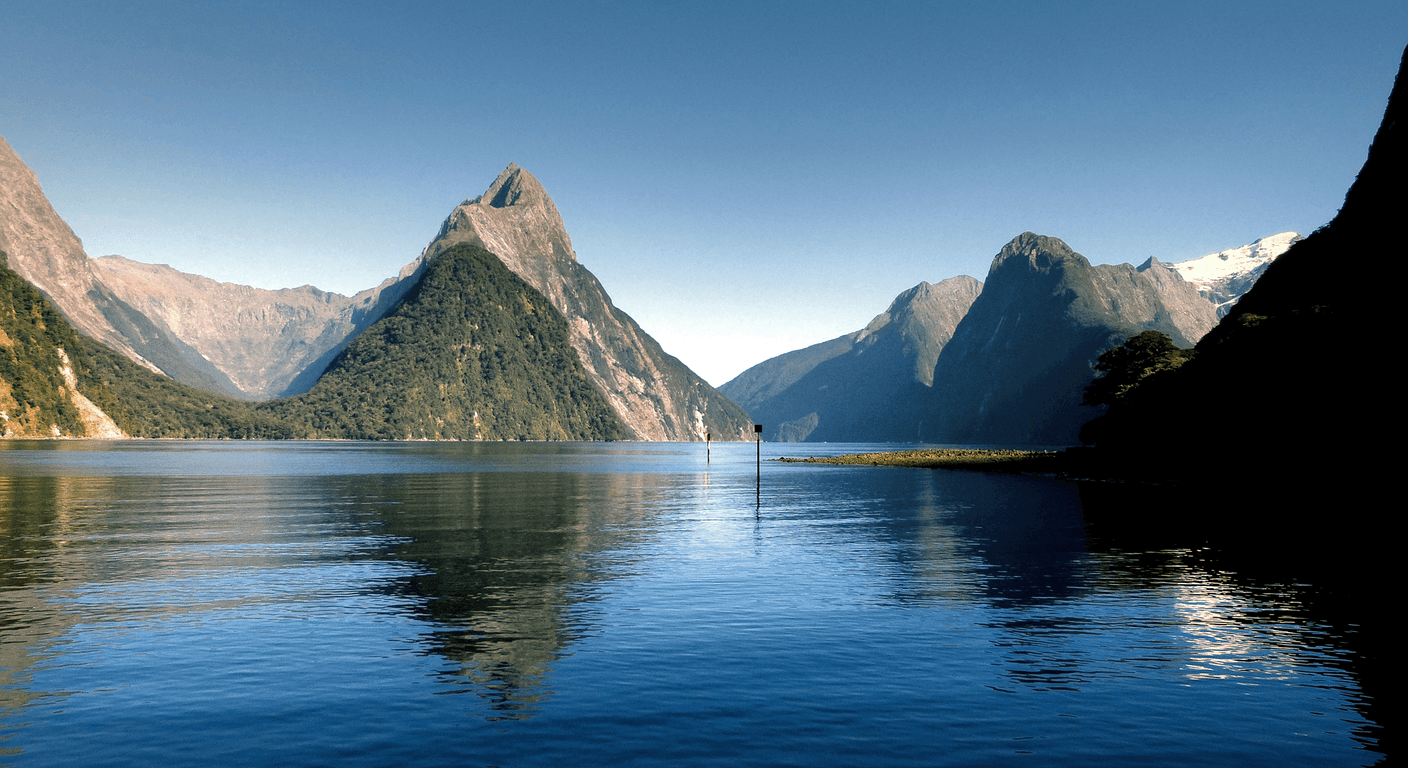
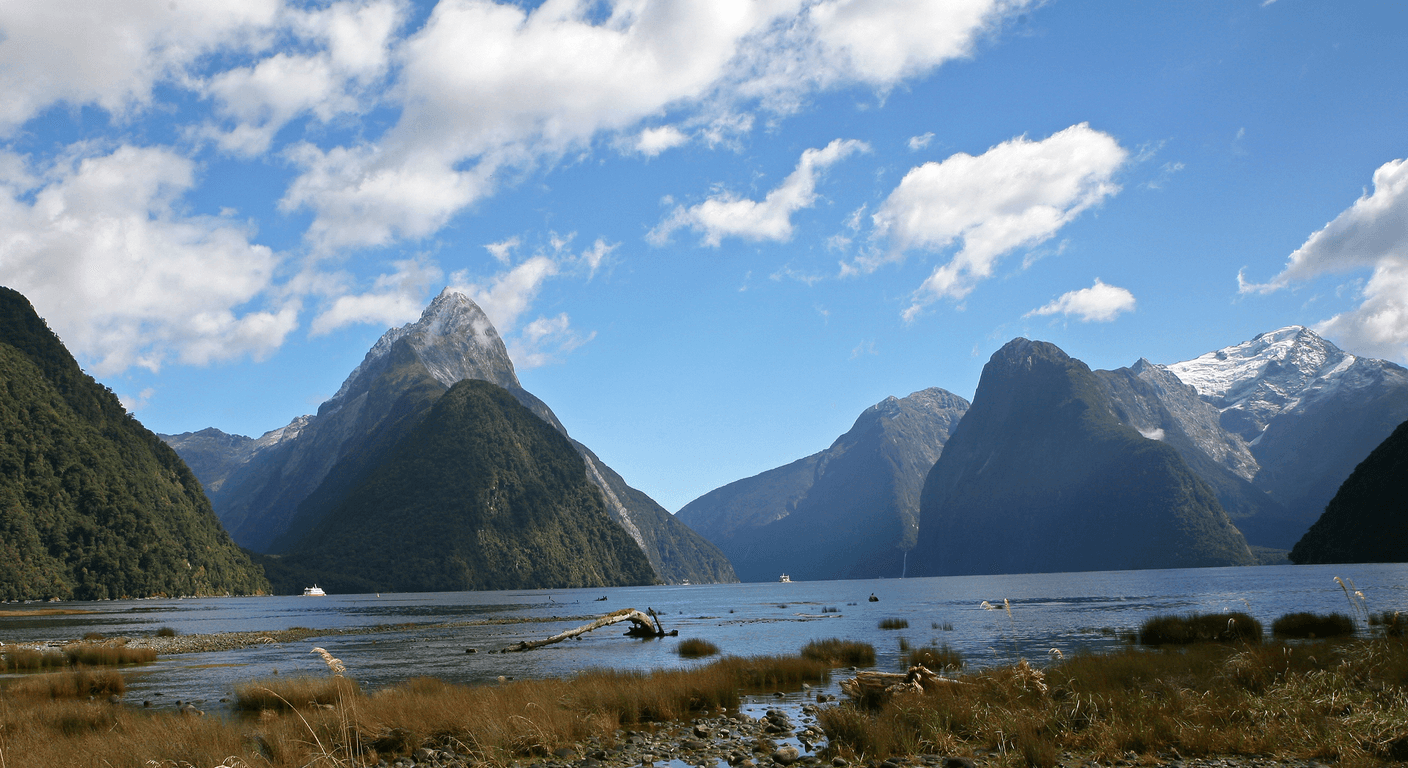
New Zealand rewards curiosity and a willingness to move. The scenery is extraordinary — the Marlborough Sounds at low tide, the thermal silica terraces at Wai-O-Tapu, the long straight road into Queenstown with the Remarkables sitting there — but you earn it. Coach transfers, uneven footpaths in historic towns, steep walking tracks even on the 'easy' options, and weather that changes its mind three times before lunch. It's not punishing, but it's not passive either.
Fiji, done properly, is the opposite. A good resort on the Coral Coast or the Mamanuca Islands asks almost nothing of you physically. You sit, you swim if the mood takes you, you eat well, and you let the pace slow to something you've probably forgotten. That's not a lesser form of travel — for many people over 50, particularly those managing fatigue, joint pain or the tail end of a stressful year, it's exactly the right choice. The trap is booking the wrong Fiji: a cheap package resort with a 45-minute transfer from Nadi, surrounded by families with young children and a swim-up bar that plays the same four songs on a loop. That version exists and it's worth avoiding.
Getting there: flight times, stopovers and the first day fatigue question
From Melbourne, Auckland is roughly three hours and fifteen minutes direct. Sydney to Auckland is about three hours. Brisbane to Auckland runs around three hours thirty. These are easy numbers — you board, you eat something, you land before you've properly settled. The time zone difference is two to three hours ahead of AEST depending on daylight saving, which is gentle enough that most travellers don't need a dedicated recovery day, though building one in is always the sensible move rather than the cautious one.
Fiji is even closer. Melbourne to Nadi is around four hours; Sydney to Nadi is about three and a half. The time zone is two hours behind Sydney, which means you can arrive in the early afternoon, clear customs, and be sitting on a resort terrace with a cold Fiji Bitter before the sun drops. Jet lag is effectively a non-issue in either direction. That said, arriving tired and then facing a 45-minute resort transfer on a narrow road in a minibus is nobody's ideal start — factor transfer time into your first-day planning and ask your operator exactly how long it takes door to door.
Perth-based travellers have a slightly different calculation. Perth to Auckland is around five and a half hours; Perth to Nadi around five hours. Still very manageable, and both routes operate with good frequency. Confirm current direct services and connections with your airline before booking — routing can change seasonally, and a stopover in Sydney or Brisbane adds time you may not want.
What does it actually cost? Indicative AUD ranges for both destinations
New Zealand has become noticeably more expensive for Australian visitors over the past several years. A mid-range escorted tour — the kind that handles all transfers, accommodation and most meals — runs roughly $4,500 to $8,000 per person for 10 to 14 days, depending on the operator and the standard of accommodation. Self-drive is cheaper in theory, around $3,500 to $5,500 for the same duration if you're disciplined, but the freedom costs you the logistics buffer that escorted travel provides. Accommodation on its own ranges from around $180 to $350 a night for a good quality hotel or motel; restaurants in Queenstown and Auckland will comfortably take $80 to $120 for two at dinner. All indicative — confirm current rates with operators.
Fiji can be cheaper or more expensive than New Zealand depending entirely on which resort you choose. A solid mid-range package — flights, seven nights at a four-star resort on the Coral Coast with breakfast and dinner included — runs roughly $3,000 to $5,500 per person from Melbourne or Sydney. Premium overwater bures on Denarau Island or the Yasawas push that figure considerably higher, sometimes to $8,000 or more per person for nine nights. The all-inclusive structure makes budgeting easier: once you're there, daily spend can be close to zero if you're not adding excursions or spa treatments. The card surcharge situation at some Fiji resorts is, frankly, annoying — some properties add 2 to 3 percent to credit card transactions, which adds up over a week. Carry some Fijian dollars for incidentals.
Both destinations have a shoulder-season pricing advantage worth knowing about. New Zealand in March and April — after the summer crowds and before the ski season builds — offers better availability and often lower accommodation rates without meaningful compromise on weather. Fiji's dry season runs May to October, which is also when demand peaks; the 'shoulder' of May and October can offer good value relative to the July–August peak. Travel insurance for both destinations, including cover for pre-existing conditions, adds a realistic $200 to $600 to the overall cost depending on age, health history and policy scope — do not skip this.
Mobility and pacing: what the itineraries don't always tell you
New Zealand's accessibility is uneven in ways that tour brochures gloss over. The big drawcards — Milford Sound, Rotorua's thermal parks, the Marlborough Sounds — are accessible, but 'accessible' often means a flat viewing platform rather than the full experience. Cobblestone streets in Arrowtown, steps into historic buildings in Napier and Wellington, and the gentle but real gradients in Queenstown's town centre are all worth knowing about before you go. The best-run escorted tours brief their guides well on which parts of any stop are genuinely manageable and which are optional — ask the operator specifically about this when you book, not when you're standing at the bottom of a staircase.
Fiji's resort environment is generally very accessible. Flat paths, golf carts between bungalows, beach access with gentle gradients, and pools designed for easy entry are standard at mid-range and above. The challenge is reef snorkelling or boat-based excursions, which require a modest level of physical confidence — boarding a small vessel from a jetty, managing a short ladder back on board. None of this is difficult, but if you have shoulder, knee or balance concerns, ask the resort or tour desk before committing to a specific excursion.
One practical note for New Zealand that doesn't appear prominently enough: long coach days. A South Island loop from Christchurch to Queenstown via the West Coast can involve six-to-eight-hour driving days, broken by stops but still demanding on the lower back and knees. The better operators keep coach segments under four hours and schedule genuine rest stops — not just a fuel station — every ninety minutes. Ask for the daily schedule in writing before you book, not after.
The shape of a day: NZ escorted tour vs Fiji resort day
On a typical New Zealand escorted tour day, the coach departs around 8:00 or 8:30. Breakfast is usually at 7:00, which means you're up by 6:30 if you want it unhurried. By 9:30 or 9:45 you're at the first stop — a scenic lookout, a heritage site, a winery. That stop runs roughly an hour, sometimes ninety minutes. There's usually a comfort break built in, though the quality of facilities varies considerably between a roadside rest area and a proper visitor centre. Lunch is typically 12:30 to 1:30, often at a local café or hotel dining room; some tours include it, others don't. The afternoon stop runs two to three hours. You're back at your accommodation by 4:30 to 5:00. Dinner is at 7:00 on a group tour, which can feel early or late depending on your habits. The third or fourth heritage church of the day is almost always skippable — any decent guide will tell you so, and the town's main street or a nearby café is a perfectly good alternative. If you need to opt out of a walking section, say so at the morning briefing rather than halfway through.
A Fiji resort day has no schedule unless you create one. Breakfast runs from roughly 7:00 to 10:00. The reef snorkelling boat typically departs around 9:00 or 9:30 and returns by noon. Cultural performances are usually evening events, starting around 7:00 or 7:30 after dinner. The spa, if you're using it, books out quickly — reserve your slot the afternoon before, not the morning of. The gap between 2:00 and 5:00 on a Fiji afternoon is yours entirely, which is either the point or the problem depending on your temperament. Travellers who find unstructured time restorative will love it; those who find it restless should book a cooking class, a village visit or a day trip to a smaller island to break it up.
These are indicative patterns — individual operators vary. Ask your operator for the actual daily run sheet, including departure times and estimated durations, before you book. The answer tells you a great deal about how well the operator understands its own product.
Solo traveller's perspective vs a couple's perspective
A solo traveller's perspective — New Zealand escorted tours are genuinely well-suited to solo travel in structure: you're with a small group, meals are communal, and the social element is built in. The problem is the single supplement. On most escorted NZ tours, a solo traveller pays 20 to 40 percent above the per-person twin-share rate for a private room. On a $5,500 base price, that's an additional $1,100 to $2,200. Some operators offer a share-match programme — you're paired with another solo traveller of the same gender — which eliminates the supplement but requires flexibility and trust. A handful of operators run designated solo-departure dates where the supplement is waived or reduced; these sell out and aren't heavily advertised, so ask directly. Fiji resort packages can be even more punishing for solos: a resort priced at $400 a night per room becomes $400 per person for a couple and $400 total (or more, with a supplement) for a solo. Always ask whether the package price is per room or per person, and what the solo supplement is in dollar terms.
A couple's perspective — New Zealand works well for couples who've travelled together long enough to know each other's pace and can negotiate the 'I'd rather sit here' moment gracefully. Self-drive suits couples who prefer autonomy; escorted suits those who want the logistics handled. Fiji is almost purpose-built for couples: the resort environment rewards togetherness or comfortable separation in equal measure, and the all-inclusive structure removes the daily negotiation over where to eat and what it costs. The risk for couples who've never done a pure resort holiday is boredom by day four — if you're both the kind of people who need to be doing something, factor in at least two or three structured excursions.
Entry requirements, insurance and what to confirm before you book
Australian passport holders generally enter both New Zealand and Fiji without a visa for tourist visits, but 'generally' is doing a lot of work in that sentence. Entry rules, health requirements and electronic travel authority processes change, and the only source worth trusting is Smartraveller (smartraveller.gov.au) — DFAT's official advisory service. Check both the destination country's entry requirements and any transit country requirements if your routing involves a stop. Do this within a few weeks of booking and again within a week of departure.
Travel insurance for travellers over 50 with any pre-existing conditions requires more attention than the standard comparison-site search. Policies vary enormously in what they cover, at what age, and with what exclusions for conditions declared or undeclared. The key question to ask any insurer: does this policy cover emergency medical evacuation, and does it cover my declared pre-existing condition for the full duration of the trip? For New Zealand, evacuation costs are less of a concern given the country's healthcare system; for Fiji, medical facilities outside Suva and Lautoka are limited, and evacuation to Australia is a real possibility if something serious occurs. Budget accordingly and read the product disclosure statement rather than the summary page.
Victorian residents should check whether their Seniors Card carries any relevant travel discounts — some tour operators offer a small reduction for Seniors Card holders, and it's worth asking. For both destinations, book through a licensed Australian travel agent or directly with an operator that holds an Australian Financial Services Licence or is ATAS-accredited; this matters if the operator fails or itineraries change. The Council of Australian Tour Operators (cato.travel) maintains an accreditation register worth checking.
Quick planning guide
| Ideal pace | NZ: active days balanced with rest stops; Fiji: resort-paced with optional day trips |
|---|---|
| Best months | NZ: Sep–Nov, Mar–Apr; Fiji: May–Oct (dry season) |
| Suggested stay | NZ: 10–14 days minimum; Fiji: 7–10 days |
| Mobility level | NZ: Moderate (uneven terrain, some steps); Fiji: Easy (flat resort grounds, accessible beaches) |
| Cost level | NZ: around $4,500–$8,000 per person all-in for 12 days; Fiji: around $3,000–$6,000 per person all-in for 9 days — indicative only, confirm with operators |
| Comfort level | Both: excellent mid-range to luxury options available |
| Best for | NZ: culturally curious solo travellers and couples who want scenery and gentle activity; Fiji: couples and solo travellers seeking warmth, water and unhurried days |
| Main planning consideration | Travel insurance covering pre-existing conditions is essential for both; single supplements can be steep on NZ tours and Fiji packages — ask about share-match options |
Key takeaways
- New Zealand suits active, curious over-50 travellers who want scenery and culture; Fiji suits those after genuine rest and warmth — they're not interchangeable.
- Both destinations are under five hours from Melbourne or Sydney, with minimal jet lag in either direction.
- Single supplements on NZ escorted tours and Fiji resort packages can add 20–40 percent to the solo traveller's cost — always ask for the dollar figure before booking.
- New Zealand's best shoulder seasons are September to November and March to April; Fiji's dry season runs May to October, with May and October offering better value.
- Long coach days on NZ tours and limited Fiji excursion variety are the two most common complaints from over-50 travellers — address both before you book, not after.
- Always confirm current entry requirements for both destinations on smartraveller.gov.au, and ensure travel insurance explicitly covers pre-existing conditions and medical evacuation.
Recommended partners and links
Indicative prices only — always confirm with the operator before booking.
Frequently asked questions
Is New Zealand or Fiji better for Australian travellers over 50?
It depends on the type of holiday you want. New Zealand suits travellers who enjoy scenery, culture and moderate activity; Fiji suits those who want warmth, relaxation and a resort-based pace. Both are short-haul flights from eastern Australia and well-suited to over-50 travellers when planned around your own mobility and pace.
How much does a New Zealand trip cost for an Australian over 50?
An escorted New Zealand tour of 10 to 14 days typically costs around $4,500 to $8,000 per person from Australia, including flights, accommodation and most meals. Self-drive holidays can be slightly cheaper but require more planning. Solo travellers should add a single supplement of roughly 20 to 40 percent unless the operator offers a share-match or solo-departure option. All figures are indicative — confirm current pricing with operators.
How much does a Fiji resort holiday cost for an Australian over 50?
A mid-range Fiji package of seven to nine nights including flights and accommodation typically costs around $3,000 to $5,500 per person from Melbourne or Sydney. Premium resorts and overwater bures push that figure significantly higher. Check whether the quoted price is per person or per room, and ask specifically about the solo supplement if travelling alone.
Do Australians need a visa for New Zealand or Fiji?
Australian passport holders generally do not need a visa for tourist visits to either New Zealand or Fiji, but entry requirements can change. Always check the current requirements on smartraveller.gov.au before booking and again close to your departure date.
Is Fiji suitable for over-50 travellers with mobility considerations?
Most mid-range and above Fiji resorts are very accessible, with flat pathways, pool access and limited need for strenuous walking. Boat-based excursions and reef snorkelling require a moderate level of physical confidence. Ask the resort or tour desk about specific accessibility before booking any excursion if you have joint, balance or mobility concerns.