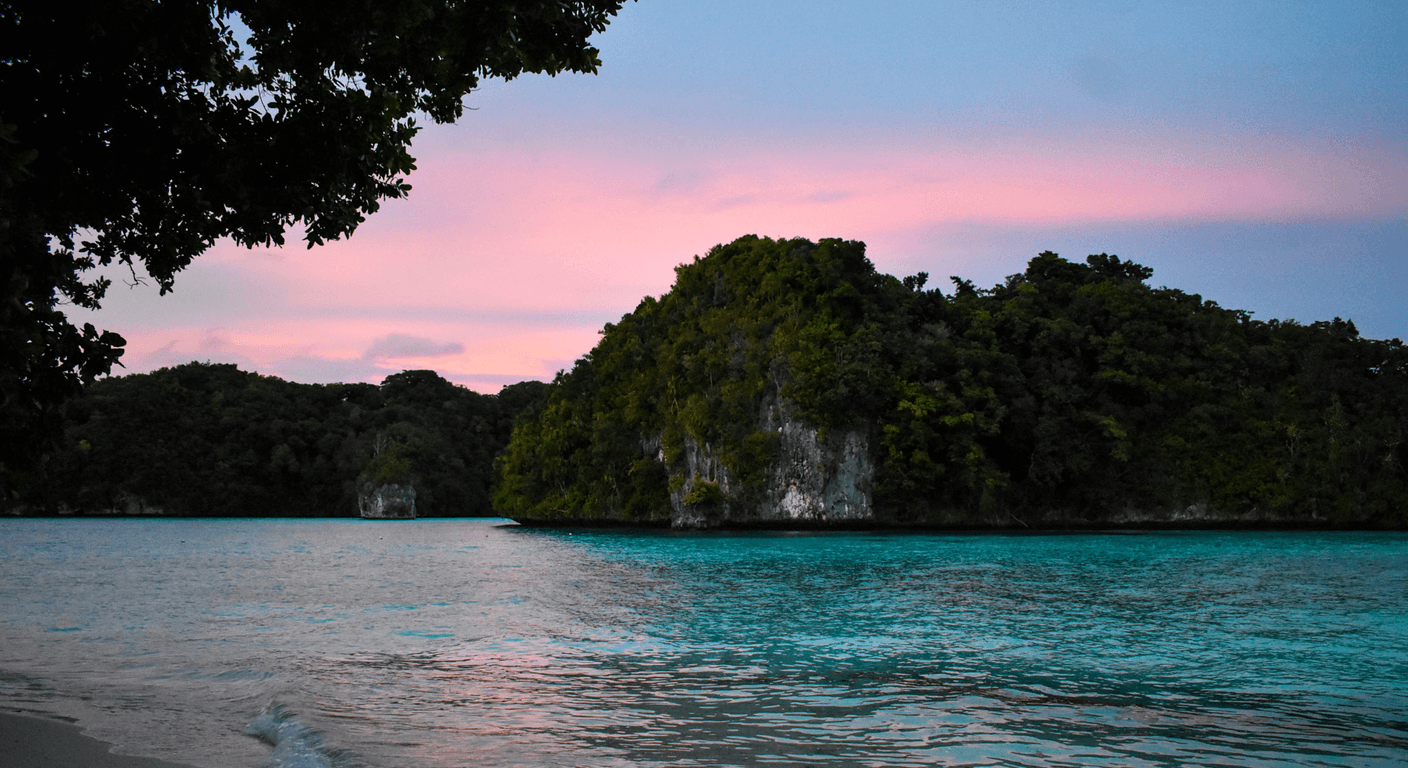
Palau suits over-50 Australian travellers best between October and April, when seas are calmer and visibility peaks. A stay of 10 to 14 days gives time to recover from the roughly 6–8 hour flight via Manila or Guam without rushing reef excursions. The defining experience is snorkelling or diving the Rock Islands — accessible to a wide range of fitness levels. Mobility rating: Moderate. Most Australians fly via Philippine Airlines through Manila or United Airlines via Guam; confirm current routes before booking.
Getting to Palau from Australia: the honest flight picture
There is no direct flight from any Australian city to Koror (Babeldaob/Koror Airport, IATA: ROR). Full stop. The two realistic routing options are via Manila with Philippine Airlines — typically connecting from Melbourne, Sydney, Brisbane or Perth — or via Guam with United Airlines, which suits east-coast travellers willing to accept an unusual Pacific routing. Total travel time, door to hotel lobby, sits at roughly 12 to 18 hours depending on the connection, which is manageable but not trivial.
From Melbourne (Tullamarine), expect a flight of around 8–9 hours to Manila, then a further 3.5 hours to Palau. Perth travellers often find the Manila connection shorter overall — around 6 hours to Manila — and the time zone shift less brutal. The jet lag is real but mild compared to Europe: Palau runs on UTC+9, the same as Japan Standard Time, which means a two-hour advance on Eastern Australian time in summer. A recovery night in Koror before your first boat excursion is not optional fussiness — it is just sensible planning.
Solo travellers should know that Palau's small tourism infrastructure means most flights into Koror have limited seat inventory, particularly during peak season (December to March). Book early. And yes, confirm all routes and schedules directly with the airline — Pacific connections can change seasonally, and codeshare arrangements shift. Smartraveller's Palau advisory (smartraveller.gov.au) is worth reading before you go, primarily for the 'exercise normal safety precautions' current status and healthcare notes.
When to go: reading Palau's seasons honestly
Palau sits just north of the equator and has two broad seasons: a drier period from roughly October to April, and a wetter period from May to September, when tropical swells and rain can make boat excursions uncomfortable and visibility patchy. For over-50 travellers who are not chasing adrenaline, October to April is the clear answer — seas are generally calmer, dive sites more accessible, and the chance of a day cancelled due to weather drops significantly.
December to March is peak season. Koror will feel busier than its reputation suggests, and prices at the better resorts climb. November and April are the sweet spots: good conditions, lower prices, and a little more space on the boats. Avoid June through August unless you have no choice — the wet season in Palau does not mean constant rain, but swells can close access to the Rock Islands and Jellyfish Lake for days at a stretch, which is a significant problem when your itinerary has been carefully paced around those sites.
Water temperature sits between 27°C and 30°C year-round, so a 3mm wetsuit or rashie is all most snorkellers need. The sun here is intense even on overcast days — UV protection is not optional, and the Palau Pledge that visitors sign on arrival includes a commitment to use reef-safe sunscreen only. Zinc-oxide-based products are available in Koror but bring your own to be safe.
Snorkelling versus diving: what actually works for different fitness levels
Here is the good news that does not get said often enough: Palau's most celebrated marine environments are accessible to snorkellers. Jellyfish Lake — the experience that appears in every Palau photograph ever taken — is snorkel-only. No scuba gear is permitted. The lake is reached by a short but steep trail through jungle (around 10–15 minutes each way, uneven ground, some rope-assisted sections), and then you're floating among millions of golden jellyfish that have lost their sting. It is extraordinary. And you do not need to be a diver to see it.
The Rock Islands Southern Lagoon — a UNESCO World Heritage area — contains shallow reef systems that are perfectly suited to snorkelling, including Ngermeaus Island and the outer edges of German Channel where manta rays regularly pass through. A competent snorkeller in good health can access 80 per cent of what makes Palau worth the flight. For those with limited shoulder mobility or difficulty with fins, discuss this openly with your tour operator before departure — some operators carry full-face snorkel masks and can adapt entry points to suit.
For certified divers, Palau is justifiably famous. Blue Corner, Blue Hole, and the WWII wrecks in the lagoon (including the Iro Maru) are considered among the finest dives in the Pacific. These are not beginner sites — Blue Corner in particular involves strong current diving and a reef hook. Divers over 50 who have not dived in a while should complete a refresher dive on day one, which any reputable operator will recommend regardless of your log book. PADI and SSI certifications are recognised; bring your certification card and a recent dive medical if you have one.
Boat excursions and mobility: what nobody tells you before you book
Almost everything in Palau happens off a boat. That is the defining logistical reality of the destination, and it matters more than it sounds. Getting on and off a fibreglass day-boat — typically a 10–20 person open vessel — requires stepping down from a dock or beach, managing a ladder or a large stride entry into the water. For travellers with knee replacements, hip issues, or limited grip strength, this is worth discussing with your operator before you pay anything.
The better operators — Sam's Tours and Fish 'n Fins are the two most established — have guides who are experienced at assisting passengers and will not rush entries or exits. Ask specifically about boat ladder configuration and whether the vessel has a swim platform. Some boats have a rear platform at water level; others require a step-ladder entry from the gunwale. A concrete, specific question ('does your boat have a rear swim platform?') will get you a useful answer. A vague question about 'accessibility' often won't.
One boat excursion per day is the right pace for most over-50 travellers, particularly in the first few days. Morning tours typically leave Koror around 8am and return by 1pm or 2pm — use the afternoon for rest, a walk around Koror town, or the Belau National Museum (the oldest museum in Micronesia, modestly priced, genuinely interesting for the WWII and traditional bai history). Early starts are hard to avoid on the water — the light is best and the sites less crowded before 10am.
What does Palau actually cost? Realistic AUD figures
Palau is not a cheap destination. The US dollar is the currency, and the exchange rate against the AUD fluctuates — at the time of writing, rough parity is around AUD $1.50 to USD $1, but confirm current rates before you budget. Daily costs for a solo traveller in mid-range accommodation will run to roughly AUD $300–$450 all in: accommodation (around AUD $180–$280 per night for a clean, air-conditioned guesthouse or mid-range hotel in Koror), one boat tour per day (USD $130–$220, roughly AUD $195–$330), meals, and incidentals. The top-end resorts — Palau Royal Resort and the Palau Pacific Resort are the two most established — run to AUD $400–$600 per night and up. All figures are indicative; confirm current rates directly with operators.
There is also a Palau departure tax (included in most airline tickets but worth confirming), and the Pristine Paradise Palau environmental levy — around USD $100 — which was restructured in 2025 and is now collected on arrival. Budget for it. Meals in Koror are reasonable: a solid local lunch at a no-frills restaurant runs roughly USD $10–$18 (AUD $15–$27), and dinner at one of the better restaurants — Elilai is frequently recommended — comes in at around USD $30–$50 per person (AUD $45–$75) for two courses. Alcohol is available but pricey. Credit card surcharges are common (yes, even at the resorts — budget an extra 2–3 per cent or carry USD cash).
For solo travellers: the single supplement reality in Palau is more nuanced than on a European river cruise. Most accommodation is priced per room, not per person, so a solo traveller simply pays the room rate — no supplement, but also no saving. Day tours are priced per person, which is fair. The financial sting for solo travellers is that the room cost is fully absorbed by one person rather than two, making the nightly rate feel steep. Some Koror guesthouses — Carp Island Resort and the smaller family-run places — offer single-room rates that are genuinely lower. Ask.
A solo female traveller's perspective
Palau is one of the safer destinations in the Pacific for a woman travelling alone. Koror is a small town — population around 12,000 — and the tourism community is tight-knit. The dive operators and tour guides tend to be professional, English-speaking, and accustomed to international visitors. Walking in Koror during daylight is unremarkable. After dark, the town is quiet rather than dangerous — there simply isn't much happening.
Small-group day tours work well for solo travellers: you'll typically be on a boat with 8–16 other people, often a mix of nationalities, and the shared experience of floating through Jellyfish Lake or watching a manta cruise past at German Channel tends to generate easy conversation without any social effort. That said, Palau is not a party destination or a social hub — if the goal is to meet people and build a travel community, it is not the natural choice. If the goal is to be quietly amazed by the natural world and return to a comfortable room alone afterwards, it is close to perfect.
Healthcare is the one genuine concern for any solo traveller. Koror has a hospital — Belau National Hospital — and a hyperbaric chamber (critical for divers), but serious medical emergencies typically require medical evacuation to the Philippines or Guam. Travel insurance that covers medical evacuation and pre-existing conditions is not a formality here — it is the single most important thing to sort before departure. The Victorian Seniors Card does not carry travel insurance benefits, but members of Australian seniors organisations should check whether any group travel insurance options apply. The Australian Government's Smartraveller service (smartraveller.gov.au) allows you to register your trip details, which is worth doing for any solo international travel.
Practical planning: what to sort before you leave Victoria
Travel insurance is first, not last. Policies that cover snorkelling are standard; policies that cover scuba diving are not always — read the fine print, or call and ask directly. Pre-existing conditions coverage is the other variable that trips people up: some policies cover stable pre-existing conditions (defined as no change in medication or treatment in the preceding 6 or 12 months), others do not. Compare policies through an independent comparison site and confirm in writing what is covered. Budget around AUD $200–$400 for a two-week comprehensive policy with medical evacuation; it varies significantly by age and health history.
Visas: Australian passport holders can enter Palau visa-free for stays up to 30 days as a tourist. This has been consistent policy for several years, but always confirm current entry requirements with the Palau Embassy or the Palau Visitors Authority before booking, as requirements can change. Yellow fever vaccination is not required unless you are arriving from a yellow fever-endemic country. No other specific vaccinations are mandated, but a conversation with your GP or a travel medicine clinic (check traveldoctor.com.au for clinic locations across Victoria) is worthwhile — hepatitis A and B, typhoid, and ensuring tetanus is current are typically recommended.
Pack light but pack smart. Reef-safe sunscreen (zinc-based), a good rashie or 3mm wetsuit top, water shoes for rocky shore entries, and a dry bag for your phone and camera. A waterproof camera or a good underwater housing for your phone will repay itself on the first day in Jellyfish Lake. Medications: bring enough for the full trip plus a week's extra supply, stored across your carry-on and checked luggage. Palau's pharmacy options in Koror are limited. And if you wear prescription glasses, bring a spare pair — optometry is not a service you'll find locally.
Quick planning guide
| Ideal pace | Slow to moderate — one boat excursion per day maximum, with rest afternoons built in |
|---|---|
| Best months | October to April for calmer seas and lower swell; December to March is peak season |
| Suggested stay | 10 to 14 nights minimum |
| Mobility level | Moderate — boat entries and exits require some agility; shore-based options exist |
| Cost level | Mid to high — indicative AUD $250–$450 per person per night all-in; daily costs add up quickly |
| Comfort level | Good to excellent — Palau has a small but solid range of well-run resorts and guesthouses |
| Best for | Snorkellers, divers, nature lovers, solo women travellers comfortable with small-group tours |
| Main planning consideration | Travel insurance covering pre-existing conditions and water activities is non-negotiable; medical facilities in Koror are limited |
Key takeaways
- Palau has no direct flights from Australia — route via Manila (Philippine Airlines) or Guam (United Airlines), with total travel time of 12–18 hours.
- October to April offers the calmest seas and best snorkelling visibility; November and April are the quietest, most affordable shoulder months.
- Jellyfish Lake is snorkel-only and accessible without scuba certification — the trail is short but uneven, so sturdy footwear matters.
- Daily costs for a solo traveller in mid-range accommodation run roughly AUD $300–$450 all in; the US dollar is the local currency.
- Medical evacuation insurance is essential — Belau National Hospital covers routine care and has a hyperbaric chamber, but serious emergencies require evacuation to the Philippines or Guam.
- Solo travellers pay room rates (not per-person supplements) at most Palau accommodation, but the full room cost falls on one person — smaller guesthouses often offer better solo value.
Recommended partners and links
Indicative prices only — always confirm with the operator before booking.
Frequently asked questions
Do Australians need a visa to visit Palau?
Australian passport holders can enter Palau visa-free for tourist stays of up to 30 days. This has been consistent policy for several years, but confirm current entry requirements directly with the Palau Visitors Authority or the relevant embassy before booking, as requirements can change without notice.
Can you experience Palau's famous marine life without scuba diving?
Yes. Jellyfish Lake — one of Palau's most iconic sites — is snorkel-only; scuba gear is not permitted. The Rock Islands Southern Lagoon also contains shallow reef systems well suited to snorkelling, and manta rays can be observed at German Channel from the surface. A competent snorkeller in reasonable health can access the majority of what makes Palau remarkable.
What is the best time of year to visit Palau from Australia?
October to April offers the calmest sea conditions and best underwater visibility. December to March is peak season with higher prices; November and April are quieter and more affordable while still offering reliable conditions. The wet season from May to September brings swells that can close access to key sites for days at a time.
Is Palau safe for a solo female traveller?
Palau is generally considered safe for solo female travellers. Koror is a small, low-crime town, tour operators are professional and English-speaking, and small-group day tours provide natural social structure without requiring effort. The main precaution is comprehensive travel insurance including medical evacuation, as serious medical emergencies require evacuation to the Philippines or Guam.
How much does a Palau holiday cost in Australian dollars?
Indicative daily costs for a solo traveller in mid-range Koror accommodation run roughly AUD $300–$450 all in, covering accommodation (around AUD $180–$280 per night), one day tour (roughly AUD $195–$330), and meals. Return flights from Australian cities via Manila or Guam start from around AUD $1,400–$2,400. All figures are indicative — confirm current rates directly with operators and airlines, and factor in the Palau environmental levy of around USD $100 collected on arrival.
- Palau Visitors Authority — official tourism information
- Smartraveller — Australian Government Palau travel advisory
- Sam's Tours Palau — day tours and dive charters
- Fish 'n Fins Palau — diving and snorkelling operator
- Travel Doctor Australia — travel medicine clinics and vaccination advice
- Philippine Airlines — Manila routing information