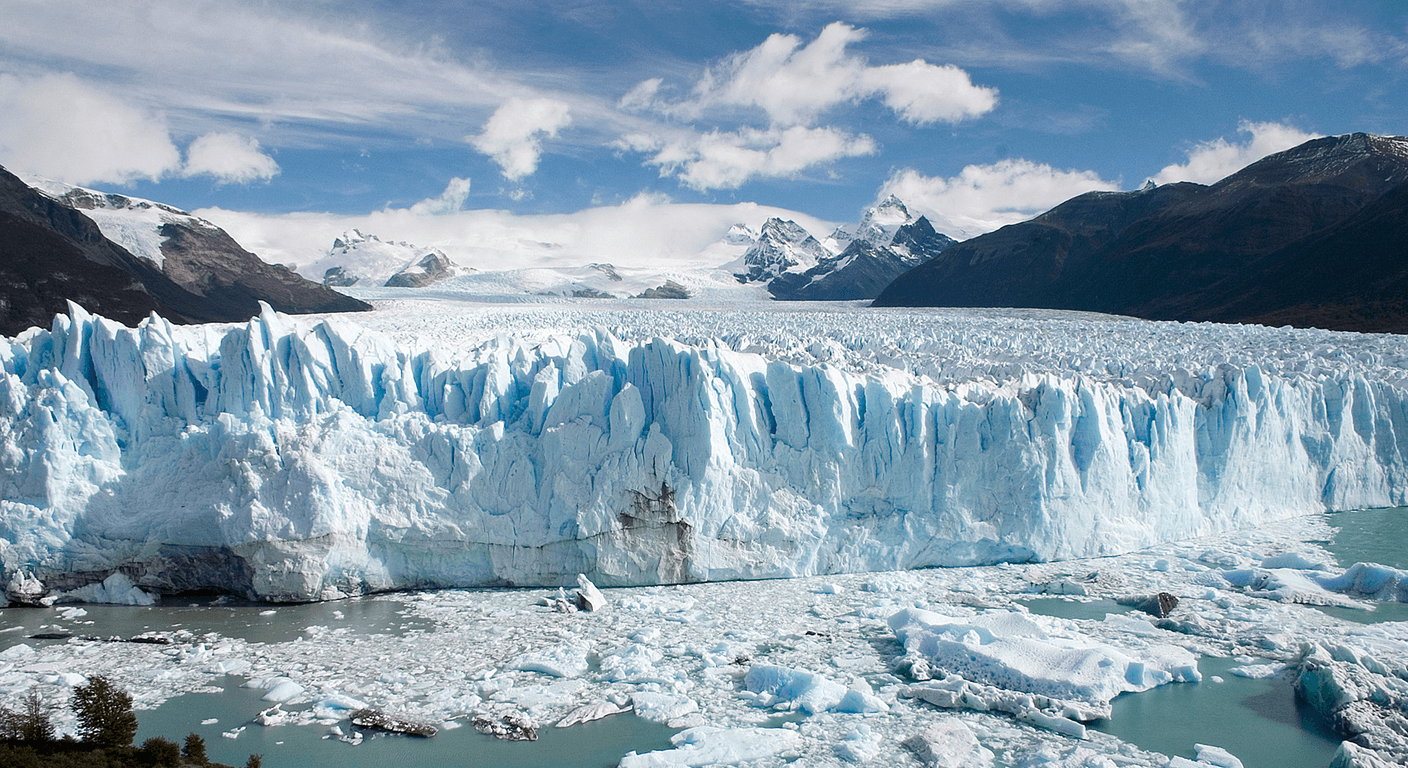
Perito Moreno Glacier, reached via El Calafate in Patagonia, is best visited on morning tours between October and February, before afternoon winds build. A half-day boardwalk visit, extended with the sheltered Safari Náutico boat cruise, showcases the glacier's ice calving. Mobility is moderate—upper platforms are flat with handrails, though lower sections involve stairs and lack wheelchair access. Reaching it from Australia requires a long-haul flight via Buenos Aires plus a domestic leg to El Calafate.
Why the Wind Is the First Thing to Understand About Patagonia
Patagonia's wind is not a travel cliché. It is a physical force that shapes every decision you make on the ground, and for travellers over 50 — particularly those with balance considerations, hearing aids, glasses, or any history of joint instability — it deserves more than a passing mention in a packing list. At Perito Moreno, sustained winds of 60 to 80 kilometres per hour are routine during the Southern Hemisphere spring and summer (October through February). Gusts can exceed 100 km/h. On the open sections of the boardwalk, that means being pushed sideways, having hats ripped away, and finding it genuinely difficult to hear a guide or companion standing beside you.
The wind follows a reliable daily pattern that experienced local operators know well. Mornings — broadly from opening time until around noon — are typically calmer. By early afternoon, the wind accelerates from the west across the lake and hits the viewing platforms with full force. This is not a reason to avoid the glacier. It is a reason to book morning departures, and to treat any tour that starts after midday with scepticism. A good tour operator will acknowledge this pattern without being asked. If yours doesn't, ask anyway.
The psychological dimension matters too. Standing near the edge of a viewing platform in strong wind, even with handrails, can be unsettling. There is no shame in stepping back from an exposed section, finding a sheltered corner, and watching from there. The glacier is vast — you do not need to be at the furthest railing to feel its scale. Solo travellers, in particular, benefit from letting a guide know their comfort level at the start of the tour, rather than pushing through an anxious moment alone.
What the Boardwalk System Actually Looks Like — and Which Sections Suit You
The viewing infrastructure at Perito Moreno is more sophisticated than most first-time visitors expect. Los Glaciares National Park has developed an extensive series of elevated boardwalks and platforms on the Península de Magallanes, arranged across several levels that descend toward the glacier face. The upper walkways are generally flat, wide, and fitted with solid metal handrails on both sides. These sections are accessible for most reasonably mobile travellers and are where the panoramic views of the glacier's full width are best appreciated.
Lower platforms involve staircases — some with moderate gradients, some steeper — and the surfaces can be slippery after rain or when frost lingers in the morning. The lowest viewpoints, closest to the waterline where calvings are most dramatic, require the most physical confidence. Travellers with knee replacements, hip concerns, or significant balance issues should be honest with themselves: the upper and mid-level platforms offer extraordinary views and are genuinely worth the visit without descending to the lowest levels. There is nothing inadequate about choosing the sections that suit your body.
Signage throughout the park is in Spanish, though guides on organised tours translate and direct throughout. The park does not currently offer wheelchair-accessible routes to the main boardwalk system, so travellers who use wheelchairs or walking frames should confirm the current state of access directly with the park administration before committing to this as the centrepiece of a trip. Walking poles are permitted and genuinely useful — not just for stability on uneven sections, but as a wind anchor on exposed platforms. Pack them in checked luggage and use them.
How to Pace a Day at the Glacier From El Calafate
El Calafate is the gateway town, sitting about 80 kilometres from the glacier along a sealed road that passes through open steppe. Most visitors either join an organised minivan tour from town or self-drive a rental car. For solo travellers and those unfamiliar with Argentine road conditions, the minivan tour is the more relaxed choice. Transfers typically depart between 8am and 9am, reach the park by 9:30am, allow three to five hours at the glacier (depending on the tour), and return to El Calafate by early afternoon. That rhythm is well-suited to the wind pattern.
Half-day tours are sufficient for the boardwalk experience and a boat cruise, and they leave time for a slow afternoon in El Calafate — a genuinely pleasant town with good restaurants, a thermal bath facility, and a perito moreno-themed everything, which is charming for about 24 hours. Full-day tours often include the boat Safari Náutico as well as extended boardwalk time, which is worth considering if the glacier is the primary reason for the trip. The boat cruise on Lago Argentino, which passes along the glacier's northern and southern faces, offers a dramatically different perspective and — critically — is far more sheltered from wind than the open platforms. For anyone anxious about wind exposure, this is the option to prioritise.
Self-driving is straightforward for confident drivers: the road is sealed, well-signed, and the park carpark is large. The advantage is flexibility — you can arrive at opening time and leave when you're ready. The disadvantage is that you're navigating a foreign country's road rules, potentially in a left-hand-drive vehicle if you've hired locally, without the buffer of a guide. For a 68-year-old travelling solo, the guided minivan removes several variables at once, and that's a reasonable trade-off.
The Long Haul From Australia: Flights, Jet Lag and Arriving Ready
There is no non-stop flight from Australia to Argentina. From Melbourne or Sydney, the most common routing is via Auckland, Santiago, or Los Angeles to Buenos Aires Ezeiza International Airport (EZE), with total journey times ranging from roughly 22 to 30 hours depending on connections and layover duration. Some routings via Dubai or Singapore add a Middle Eastern or Asian leg. This is a significant undertaking, and planning the arrival carefully makes a meaningful difference to how the rest of the trip feels.
A minimum of one full rest night in Buenos Aires before any onward travel is sensible, and two nights is better. Buenos Aires is a remarkable city in its own right — the Recoleta neighbourhood, San Telmo, and the city's café culture reward slow exploration and make the stop feel like part of the trip rather than a logistical inconvenience. The domestic flight from Buenos Aires to El Calafate (Aeropuerto Internacional Malvinas Argentinas) takes around three hours and is operated primarily by Aerolíneas Argentinas and LATAM. Book this in advance, particularly for October and November when demand is strong.
Indicative return airfares from Melbourne to Buenos Aires range from around AUD 2,200 to AUD 4,500 depending on airline, routing, and how far in advance you book — these figures are a rough guide only, and travellers should compare current fares directly. Travel insurance with coverage for pre-existing medical conditions is non-negotiable on a trip of this length and distance. Argentine medical facilities in El Calafate are limited; Buenos Aires has excellent private hospitals. Ensure your policy covers emergency evacuation.
Wind-Safety Packing: What Actually Works at the Glacier
The single most important item is a wind-proof outer layer — not water-resistant, not 'shower-proof', but genuinely wind-proof. A hardshell jacket with a snug hood and chin guard makes an immediate difference on the boardwalk. Underneath, thermal base layers and a mid-layer fleece follow standard cold-weather logic, but the outer shell is where Patagonia separates the comfortable from the miserable. Temperatures at the glacier can sit between 4°C and 14°C even in midsummer, and the wind chill drops the effective temperature considerably.
Hats require chin straps. This is not optional. A warm beanie without a strap will be airborne within minutes on an exposed platform. Sunglasses with a retainer cord serve a dual purpose: they stay on your face and protect eyes from wind-driven dust particles. For travellers who wear hearing aids, the wind noise at the glacier is overwhelming without appropriate covers or dampening settings — speak with your audiologist before departure about wind-noise management settings, and consider a small dry bag or case to protect devices during the visit. Glasses wearers will find anti-fog lenses genuinely useful given the temperature differential between sheltered and exposed sections.
Walking poles have already been mentioned, but they deserve emphasis again. The combination of uneven boardwalk sections, wet surfaces, and lateral wind gusts means that an extra two points of contact is not overcaution — it is good judgement. Many travellers who don't ordinarily use poles find them transformative in this environment. Lightweight trekking poles fold into checked luggage easily. Finally: stay away from platform edges in strong gusts, regardless of handrails. This is the park's own advice and worth taking seriously.
Accommodation and Costs in El Calafate: What to Expect
El Calafate has a well-developed tourist infrastructure built almost entirely around glacier visits. Hotels range from comfortable three-star properties on the main street (Avenida del Libertador) to higher-end lodges on the lake's edge. For solo travellers, mid-range hotels with private rooms and included breakfast offer good value and a social common area without the dormitory dynamic of budget accommodation. Indicative costs for a comfortable mid-range hotel room in El Calafate run from around AUD 150 to AUD 280 per night; luxury properties sit higher. These figures are indicative and Argentina's economic conditions mean prices fluctuate — always confirm current rates at booking.
Guided glacier day tours from El Calafate — including park entry, transfer, and boardwalk access — run indicatively from around AUD 80 to AUD 180 per person depending on inclusions. Tours that add the Safari Náutico boat cruise cost more. The mini-trekking option (walking on the glacier in crampons) is available for those who want it, but it involves a boat crossing and physical exertion that places it firmly in the 'active' rather than 'moderate' category — most over-50 travellers find the boardwalk and boat cruise more than satisfying. Dining in El Calafate is good: lamb is the regional speciality, and several restaurants on the main street serve it well.
A realistic budget for a ten-to-fourteen-night trip from Melbourne — covering return international airfares, Buenos Aires accommodation, domestic flights, El Calafate hotel, glacier tours, meals and incidentals — sits indicatively in the range of AUD 8,000 to AUD 14,000 per person depending on travel style and timing. This is not a cheap destination when combined with the long-haul airfare, but for a trip of this scale and rarity, most travellers who go find the investment proportionate to the experience.
The Boat Option: Lago Argentino as a Calmer Alternative View
For travellers who find the wind on the open boardwalk genuinely difficult, or who simply want a different relationship with the glacier's scale, the Safari Náutico boat cruise is the answer. Operated by Hielo y Aventura, the cruise departs from a jetty near the park and travels along the full length of the glacier's northern and southern faces, pausing close enough to the ice wall that the blue-green depths of the crevasses are visible. The boat provides significant shelter from the wind, seating is available throughout, and the perspective — looking up at a 60-metre ice cliff from water level — is entirely different from the boardwalk experience.
The cruise takes roughly one hour and can be combined with boardwalk time in a full-day itinerary, or taken as a standalone option if boardwalk access is limited. even on the boat, the wind across the lake can be brisk, and a wind-proof layer remains necessary. But the physical demands are minimal, the seating is comfortable, and the sense of scale is, if anything, more immediate than from the platforms above.
A calving event — when a section of the glacier's face breaks away and crashes into the lake — is not guaranteed on any visit. The glacier calves regularly, but timing is unpredictable. The sound alone, a deep crack followed by a roar that carries across the water, is worth waiting for. Patience and a morning visit give the best odds.
Quick planning guide
| Ideal pace | Slow-paced, with morning departures and unhurried transitions |
|---|---|
| Best months | October to February, booked as morning tours for calmer wind |
| Suggested stay | Half to full day at the glacier itself; 10–14 nights for the full trip from Melbourne |
| Mobility level | Moderate — flat, railed upper platforms suit most; lower stairs and no wheelchair access require more confidence |
| Cost level | Premium — long-haul airfares and Patagonia costs bring the full trip to roughly AUD 8,000–14,000 per person |
| Comfort level | Comfortable with proper wind-proof gear; exposed and harsh on the boardwalk without it |
| Best for | Over-50 and solo travellers who prefer a guided, well-paced itinerary over spontaneous exploring |
| Main planning consideration | Booking morning tours to avoid strong afternoon winds and allowing rest time for the long haul via Buenos Aires |
Key takeaways
- Morning tours (departing before 9am) consistently offer calmer wind conditions at Perito Moreno Glacier — this is the single most important booking decision.
- The upper and mid-level boardwalk platforms at Perito Moreno have solid handrails and suit most reasonably mobile travellers; lower sections involve stairs and require more physical confidence.
- A wind-proof hardshell jacket and a hat with a chin strap are non-negotiable items — standard water-resistant gear is not sufficient on the open platforms.
- The Safari Náutico boat cruise on Lago Argentino offers a dramatically different, more wind-sheltered view of the glacier and suits travellers with balance or mobility concerns.
- Allow at least one to two rest nights in Buenos Aires on arrival before flying on to El Calafate — the long haul from Australia demands a genuine recovery buffer.
- Travel insurance covering pre-existing conditions and emergency evacuation is essential for this trip; medical facilities in El Calafate are limited.
Recommended partners and links
Indicative prices only — always confirm with the operator before booking.
Frequently asked questions
Is Perito Moreno Glacier suitable for over-50 travellers with mobility concerns?
Yes, with realistic expectations. The upper and mid-level boardwalks have solid handrails and are largely flat, making them accessible for most reasonably mobile travellers. Lower platforms involve stairs and can be slippery. Travellers who use wheelchairs or walking frames should contact Los Glaciares National Park directly to confirm current accessibility before booking, as the main boardwalk system is not fully wheelchair accessible.
What time of year is best for visiting Perito Moreno if you want to avoid the worst wind?
September to November (early spring in the Southern Hemisphere) and March offer the best balance of manageable wind and reasonable weather. December through February is peak summer, peak crowds, and peak wind. July and August are colder and quieter but carry greater risk of access disruption from winter weather.
How long is the flight from Australia to El Calafate, and how should seniors plan for jet lag?
There are no direct flights from Australia to Argentina. Total travel time from Melbourne or Sydney to El Calafate — including a stopover in Auckland, Santiago, or Los Angeles, and a domestic connection in Buenos Aires — typically runs between 26 and 32 hours. Plan at least one, preferably two, full rest days in Buenos Aires before flying onward to El Calafate.
Can you visit Perito Moreno Glacier without a guided tour?
Yes. The sealed road from El Calafate to the park is straightforward, and self-driving is an option for confident drivers. However, for solo travellers or those unfamiliar with Argentine road conditions, an organised minivan tour with a guide removes several logistical variables and includes the transfer, park navigation, and commentary. Most El Calafate hotels and tour desks can book these directly.
What hearing aid or glasses precautions should travellers take at the glacier?
Wind noise at Perito Moreno can be overwhelming for hearing aid users. Consult your audiologist before travel about wind-noise management settings on your devices, and carry a small protective case or dry bag. Glasses wearers should use a retainer cord to prevent loss in gusts; anti-fog lenses help with the temperature changes between sheltered and exposed sections of the boardwalk.