Provence suits over-50 travellers who base themselves in flat Aix-en-Provence or Avignon and day-trip to hilltop villages rather than sleep in them. Mid-May to mid-June brings emerging lavender, manageable heat and lighter crowds, with a one-to-two week stay allowing time for markets, Roman ruins and the Luberon. Mobility is moderate, with some cobbled streets and uphill village lanes. The TGV from Paris reaches Avignon in under three hours, replacing a domestic flight entirely.
Getting There: The Long Haul and the Smart Second Leg
Flying from Melbourne or Sydney to Paris is a serious undertaking — roughly 22 to 24 hours in the air with at least one stopover, typically in Dubai, Singapore, Doha or Bangkok depending on the carrier. That's before you factor in airport transit time. Book a business or premium economy seat if your budget allows, and plan to arrive in Paris a full day before you intend to do anything. A night at an airport-adjacent hotel near Charles de Gaulle, a proper sleep, and a calm morning before boarding the TGV south is not an indulgence — it's the difference between arriving in Provence ready to walk a market and arriving depleted.
The TGV from Paris Gare de Lyon to Avignon TGV station takes around two hours and forty minutes; to Aix-en-Provence TGV (a few kilometres from the city centre, connected by shuttle bus) it's around three hours. Book through SNCF Connect well ahead for the best fares — indicative economy prices sit anywhere from AUD 80 to over AUD 200 depending on how early you book, though confirm current fares before relying on any figure. This single train journey replaces a domestic French flight, an airport security queue and a baggage carousel. For most travellers over 50, it's the superior choice in every respect.
Australians currently enter France visa-free for stays under 90 days within a 180-day period, but France is part of the Schengen Area and the EU's forthcoming ETIAS travel authorisation system for non-EU nationals — including Australians — is expected to apply when it launches. The system, fee-based and online, is separate from a visa but still required. Check the current status on smartraveller.gov.au and on the official EU ETIAS site before booking anything. Travel insurance that covers pre-existing medical conditions is non-negotiable for a trip of this length; compare policies carefully and declare everything.
Choosing Your Base: Aix or Avignon?
This is the most practical decision in planning a Provence trip, and the answer depends on your priorities. Aix-en-Provence is elegant, university-town lively without being loud, and organised around the Cours Mirabeau — a long, plane-tree-lined boulevard that is essentially flat and a genuine pleasure to walk. The old quarter fans out from here in a maze of pedestrian lanes. Yes, some of those lanes are cobbled, but the terrain is gentler than in many Provençal towns. Aix has excellent café culture, a daily market on the Place Richelme, and a deeper sense of local life than somewhere more obviously touristic.
Avignon has the drama of the Palais des Papes and the medieval walls, and it sits directly on the Rhône, which gives it a different character — more monumental, more visited, with a livelier evening scene. The walled centre is largely flat within the ramparts, though again, some streets are uneven underfoot. Avignon is arguably the better transport hub: buses and trains radiate outward to Arles, Nîmes and the Pont du Gard more conveniently than from Aix. For a solo traveller who wants easy access to the wider region without a hire car, Avignon has a slight edge.
A sensible approach for a fortnight: spend the first week based in Avignon to absorb the Roman and medieval sites to the west, then take the train to Aix and spend the second week exploring the Luberon villages and the coast to the south. Or simply commit to one and do it properly. Resist the temptation to move every two nights — the whole point of Provence is staying still enough to notice things.
Morning Markets: The Real Reason You're Here
Provence's markets are not a tourist attraction dressed up as local life — they are local life, and there's a meaningful difference. The Saturday market in Aix-en-Provence is one of the largest and most varied in the south: multiple squares fill with cheese, olives, lavender honey, cut flowers, fabric, and vegetables that look implausibly good. Arrive by eight-thirty and the light is still soft, the crowds are manageable, and the stallholders are still in the mood to talk. By eleven, it's shoulder-to-shoulder.
Arles has its Wednesday and Saturday markets, spilling along the Boulevard des Lices, and they carry a slightly rougher, more agricultural energy than Aix — in the best sense. L'Isle-sur-la-Sorgue, east of Avignon, is known across Europe for its Sunday antiques market; it's not a place to buy unless you're committed to shipping something home, but wandering it is one of the more pleasurable ways to spend a Sunday morning in France. The town itself is threaded with canals and water wheels, and the café terraces are civilised.
One practical note: markets are cash-heavy. Carry euros in small denominations, and know where the nearest ATM is before you get absorbed in the stalls. Many smaller stallholders don't take cards, and fumbling with a phone in a crowd is its own minor stress. A small, cross-body bag worn in front is the standard solo-traveller solution — sensible, not paranoid.
Roman Provence: Arles, Nîmes and the Pont du Gard
The Roman footprint in this part of France is so substantial that it recalibrates your sense of European history. Arles was a major Roman city — at its height, arguably more significant than Lyon — and the amphitheatre that sits at its centre is still used for events. You can walk its upper tiers, though the stone steps are steep and worn smooth, so take your time and use the handrails without embarrassment. The rest of the Roman monuments in Arles are compact and close together; a half-day of walking covers the amphitheatre, the theatre, the cryptoporticus and the Alyscamps burial grounds, with breaks built in.
The Pont du Gard, around 25 kilometres northeast of Nîmes, is one of those places where the scale of what you're looking at takes a moment to absorb. A three-tiered Roman aqueduct, nearly 50 metres high, built in the first century AD and still standing with most of its original stonework intact. The site itself is well-managed, with a modern visitor centre, good walking paths along the Gardon River, and areas to sit and simply look at the thing. The path across the lower tier is walkable but uneven in places; the upper tier is not generally open to general visitors. From Avignon, a combination of train to Nîmes and local bus or taxi gets you there, though a hire car makes the logistics simpler — confirm current transport options before you travel.
Nîmes itself is worth at least a half-day. The Maison Carrée — a Roman temple so well-preserved it looks slightly unreal — stands in the city centre, surrounded by cafés. The Roman arena in Nîmes is comparable to Arles and admission is indicatively around AUD 15–20; confirm current pricing. Neither city is as heavily visited as Avignon or Aix, which, on a warm Tuesday morning, can feel like a gift.
Hilltop Villages: Day-Trip Them, Don't Sleep in Them
Les Baux-de-Provence, Gordes, Roussillon, Ménerbes, Lacoste — these are the villages that fill the Provence section of every travel magazine, and they are genuinely striking. They're also, as a rule, built on rock, connected by narrow lanes, and surrounded by parking areas that require a walk uphill to reach the village entrance. Staying in one can be romantic in theory and tiring in practice, especially in July and August when the lanes are at capacity and the heat radiates off the stone.
The smarter approach for most travellers over 50 is to visit them in the cooler part of the day — early morning or late afternoon — from a flat base. Drive or take a tour to Gordes for the light at seven in the morning, when the village is almost empty and the Luberon spreads out below in the haze. Walk what you can, sit when you need to, and leave before the coaches arrive. Roussillon, with its ochre cliffs and rust-red buildings, is best in the late afternoon when the light turns the colour of the stone extraordinary. The ochre trail through the cliffs is a short walk, mostly on compacted earth, and is manageable for most travellers with reasonable mobility — though open sandals are a poor choice.
Les Baux has a dramatic medieval citadel at the top, with significant walking on uneven ground. The Carrières de Lumières — an immersive art projection show held in the old bauxite quarries just below the village — is a genuinely impressive experience and almost entirely accessible, with a flat floor and cool interior that is welcome on a hot afternoon. It runs seasonal programs; check the current exhibition and book tickets in advance at carrieres-lumieres.com.
Lavender: Timing, Locations and Managing Expectations
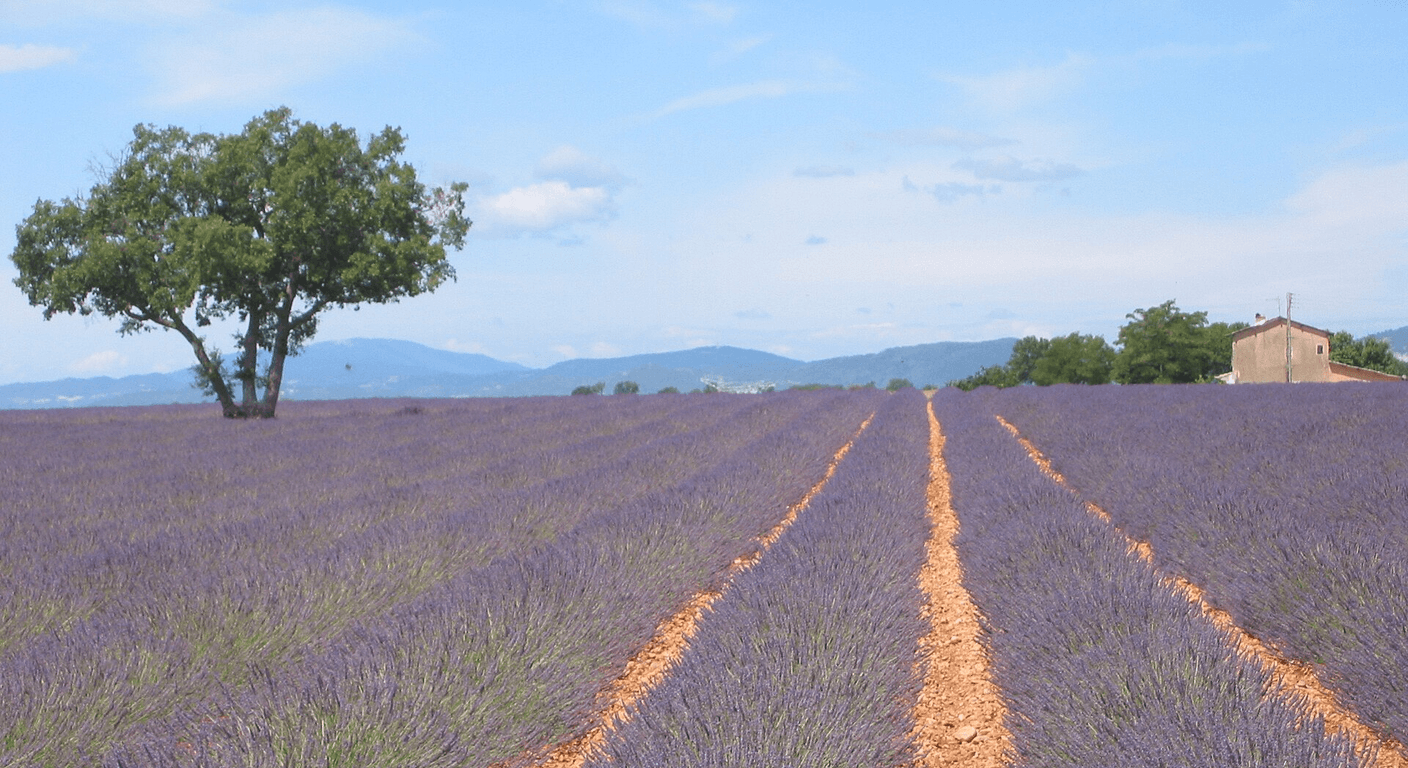
The lavender plateau of the Valensole, east of Manosque, and the fields around Sault and Sénanque Abbey are the images that sell Provence to the world. They are real — and they are also highly seasonal, heavily photographed, and dependent on a calendar that shifts by a week or two each year depending on rainfall and temperature. Peak bloom is typically late June to mid-July, with earlier colour in warmer years from mid-June. By late July, many fields have been harvested. If lavender is the primary reason for the trip, travel in mid-June and build flexibility into your itinerary.
The Abbaye Notre-Dame de Sénanque, the twelfth-century Cistercian abbey photographed with lavender in the foreground, is genuinely beautiful but receives a significant volume of visitors during bloom season. Go early. The abbey itself is a working monastery and visits are structured — check current access arrangements and any booking requirements via the abbey's official site (senanque.fr) before arriving. Valensole plateau is more expansive and less concentrated than the abbey approach, which makes it easier to find a quiet stretch of road and a field to stand in without a queue.
A word on the heat: July and August in inland Provence routinely reach 35°C and above, and some years push beyond 40°C. This is not comfortable walking weather for anyone, and the risk to older travellers is real. If you travel in peak summer, do your outdoor exploring before ten in the morning and after five in the afternoon. Carry water constantly. Book accommodation with air conditioning and confirm it actually works before you finalise. Mid-May to mid-June, or September to early October, are the more sensible windows for travellers who want to be outside and comfortable.
Practical Provence: Getting Around, Eating and Managing Costs
A hire car gives you the most freedom in Provence, but it's not the only option. From Avignon, a combination of regional trains (TER) and buses reaches Arles, Nîmes, Aix, and several Luberon towns. The Luberon villages themselves are poorly served by public transport, which is where organised day tours — bookable through local tourist offices — fill the gap usefully. Driving in France is straightforward for Australians once you adjust to the priority-to-the-right rule in many villages; GPS navigation on your phone is reliable throughout the region. Confirm current international driving permit requirements before you travel.
Food in Provence is one of the more reliable pleasures of southern France. A two-course lunch menu (the plat du jour with entrée or dessert) at a local restaurant is indicatively around AUD 20–35; a sit-down dinner at a mid-range restaurant more like AUD 50–80 per person with wine, though prices vary considerably. The local rosé — Provence produces roughly 40 per cent of France's rosé — is consistently good and priced reasonably by the glass or carafe. Markets are the most economical way to assemble a meal: a wedge of cheese, some olives, bread from the boulangerie and a peach from the market stall is not a compromise, it's the point.
Accommodation costs in Provence range widely. A well-located three-star hotel in Aix or Avignon is indicatively AUD 180–280 per night in shoulder season; boutique properties and chambres d'hôtes (B&Bs) vary enormously. Book the first and last nights before you leave Australia; a degree of flexibility in between allows you to respond to what you find. Confirm cancellation policies carefully — French accommodation providers vary in their terms. Overall, budget for Provence to cost more than, say, Portugal or the south of Italy at a comparable comfort level. It's worth it, but it's not a budget destination.
Quick planning guide
| Ideal pace | Slow-paced — one base, frequent day trips, no constant relocating |
|---|---|
| Best months | Mid-May to mid-June or September to early October; mid-June for lavender without peak heat |
| Suggested stay | One to two weeks |
| Mobility level | Moderate — flat town centres but cobbled lanes, uneven paths and uphill village access |
| Cost level | Premium — pricier than Portugal or southern Italy at a comparable comfort level |
| Comfort level | High — good hotels and cafés, though air conditioning and shade matter in summer |
| Best for | Solo travellers over 50 who prefer markets, history and unhurried village exploring |
| Main planning consideration | Choose a flat base (Aix or Avignon) and avoid inland Provence's peak summer heat for outdoor activity |
Key takeaways
- Base yourself in flat Aix-en-Provence or Avignon and day-trip to hilltop villages — don't stay in them.
- The TGV from Paris Gare de Lyon reaches Avignon in under three hours, eliminating the need for a domestic French flight.
- Mid-May to mid-June is the optimal window: lavender is emerging, temperatures are manageable and crowds are lighter than July.
- Check French entry requirements and ETIAS status on smartraveller.gov.au before booking — rules are expected to change.
- July and August heat in inland Provence regularly exceeds 35°C; plan all outdoor activity for early morning or late afternoon.
- The Roman sites at Arles and the Pont du Gard are among the most significant in Europe and require only moderate walking to appreciate fully.
Recommended partners and links
Indicative prices only — always confirm with the operator before booking.
Frequently asked questions
Do Australians need a visa to visit France in 2025–2026?
Australians currently enter France visa-free for stays under 90 days in any 180-day period. However, the EU's ETIAS pre-travel authorisation system for non-EU nationals, including Australians, is expected to come into operation in 2025–2026. ETIAS is a separate, fee-based online requirement — not a visa, but still mandatory when active. Check the current status at smartraveller.gov.au and confirm requirements before booking your trip.
Is Provence suitable for travellers with limited mobility?
Provence is Moderate for mobility. Flat city centres in Aix-en-Provence and Avignon are largely walkable with reasonable care, though some streets are cobbled or uneven. Hilltop villages such as Les Baux, Gordes and Roussillon involve significant gradients and rough stone surfaces — they are best visited as short day-trips with realistic expectations about how far you'll walk. Roman sites at Arles and the Pont du Gard have accessible areas but also uneven terrain. A walking stick or trekking poles are practical, not a concession.
When is the best time to see lavender in Provence?
Peak lavender bloom in Provence is typically late June to mid-July, though it varies by a week or two each year depending on weather. Some colour appears from mid-June in warmer years. By late July, most commercial fields have been harvested. If lavender is a priority, aim for mid-June and build some flexibility into your itinerary rather than committing to a single date.
Is it better to hire a car or use public transport in Provence?
Both work, depending on your itinerary. Avignon and Aix-en-Provence are well-connected by regional trains (TER) to Arles, Nîmes and each other. The Luberon hilltop villages — Gordes, Roussillon, Ménerbes — are poorly served by public transport and are most practicably reached by hire car or organised day tour from a tourist office. If you're comfortable driving in Europe and want flexibility, a hire car for part of the trip is worth considering. Confirm current international driving permit requirements before you travel.
How far is Provence from Paris, and how should you get there?
Avignon is roughly 700 kilometres south of Paris. The TGV high-speed train from Paris Gare de Lyon reaches Avignon TGV station in approximately two hours and forty minutes; Aix-en-Provence TGV takes around three hours. This is strongly preferable to a domestic flight for most travellers — faster city-to-city, less airport stress, and more comfortable. Book through SNCF Connect well in advance for the best fares, and confirm current pricing before relying on any indicative figure.
- Smartraveller — France travel advice (Australian Government)
- SNCF Connect — French national rail booking
- Avignon Tourisme — official tourist office
- Aix-en-Provence Tourism — official site
- Carrières de Lumières, Les Baux-de-Provence
- Abbaye Notre-Dame de Sénanque — official site
- Pont du Gard — official visitor site