The Middle Rhine Gorge, a 65-kilometre UNESCO stretch between Koblenz and Rüdesheim, is best visited between April and October, when KD Rhine passenger boats run alongside regional trains. A four-day itinerary from a Frankfurt or Cologne base suits the pace well, taking in castle-crowned cliffs, slate-roofed villages and steep Riesling vineyards. Mobility demands are low, since trains and boats handle the scenery, though cobbled town centres and occasional steep gangways call for sturdy, flat-soled shoes.
Why the Rhine Gorge works so well for travellers over 50
There's a particular pleasure in scenery that comes to you. On the Rhine between Koblenz and Rüdesheim, the castles appear on the cliffs above whether you're watching from a train window or leaning on the rail of a slow passenger boat. Nobody asks you to climb anything. The river does the organising.
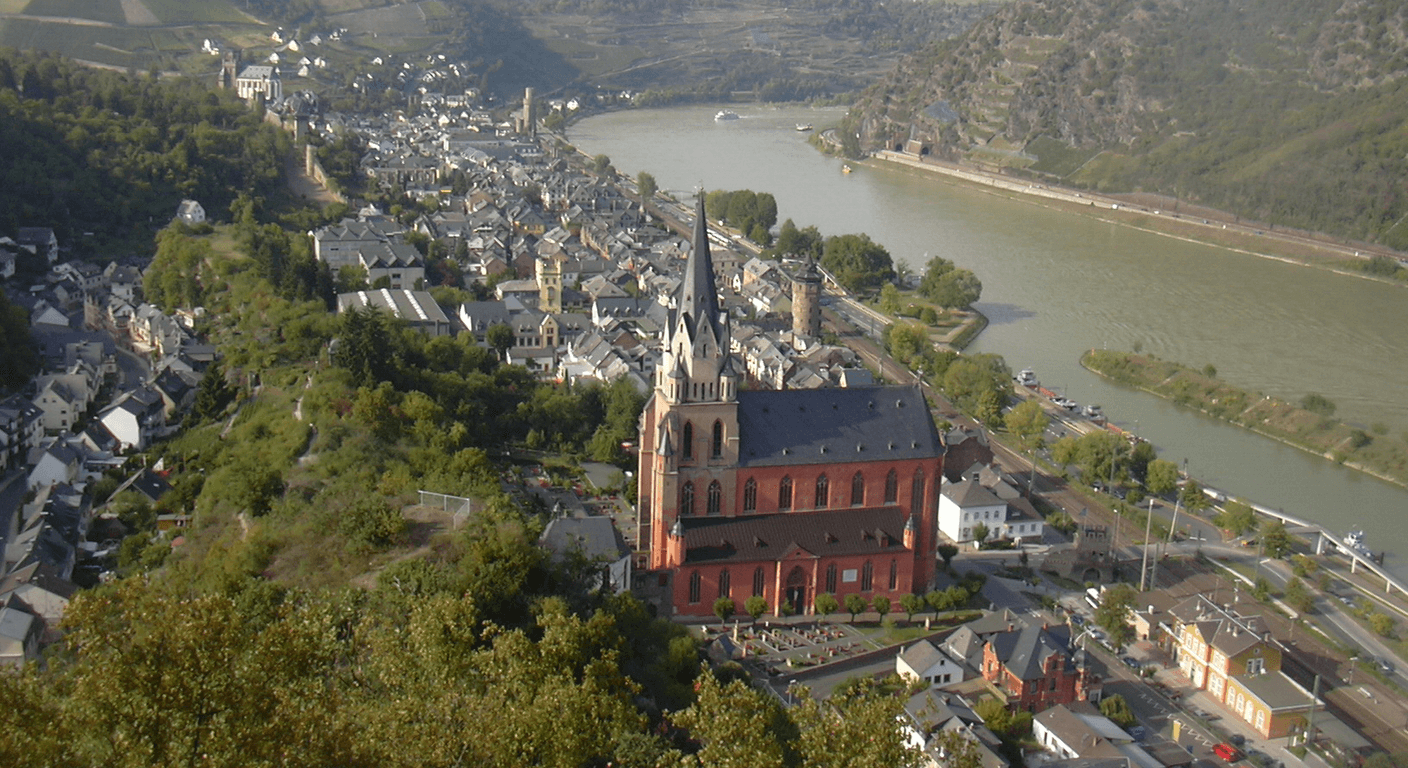
The gorge covers roughly 65 kilometres of the Middle Rhine, a UNESCO World Heritage corridor since 2002. In that stretch you'll pass Marksburg Castle — the only hilltop Rhine castle never destroyed — the theatrical twin fortresses of Sterrenberg and Liebenstein, the infamous Lorelei Rock, and the vine-draped slopes that produce the Riesling Germany actually keeps for itself. It's a lot of history in a short distance, which suits an unhurried day trip perfectly.
For an Indian Australian traveller used to Melbourne's flat bayside suburbs, the scale of it can be quietly startling — those medieval towers perched on near-vertical slate cliffs, above a river still busy with commercial barges. Germany takes its rivers seriously. The gorge is neither a theme park nor a ruin — it's a working landscape that happens to be extraordinarily old and good-looking.
Getting there from Australia — the honest long-haul picture
From Melbourne or Sydney, flights to Frankfurt typically take 22 to 24 hours including a stopover, usually in the Middle East or Southeast Asia. That's a long day, and the jet lag heading west into Europe can be a slow burn — many travellers find it takes three or four days to feel properly settled. Building a recovery night in Frankfurt before heading to the gorge is not overcautious; it's sensible planning.
Frankfurt Airport has direct ICE (high-speed) train connections to Frankfurt Hauptbahnhof (the main city station) in around 15 minutes — no bus, no transfer drama. From Frankfurt Hbf, regional trains reach Koblenz in roughly an hour and a half, and Rüdesheim in under an hour. The Rhine Valley is, in this sense, genuinely easy to reach from a Frankfurt base.
Cologne is the other natural base. It's two hours from Frankfurt by ICE, and sits at the northern end of the gorge near Koblenz. The city itself — the Cathedral, the old town, the Romano-Germanic Museum — can occupy a day or two before you head south along the river. Either city has solid hotel stock, good medical facilities, and English is widely spoken. Both matter when you're travelling with any pre-existing health considerations.
The boat or the train — how to choose, or why not to choose
The classic answer is both, on the same day, in different directions. Take the train south along the right bank of the Rhine (the Koblenz–Mainz line hugs the river closely, and the right bank is the more scenic), then return by boat — or reverse it. KD Rhine runs scheduled passenger services through the gorge from around April to October; the journey from Koblenz to Rüdesheim by boat takes roughly four hours downstream, slower upstream. Confirm current timetables directly with KD Rhine before planning your day, as seasonal schedules vary.
The train is faster and lets you choose your stops — Boppard, St Goar, Bacharach, each a small town with a flat riverside promenade and a café. The boat is slower and gives you the castle silhouettes from the water, which is simply the better view. Neither requires any meaningful walking beyond the platforms and gangways. Boppard's chairlift to the Vierseenblick viewpoint is an option for those who want elevation, but it's entirely optional.
For travellers who prefer a fully catered experience with a cabin and no packing and unpacking, a dedicated river cruise — not just a day boat — is worth considering. Several Australian-marketed river cruise operators run Rhine itineraries; compare offerings through a travel agent experienced in river cruising for older travellers. That said, the independent train-and-day-boat combination is genuinely manageable, flexible, and considerably less expensive.
Rüdesheim, Bacharach, and Koblenz — which towns deserve your time
Rüdesheim is the most visited town in the gorge, and it shows — the Drosselgasse lane is cheerfully crowded in summer. That said, it earns its popularity. The cable car to the Niederwald Monument offers vineyard views without a single uphill step on foot, and the Siegfried's Mechanical Music Cabinet museum is one of those genuinely eccentric places that stays with you. The riverside promenade is flat and wide. Rüdesheim is also the most accessible town by direct train from Frankfurt, making it an easy standalone day trip.
Bacharach, by contrast, is quieter and arguably more atmospheric — a half-timbered medieval town that hasn't been entirely smoothed out for tourism. The walk along the old town wall is gentle and rewarding, though some sections have uneven cobblestones worth noting for anyone with knee or balance concerns. There's a Werner Chapel ruin above the town that looks Gothic-dramatic from the river but requires a climb to reach; the view from the riverside is sufficient.
Koblenz anchors the northern end of the gorge at the confluence of the Rhine and Moselle — the Deutsches Eck, or German Corner, where a large equestrian monument stands at the meeting of the two rivers. It's a wide, open space, flat and easy to walk, and the city has a relaxed feel. The Ehrenbreitstein Fortress across the river is reached by cable car (gondola) — another option that requires no stairs and delivers genuinely fine views over both rivers.
Eating, drinking, and the wine question
The Middle Rhine grows Riesling on some of the steepest, shallowest-soiled slopes in Germany — the slate retains heat, the river reflects light, and the result is a wine that's nothing like the sweetish export versions most Australians have encountered. In a good village Weinstube (wine tavern) in Bacharach or Assmannshausen, a glass of estate Riesling costs roughly €5–€8; a bottle to take home is often less than you'd pay for equivalent quality in Australia. Confirm current pricing locally.
Lunch in a riverside restaurant — a plate of Sauerbraten or fresh river trout, a bread basket, a glass of wine — is a perfectly good use of a long afternoon. Dinner doesn't need to be elaborate; many travellers find a light early evening meal suits better than a late three-course sitting, particularly in the first few days of adjusting to European time. Most restaurants in tourist areas have English menus or staff who speak English comfortably.
For those who don't drink, the region's non-alcoholic apple juice and grape juice are both excellent and locally produced. Germany takes its Apfelschorle (apple juice mixed with sparkling water) seriously. It's not an afterthought.
Practical planning — health, insurance, and entry rules
Australia has no specific tax or visa fee agreement that makes Germany entry automatic — Australian passport holders currently enter the Schengen area visa-free for short stays, but the new European Entry/Exit System (EES), anticipated in 2025–2026, may change border processing. Do not rely on this guide for current entry requirements. Check smartraveller.gov.au and the official German embassy website before booking anything.
Travel insurance is non-negotiable, and for travellers over 60 or 65 with any pre-existing conditions, the fine print matters enormously. Policies vary widely in what they cover for cardiac, diabetic, or respiratory conditions — read the product disclosure statement carefully, and consider using a specialist insurer experienced with older travellers. Germany has excellent public hospitals, but an uninsured emergency is financially catastrophic.
The physical demands of this itinerary are genuinely low. Boat gangways can be slightly steep when water levels are high — hold the rail. Train platforms in smaller stations may have a small step up to the carriage. Cobblestoned town centres are common; comfortable, flat-soled walking shoes are more useful than anything with a heel. A lightweight folding walking stick or trekking pole is worth packing if balance is a consideration — nobody will look twice.
A suggested four-day rhythm from Frankfurt
Day one is the recovery day — arrive Frankfurt, check in, walk the Sachsenhausen quarter or the Römerberg old town at whatever pace feels right, eat something simple, sleep early. Frankfurt's old town is largely reconstructed but pleasant, and the Städel Museum is one of Germany's finest art museums if culture is the priority. Day two, take the regional train to Rüdesheim: cable car, the Drosselgasse, a long lunch, back by late afternoon. Straightforward and satisfying.
Day three is the gorge day proper — train to Koblenz in the morning, walk the Deutsches Eck, take the cable car to Ehrenbreitstein, then catch the KD boat downstream through the gorge to Rüdesheim or St Goar, returning to Frankfurt by train in the evening. It's a long day but almost entirely seated. Day four can be Bacharach by train for the quieter, more contemplative version of the gorge — or a rest day in Frankfurt before the flight home. Don't underestimate the value of a rest day before a 22-hour journey.
This rhythm works equally well from a Cologne base, simply adjusting the directions. Cologne to Koblenz by train is around 75 minutes; Cologne itself warrants half a day for the Cathedral interior alone — the medieval stained glass is extraordinary and requires no explanation or prior knowledge of German religious history to appreciate.
Quick planning guide
| Ideal pace | Slow-paced, unhurried day trips with room for long lunches |
|---|---|
| Best months | April to October, when KD Rhine boats operate |
| Suggested stay | Around four days from a Frankfurt or Cologne base |
| Mobility level | Easy — trains and cable cars do the climbing, minimal walking required |
| Cost level | Budget-friendly for independent train-and-boat travel; premium for a full river cruise |
| Comfort level | Comfortable, with flat riverside promenades, English widely spoken and good hotel and medical infrastructure |
| Best for | Older travellers who want dramatic scenery without driving or steep climbs |
| Main planning consideration | Confirm KD Rhine boat timetables in advance and arrange travel insurance that covers pre-existing conditions |
Key takeaways
- The Rhine Gorge between Koblenz and Mainz is one of Europe's most accessible scenic corridors — boats and trains do the climbing so you don't have to.
- A Frankfurt base puts Rüdesheim within 45 minutes by train and Koblenz within 90 minutes — no car hire needed.
- KD Rhine passenger boats run the gorge from roughly April to October; confirm current timetables and fares at k-d.com before building your itinerary around them.
- Australia's Schengen visa-free entry rules may be affected by the European Entry/Exit System — check smartraveller.gov.au before booking.
- Travel insurance that covers pre-existing conditions is essential; read the product disclosure statement carefully, not just the summary.
- The best single day in the gorge combines a morning train and an afternoon boat — different views, same castles, no duplication.
Recommended partners and links
Indicative prices only — always confirm with the operator before booking.
Frequently asked questions
Do I need a visa to visit Germany from Australia?
Australian passport holders can currently enter Germany and the Schengen area without a visa for short tourist stays. However, the European Union's new Entry/Exit System (EES) may change border processing procedures in 2025–2026. Always confirm current entry requirements at smartraveller.gov.au and the German Embassy website before booking — visa rules can change and this guide cannot substitute for official advice.
What is the easiest way to see the Rhine Gorge without driving?
The easiest approach is to combine Deutsche Bahn regional trains (which run closely along the Rhine's right bank) with KD Rhine passenger boats for the return leg. Neither requires a car, and both run between Koblenz and Rüdesheim through the heart of the gorge. Trains are faster; boats offer the better castle views from the water. Check bahn.com and k-d.com for current timetables.
Is the Rhine Valley trip suitable for travellers with limited mobility?
Yes — the gorge is rated Easy for mobility. Boat and train travel is largely seated; riverside promenades in Rüdesheim, Koblenz, and Boppard are flat. Some town centres have cobblestones, and boat gangways can be steep when river levels are high. Cable cars at Rüdesheim and Koblenz's Ehrenbreitstein provide elevated views without any climbing. Comfortable flat shoes and a walking stick or pole are worthwhile.
What is the best time of year to visit the Rhine Valley from Australia?
Late April through October is the best window — boats run full schedules, vineyard terraces are green or golden, and the days are long. September and October bring harvest season to the Riesling vineyards and local wine festivals in many gorge towns. Summer (July–August) is peak season with larger crowds. Spring (April–May) offers cooler temperatures and fewer tourists.
How much should I budget for a Rhine Valley day trip from Frankfurt?
Indicative costs for a day trip from Frankfurt including regional train fares, a KD boat segment, lunch, and a cable car ride might run to around €80–€130 per person, depending on choices — but these are rough estimates only. Germany is not a cheap destination in 2026. Confirm current rail fares at bahn.com and boat fares at k-d.com, and factor in accommodation, flights, and insurance separately.