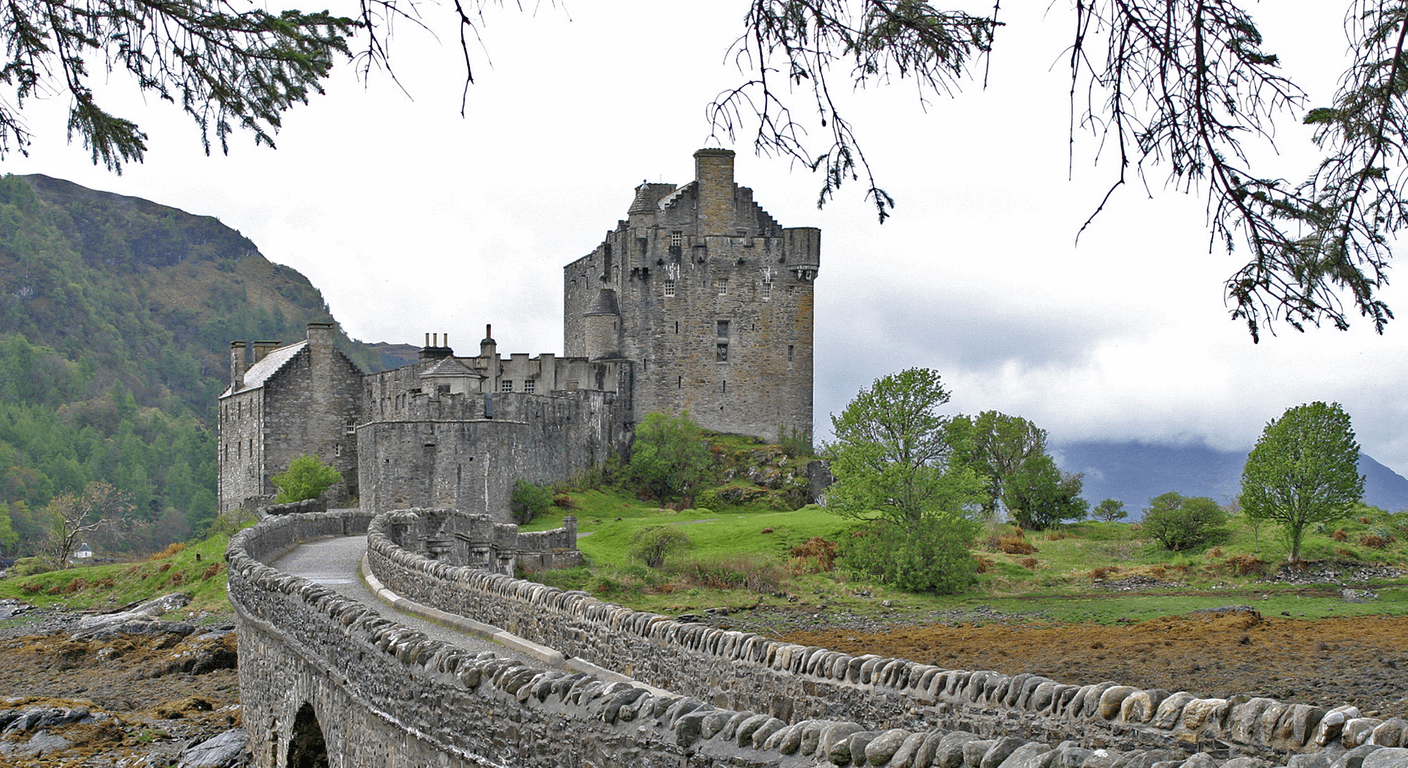
Scotland's Highlands are best explored by small-group coach tour rather than self-drive, since single-track roads with passing places are stressful for unfamiliar drivers. Autumn (September–October) offers the most rewarding light and fewer crowds, though summer is warmest. A three to five day tour from Edinburgh or Inverness typically covers Glencoe, Loch Ness, Eilean Donan Castle and Skye. Mobility is moderate, with uneven castle grounds and cobbled streets; a driver-guide handles all navigation.
Why the Highlands and a coach are a natural match
The Scottish Highlands are vast in a way that surprises most Australians, and not always in the way they expect. Distances between key sights look manageable on a map, but the roads tell a different story. Single-track roads with passing places — those small gravel cutouts where two vehicles negotiate who reverses — are the norm across much of the northwest, Skye and the roads to Glencoe. For a visitor from Victoria who last drove on the left side of the road never, or who simply hasn't driven on the right side of the car for decades, these roads are genuinely stressful rather than scenic.
A coach tour converts that stress into scenery. You sit on the left side of a well-insulated vehicle, look out at the landscape, and let a local driver handle the passing places, the tight bends above sea lochs and the occasional sheep in the road. The driver doubles as guide on most small-group tours, which means you get the history of Glencoe or the folklore of Loch Ness delivered in real time as you pass through it. That combination — local knowledge, no navigation anxiety, and genuine comfort — is why escorted coach touring has such a loyal following among travellers in their 60s and 70s.
For Indian Australian travellers, there is an additional layer of familiarity in the escorted format: a structured group with shared meals, knowledgeable hosts and a clear daily plan is a well-understood way to travel, and the Highlands rewards that approach. The landscape changes character hour by hour — moorland giving way to sea loch, then forest, then a castle on a promontory — and having someone contextualise it as you go makes the experience considerably richer than piecing it together from a hire car.
Small-group versus large-coach touring: which suits the Highlands?
Not all coach tours of the Highlands are alike, and for older travellers the distinction between a large-coach operation and a small-group minibus tour matters practically. Large coaches — those carrying 40 or more passengers — are simply unable to access some of the most rewarding roads in the Highlands. The road to Neist Point on Skye, the narrow approaches to certain loch-side villages, and several castle access roads are either prohibited or impractical for full-size coaches. A tour that keeps to the A9 and the major trunk roads will show you the Highlands from a distance rather than from within them.
Small-group operators typically use vehicles carrying 16 or fewer passengers, sometimes as few as 8 or 12. Companies such as Rabbie's and Timberbush have built their reputations specifically on this model. The vehicles are comfortable minibuses with good window height for sightseeing, and the smaller group size means stop decisions can be flexible — if the light on a loch is particularly good, a driver-guide can pull over without consulting 40 itineraries. That flexibility suits the pace that most over-50 travellers prefer.
When comparing tours, look at the stated group size, the type of vehicle and whether the itinerary includes the roads you actually want to travel. Read the day-by-day breakdown carefully: some tours advertise Skye but spend only a few hours there; others dedicate a full day or overnight. If a castle stop matters to you — Eilean Donan, Urquhart on Loch Ness, or the ruins at Dunnottar — check whether entry is included or an optional add-on, as this affects your real cost.
What to expect at the key Highlands stops
Glencoe is typically the first major Highland landmark on tours departing Edinburgh or Glasgow heading north. The glen is wide, dramatic and genuinely moving once you know its history — the 1692 massacre of the MacDonald clan by government troops is not ancient myth but documented event. The visitor centre, operated by the National Trust for Scotland, provides solid context. The walking here ranges from gentle loch-side paths to serious hillwalking; a good tour guide will be clear about what is accessible for those who prefer flat ground or have mobility considerations.
Loch Ness tends to be the stop that generates the most questions from first-time visitors, and the honest answer is that the loch itself — 37 kilometres long, extraordinarily deep, and dark with peat — is genuinely impressive regardless of your views on the monster. Urquhart Castle sits on a promontory above the loch and involves some uneven ground and steps; it is worth checking with your tour operator whether mobility aids are manageable on the site. The loch-side village of Drumnadrochit has the main visitor facilities.
The Isle of Skye is the centrepiece of most northwest Highlands itineraries. Tours cross via the Skye Bridge at Kyle of Lochalsh — no ferry required — and the island's interior is a different landscape again: the Cuillin mountains, the Fairy Pools, the Old Man of Storr and the Quiraing are all within reach. Skye rewards an overnight stay rather than a day trip if your itinerary allows it, because the light changes the landscape entirely between morning and late afternoon. Portree, the island's small capital, has good cafes and a pretty harbour worth an unhurried hour.
Seat rotation, comfort stops and the practical rhythm of touring
Reputable small-group operators use a seat rotation system, typically moving passengers forward one row each day so that everyone gets time at the front near the driver-guide and good views through the windscreen. If this matters to you — and on winding Highland roads it does — ask the operator directly whether they practise rotation before you book. Some do it as policy; others leave seating ad hoc.
Comfort stops on a well-run Highlands tour happen roughly every 90 minutes to two hours, which is a reasonable expectation for most travellers. The Highlands have fewer roadside facilities than urban Australia, so stops are planned rather than spontaneous — a local cafe, a distillery visitor centre, a hotel with public facilities. The quality of these stops varies; some are genuinely enjoyable breaks at historic inns, others are functional only. Your driver-guide will usually know which is which and set expectations accordingly.
For travellers with mobility considerations, it is worth a direct conversation with the operator before booking. Most small-group Highlands tours involve some walking on uneven ground — castle ruins, loch-side paths, village streets with cobblestones. The best operators will tell you honestly what can be skipped or adapted and what is central to the itinerary. A note that you use a walking stick or prefer flat terrain is not a reason to avoid these tours; it is simply useful information for a good guide to work with.
Honest weather expectations across the seasons
The Scottish Highlands have a reputation for unpredictable weather that is entirely deserved, and travellers who arrive expecting Mediterranean reliability will be disappointed. The honest position is that four seasons in a single day is a genuine description rather than a cliché. A morning that starts with clear skies over Glencoe can deliver horizontal rain by lunchtime and sunshine again by three. This is not a problem if you are dressed for it; it becomes one if you are not.
Spring — April and May — brings longer days, wildflowers on the moorland and fewer tourists on the roads. The weather is cool, often around 8–14 degrees Celsius, and rain is frequent. Summer, June through August, is the warmest and most visited period, with temperatures typically reaching 15–20 degrees on good days. Autumn — September and October — is considered by many experienced Highlands travellers to be the most rewarding season: the bracken turns rust and amber, the light is lower and more golden, and the crowds thin noticeably. Winter touring is possible but daylight hours are short and some attractions reduce their opening hours significantly.
Layering is the practical solution across all seasons. A waterproof outer layer is non-negotiable, and it should be genuinely waterproof rather than water-resistant — there is a difference in the Highlands. Good walking shoes with grip matter on any uneven ground. Bringing a compact umbrella is less useful than you might expect, because Highland wind makes umbrellas largely decorative. A warm hat and gloves are worth packing even in July, particularly on Skye and at higher elevations.
The midge question: what summer travellers need to know
The Highland midge — a tiny biting insect that travels in clouds — is a subject that Scots treat with a mixture of dark humour and genuine respect. Midges are most active from late May through September, particularly in the early morning and evening, in still conditions and near water. They are not dangerous, but they are genuinely irritating in large numbers, and a still summer evening at a loch-side can be uncomfortable without protection.
The practical response is straightforward. A DEET-based repellent is the most effective option; products marketed specifically for midges are available in Scottish outdoor shops and some pharmacies. A fine-mesh midge head net — inelegant but effective — is worth packing for anyone who plans to be outdoors at dawn or dusk. Midges do not generally penetrate well-sealed coach windows, so the touring vehicle itself is a refuge. Windy days and midday sun both reduce midge activity considerably.
The midge situation should not deter summer travel to the Highlands; it is a manageable inconvenience rather than a serious deterrent. It is worth knowing, however, because arriving unprepared and then spending a beautiful Skye evening retreating indoors is a preventable disappointment. Ask your tour operator whether they carry repellent or whether they recommend particular products — the good ones will have a clear, honest answer.
Indicative costs and what to look for when choosing a tour
Tour costs vary considerably depending on the operator tier, group size, duration, accommodation standard and what is included in the price. As a broad, indicative guide only — and travellers should confirm all current pricing directly with operators — a three to five day small-group Highlands tour from Edinburgh or Inverness might range from roughly AUD 500 to AUD 1,200 per person at the budget to mid-range end, while premium escorted touring programs from operators catering specifically to the over-50 market can sit considerably higher, sometimes AUD 4,000 to AUD 6,500 or more for a thorough Scotland program including flights and hotels. These figures are indicative only and exchange rates, seasonal pricing and inclusions all affect the real number.
When comparing tours, look beyond the headline price to what is actually included: accommodation grade, meals, entry fees to castles and attractions, and whether the guide is a dedicated escort or a driver who also narrates. Tours that include dinner and breakfast at good quality accommodation remove a significant daily decision and cost. Those that leave all meals to the traveller give more flexibility but require more planning in areas where dining options are limited.
For Australian travellers booking from Victoria, it is worth checking whether the operator has an Australian office or agent, which simplifies booking, payment in AUD and any changes to the itinerary. Travel insurance that covers trip interruption and medical costs in the UK is essential and should be arranged before departure. The Australian Government's Smartraveller service at smartraveller.gov.au is the right place to check current travel advice for the United Kingdom before finalising plans.
Quick planning guide
| Ideal pace | Slow-paced, escorted touring with a fixed daily rhythm |
|---|---|
| Best months | September–October for golden light and thinner crowds; June–August warmest but busiest |
| Suggested stay | Three to five days, with an overnight on Skye if possible |
| Mobility level | Moderate — uneven castle ruins, loch-side paths and cobbled village streets |
| Cost level | Budget-to-mid-range small-group tours around AUD 500–1,200; premium escorted programs AUD 4,000–6,500+ |
| Comfort level | High on well-run small-group tours, with seat rotation and comfort stops every 90 minutes to two hours |
| Best for | Over-50 Australian travellers who want Highland scenery without self-driving on unfamiliar roads |
| Main planning consideration | Choose a small-group operator (16 or fewer passengers) that can reach narrow roads and castle access points, and confirm mobility needs and weather layering before departure |
Key takeaways
- Single-track Highland roads with passing places make self-driving genuinely stressful for unfamiliar drivers — a small-group coach tour removes that stress entirely.
- Small-group tours of 16 or fewer passengers access roads and stops that full-size coaches cannot, delivering a more authentic Highland experience.
- Seat rotation, planned comfort stops every 90 minutes and driver-guides with local knowledge are markers of a well-run Highlands tour worth booking.
- Packing a genuinely waterproof outer layer and warm layers is non-negotiable in the Highlands across every season, including summer.
- Midges are active from late May to September near water in still conditions — DEET-based repellent and a midge net are practical, not excessive.
- Indicative tour costs vary widely by operator, duration and standard; always confirm current pricing directly and factor in travel insurance before booking.
Recommended partners and links
Indicative prices only — always confirm with the operator before booking.
Frequently asked questions
Do I need to drive at all on a Scottish Highlands coach tour?
No. On an escorted coach or small-group minibus tour, all driving is handled by a professional local driver. You do not need to navigate, park, or manage single-track roads at any point during the tour.
Is the Isle of Skye accessible by coach without a ferry?
Yes. The Skye Bridge at Kyle of Lochalsh connects the island to the Scottish mainland by road, so coach tours cross without requiring a ferry. The bridge crossing itself is part of the scenic approach to the island.
When is the best time of year for a Highlands tour for older travellers?
September and October are often considered the most rewarding months: autumn colour is at its peak, crowds are noticeably thinner than in summer, and the light is lower and more atmospheric. Spring in April and May is also appealing for wildflowers and quieter roads, though the weather is cool and rain is frequent.
Are Scottish Highlands coach tours suitable for travellers with limited mobility?
Many tours are accessible for travellers who walk with a stick or prefer flat terrain, but some castle ruins and loch-side paths involve uneven ground and steps. The right approach is to contact your chosen operator directly before booking and describe your specific needs — reputable small-group operators will give you an honest assessment of what is and is not manageable on their itinerary.
How much does a Scottish Highlands coach tour cost for an Australian traveller?
Costs vary significantly by operator, duration, accommodation standard and inclusions. As a broad, indicative guide only, small-group tours of three to five days might range from roughly AUD 500 to AUD 1,200 per person at the mid-range level, while premium escorted programs including flights and hotels can be considerably higher. Always confirm current pricing directly with operators, as exchange rates and seasonal pricing affect the final figure.
- VisitScotland — Official Scotland Tourism and Trip Planning
- National Trust for Scotland — Glencoe Visitor Centre
- Historic Environment Scotland — Urquhart Castle
- Rabbie's Small Group Tours — Scotland Itineraries
- Timberbush Tours — Scottish Highlands Small Group Tours
- Australian Government Smartraveller — United Kingdom Travel Advice
- Insight Vacations — Scotland Escorted Tours