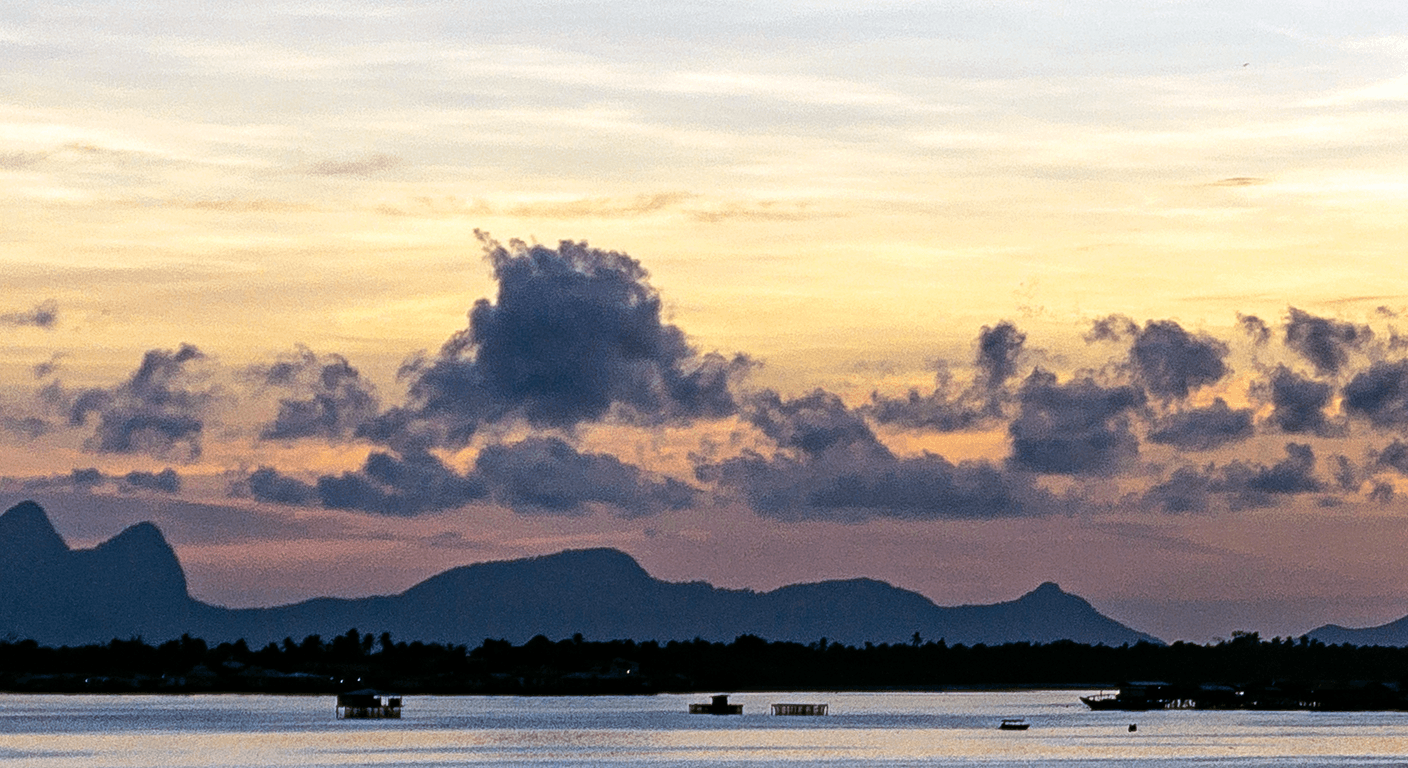
Semporna is a small fishing town on the southeastern tip of Sabah, Malaysian Borneo, and the gateway to one of Southeast Asia's richest marine parks. For over-50 Australian travellers, it offers something increasingly rare: genuinely uncrowded coral reefs, warm turquoise water, and a pace of island life that rewards slowing down. The key is approaching it on your own terms — two well-chosen day trips, a comfortable base in town, and no pressure to tick every island off a list.
Getting There: The Honest Picture of Travel Time from Australia
Semporna does not have its own airport. The standard route from Australia runs through Kuala Lumpur or Kota Kinabalu (KK), then on to Tawau Airport — the nearest airport to Semporna — followed by a road transfer of roughly 90 minutes to two hours into town. From Melbourne or Sydney, total door-to-door travel time sits somewhere between 14 and 20 hours, depending on layover length and connection timing. Perth travellers fare a little better, with shorter flight legs to KL.
The Tawau transfer is straightforward — shared vans and private taxis operate the route, and some guesthouses in Semporna can arrange a pick-up if you confirm in advance. What matters for over-50 travellers is building that transfer into your fatigue budget. Arriving in Tawau after a red-eye from KL and then bouncing along a two-hour road to Semporna is a full day's work before you've seen a single beach. The smartest move is a recovery night: either a brief overnight in Kota Kinabalu (a genuinely pleasant city in its own right) or arriving in Semporna by mid-afternoon and spending the rest of that day doing nothing more strenuous than a slow walk along the waterfront.
Australian passport holders generally enter Malaysia without a visa for stays up to 90 days, but entry rules can change — confirm your visa status with the Malaysian High Commission or the official Immigration Department of Malaysia website before travel. Travel insurance that covers pre-existing health conditions is essential, and policies should include medical evacuation, as hospital facilities in Semporna itself are limited. Tawau has more substantial medical services.
Why One or Two Day Trips Beats the Full Circuit
The Semporna Archipelago contains dozens of islands, and tour operators will happily sell you a programme that visits Sibuan, Mantabuan and Bohey Dulang across two or three consecutive days. Resist the temptation. Each day trip begins with an early-morning boat departure — typically 7.30 to 8am — from the main jetty, followed by a speedboat crossing that can take anywhere from 30 minutes to over an hour depending on the island. By the time you've snorkelled, eaten a packed lunch in the sun, and made the return crossing in the afternoon chop, you've had a genuinely full physical day.
Back-to-back early starts in tropical heat, on small open boats, with sun exposure from mid-morning onwards, adds up quickly. Fatigue is cumulative in this kind of heat, and the return journey always feels longer than the outward one. Choosing two day trips — say, Sibuan one day and Bohey Dulang another — with a rest day or a gentle town morning in between, is not a compromise. It's the difference between arriving home refreshed and arriving home exhausted.
A rest day in Semporna has its own quiet pleasures. The floating village on the stilts at the water's edge is fascinating to observe at dawn, the local seafood restaurants along the main strip serve some of the freshest and most affordable seafood you'll find in Malaysia, and the town's market gives a real sense of the region's Filipino-Bajau heritage. It's a place that repays a slow look.
The Islands: What to Expect at Sibuan, Mantabuan and Bohey Dulang
Sibuan Island is often the first choice for first-time visitors — a small, low-lying island with a sandy beach, calm snorkelling water on the sheltered side, and relatively straightforward access from the boat. That said, 'straightforward' is relative. Disembarking from a speedboat onto a small, wooden jetty that moves with the swell requires decent balance and confident footwork. On some occasions, depending on tides and conditions, you may need to wade ashore in knee-deep water. Neither is difficult for most reasonably fit over-50 travellers, but anyone with significant balance issues, knee replacements under strain, or limited lower-body mobility should factor this in honestly before booking.
Mantabuan is quieter and slightly less visited, with good snorkelling and a more relaxed atmosphere. The coral coverage here has been variable in recent years — reef health across the archipelago has suffered from bleaching events and, in some areas, anchor damage — so water clarity and coral condition can be genuinely patchy. The marketing imagery for these islands, much of it drawn from peak-visibility days and wide-angle lenses, can set expectations that don't always match the experience on a given day. The reefs are genuinely beautiful, but honest travellers manage their expectations accordingly.
Bohey Dulang is the archipelago's most photographed island, and the viewpoint at its peak is the image you'll have seen in every travel article about Semporna. The hike to reach that viewpoint is steep, uneven, and involves scrambling over exposed roots and loose rock — it takes roughly 20 to 40 minutes depending on fitness, with no shade on the upper section. For travellers with limited mobility, balance concerns, or cardiovascular conditions, it is simply not the right activity. The good news: the island itself, at sea level, is lovely. The surrounding water is clear and shallow enough for snorkelling without reaching the summit at all, and the view from the beach looking back at the karst formations is striking in its own right. Staying at sea level here is a perfectly valid — and genuinely enjoyable — alternative.
Boats, Jetties and Sun: The Practical Realities
The speedboats used for island day trips are small, fibreglass vessels — typically seating 8 to 15 passengers — with bench seating and no cabin. The crossing can be smooth on calm days and noticeably choppy when there's any swell or wind. If you're prone to motion sickness, carry appropriate medication and take it well before departure. Life jackets are provided, though their fit and condition varies between operators. Sitting near the middle of the boat reduces the worst of the jolting on rougher crossings.
The main Semporna jetty — where most day trips depart — is a working fishing and water-taxi hub, not a purpose-built tourist terminal. The walkways are uneven, the planks can be slippery, and the early-morning light is low when you arrive. Sensible footwear — closed-toed water shoes or sturdy sandals with grip — is genuinely useful, not optional. Thongs (flip-flops) are a liability on these surfaces.
Sun exposure on these day trips is significant and easy to underestimate. The boats offer no shade, the beach islands have limited tree cover, and the equatorial sun is intense even on overcast days. A high-SPF reef-safe sunscreen, a wide-brimmed hat, a long-sleeved rash vest for snorkelling, and a reusable water bottle are the non-negotiables. Midday, roughly 11am to 2pm, is the hottest and harshest period — most day trips are structured to be at the islands during this time, so planning rest in shade during those hours, rather than active snorkelling, is sensible.
Where to Stay: Town Comfort Versus Resort Islands
Most over-50 travellers will find Semporna town the more practical and comfortable base. A handful of mid-range hotels sit along or near the waterfront, offering air-conditioned rooms, reliable hot water, and easy access to restaurants and the jetty. Indicative rates for a comfortable double room in a mid-range town hotel run around AUD 60–120 per night, though prices and availability shift seasonally — confirm current rates directly with properties or via booking platforms before committing.
There are resort options on some of the closer islands, including a few established dive resorts that cater to longer-stay snorkellers and divers. These can be atmospheric and genuinely relaxing, but they come with trade-offs: higher costs (roughly AUD 200–400 per night at mid-range island resorts, indicative only), limited dining options, and the reality that once you're on a small island, you're there until the transfer boat runs. For travellers who want flexibility — to change plans if they're tired, to eat a proper meal in town, or to simply walk somewhere — a town base wins.
Semporna's restaurant strip is one of its genuine pleasures. Fresh seafood — grilled fish, tiger prawns, clams — is the local speciality, and a generous dinner for two at a local seafood restaurant typically costs around AUD 25–50, depending on what you order and where. Hawker-style lunches and noodle soups from the morning market cost considerably less. The food is a highlight in its own right, and it's easy to eat very well here for very little.
Snorkelling, Diving and Reef Conditions: Setting Realistic Expectations
Snorkelling gear — mask, snorkel and fins — is available for hire through most day-trip operators and some guesthouses, at indicative costs of around AUD 5–15 per day. The quality varies, so if you have your own mask and snorkel, bringing them is worthwhile — a well-fitted mask makes an enormous difference to the experience. Buoyancy vests (sometimes called 'life jackets' in this context) are often available on request for non-swimmers or those who want extra security in the water; ask your operator in advance.
Semporna sits within the Coral Triangle, and at its best, the reef life here is genuinely extraordinary — dense coral formations, sea turtles, reef sharks, and an extraordinary variety of fish. That said, 'at its best' is doing some work in that sentence. Reef health in the archipelago has been affected by bleaching events, some historical dynamite fishing damage (now heavily policed), and visibility that varies with rain, currents and season. The Maldives-style turquoise perfection that appears in promotional imagery reflects real conditions on good days — but it's not guaranteed on any given visit.
For certified divers, Semporna remains one of Southeast Asia's most rewarding destinations, with Mabul, Kapalai and Sipadan (the latter requiring a permit, allocated by ballot) within reach. Day trips from Semporna to dive sites are well-established, and several reputable dive operators work out of the town and nearby resorts. Confirm operator credentials, equipment standards and permit arrangements directly before booking.
Seasonal Weather and When to Go
The dry season — broadly April through August — offers the best conditions for island hopping: calmer seas, lower humidity, and the clearest underwater visibility. September and October can still be reasonable, though conditions start to shift. The northeast monsoon, which affects Sabah from roughly November through March, brings heavier rain, rougher seas and significantly reduced visibility. Day trips during monsoon months may be cancelled at short notice, and the experience is genuinely diminished. Travelling in the dry season is not just preferable — for island-hopping day trips specifically, it's the difference between a good trip and a frustrating one.
Even in the dry season, afternoon squalls are possible — equatorial weather is never entirely predictable. Build flexibility into your itinerary, keep your best day-trip days free of other commitments, and don't schedule a day trip for your last full day before a flight. If a trip is cancelled due to weather, you want the option to reschedule, not a missed experience and a long journey home.
Key takeaways
- Build a recovery night into your arrival plan — total travel time from most Australian cities to Semporna runs 14 to 20 hours, door to door.
- Choosing one or two island day trips with rest days between is smarter travel, not a lesser experience.
- The Bohey Dulang viewpoint hike is steep and uneven — travellers with balance or mobility concerns should stay at sea level and snorkel instead.
- Travel insurance with pre-existing condition cover and medical evacuation is essential; hospital facilities in Semporna are limited.
- April to August offers the most reliable conditions for island hopping — monsoon months (November to March) bring rough seas and poor visibility.
- Reef conditions vary and promotional imagery reflects best-case days — approach with curiosity rather than fixed expectations.
Recommended partners and links
Indicative prices only — always confirm with the operator before booking.
Frequently asked questions
How do you get from Australia to Semporna, Sabah?
From Australia, the standard route is a flight to Kuala Lumpur or Kota Kinabalu, then a connecting flight to Tawau Airport in Sabah, followed by a road transfer of roughly 90 minutes to two hours into Semporna town. Total travel time from Melbourne or Sydney runs approximately 14 to 20 hours depending on layover length. Perth travellers have shorter flight legs to Kuala Lumpur. Confirm current routes and schedules with Malaysia Airlines or AirAsia before booking.
Is Semporna island hopping suitable for travellers over 50 with mobility concerns?
Island hopping in Semporna is rated Moderate overall — it involves boarding small speedboats, navigating unsteady wooden jetties, and sometimes wading ashore. These activities suit reasonably fit travellers but are not ideal for anyone with significant balance issues, limited lower-body mobility, or recent joint surgery. The Bohey Dulang viewpoint hike is steep, unshaded and uneven, and is not recommended for travellers with limited mobility or balance concerns; staying at sea level and snorkelling is a genuine and enjoyable alternative.
What is the best time of year to visit Semporna for island day trips?
April through August is the recommended window for island hopping around Semporna. Seas are calmer, visibility is better, and the risk of day-trip cancellations due to weather is lower. The northeast monsoon (roughly November to March) brings heavier rain, rough seas and significantly reduced underwater visibility, making island day trips unreliable and often disappointing during those months.
How much does a day trip to the Semporna islands cost?
Indicative costs for a guided island day trip from Semporna — including boat transfer and park entry fees for the Tun Sakaran Marine Park — typically run around AUD 60–130 per person, depending on the islands visited and whether snorkelling gear is included. Park fees are charged separately by Malaysian authorities and are subject to change. These figures are indicative based on mid-2020s pricing; confirm current costs with operators and the Sabah Parks authority before booking.
Do Australian passport holders need a visa to visit Malaysian Borneo?
Australian passport holders generally do not require a visa to enter Malaysia for stays up to 90 days, which covers both Peninsular Malaysia and Sabah (Malaysian Borneo). However, entry requirements can change, and Sabah has its own immigration controls separate from the Malaysian peninsula. Confirm your visa status with the Malaysian High Commission in Australia or the official Immigration Department of Malaysia website well before travel.
- Tourism Malaysia — official destination information
- Sabah Tourism Board — Semporna and the Tun Sakaran Marine Park
- Sabah Parks — Tun Sakaran Marine Park information
- Immigration Department of Malaysia — visa and entry requirements
- Malaysia Airlines — flights from Australia to Tawau via Kuala Lumpur
- AirAsia — connecting flights within Malaysia including Kota Kinabalu and Tawau
- BrittAndMitchWorldwide — Semporna destination video (YouTube)