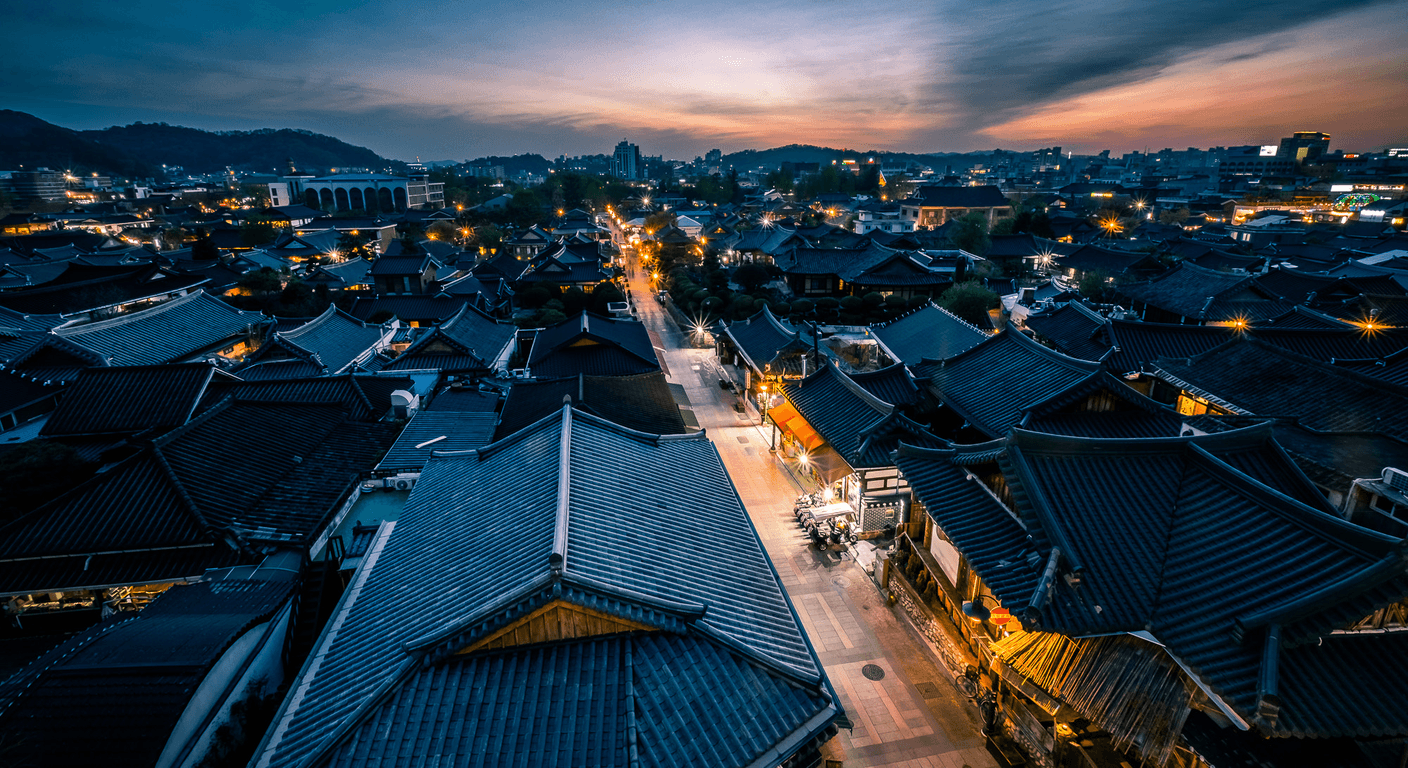
South Korea suits a spring (late March–May) or autumn (late September–November) visit, when temperatures are mild and comfortable for walking. A twelve to fourteen day loop through Seoul, Gyeongju, and Busan, linked by the KTX high-speed train, lets travellers move at an unhurried pace. Highlights include Gyeongbokgung Palace and the cliffside Haedong Yonggungsa Temple. Mobility is moderate: subways have lifts and escalators, though some temple paths and hilly lanes are uneven.
Why South Korea works so well for a first trip at this stage of life
South Korea has a way of surprising first-time visitors from Australia who arrive expecting chaos and leave talking about how organised and easy it all felt. The public transport is reliable and well-signed in English. The food is abundant, varied, and largely affordable. The history stretches back more than two thousand years and sits right there in the middle of modern cities — a Joseon-era palace flanked by glass towers, a coastal Buddhist temple carved into a cliff above the sea.
For a traveller in her mid-sixties who has spent years exploring Victoria and Latin America, South Korea offers something genuinely different without being overwhelming. There is a legible logic to the place. Streets are safe, pharmacies are everywhere, and locals in tourist areas are generally patient with visitors who are still finding their feet. The pace you set is your own — this is not a destination that demands a packed itinerary to feel worthwhile.
The key is choosing the right season, giving yourself enough days (twelve to fourteen is a comfortable minimum for this itinerary), and not trying to do everything at once. A three-city loop — Seoul, Gyeongju, Busan — covers an enormous range of experiences without requiring constant movement. You will come home feeling you have seen something real.
When should you go? Seasons honestly assessed
Spring (late March to mid-May) and autumn (late September to early November) are the two seasons that most experienced travellers point to, and for good reason. In spring, the cherry blossoms and forsythia bloom across the country, temperatures sit in the comfortable range of roughly 12–20 degrees Celsius, and the light is soft and clear. Autumn brings vivid foliage across mountain temples and palace gardens, with crisp air and blue skies that make outdoor sightseeing genuinely pleasant.
Summer (June to August) is a different story. Seoul in July and August is hot, humid, and frequently wet from monsoon rains. The humidity in particular can be difficult for anyone with cardiovascular or respiratory conditions, and it makes long days of walking considerably more tiring. It is not impossible to travel then, but you need to be realistic about how much you will actually want to do outdoors.
Winter (December to February) is dry and often sunny, but cold — genuinely cold, with temperatures regularly dropping below zero in Seoul and Gyeongju. Busan stays milder on the coast. If you have good cold-weather gear and enjoy quiet, uncrowded temples, a winter trip has its own appeal. But for a first visit, spring or autumn gives you the most comfortable experience with the fewest weather-related compromises.
Seoul: palaces, markets, and taking it at your own pace
Seoul is enormous — a city of around ten million people — but it is navigated almost entirely on a subway system that is one of the most accessible in Asia. The stations have lifts as standard on most lines, escalators throughout, and English signage at every platform and exit. For anyone with knee or hip concerns, the lifts are genuinely useful and not hard to find. A T-money card, purchased at convenience stores or airport kiosks for a small deposit (around AUD $5, indicative), is loaded with credit and tapped on and off buses and subways — it takes the friction out of every journey.
Give yourself at least four to five days in Seoul. Gyeongbokgung Palace, the largest of the Joseon-era royal palaces, is the obvious starting point — arrive when it opens at nine in the morning to have the courtyards relatively to yourself before tour groups arrive. The changing of the guard ceremony runs several times daily and is worth timing your visit around. Nearby, the Bukchon Hanok Village is a preserved neighbourhood of traditional Korean houses on a hillside; it is hilly in parts, so comfortable shoes and a slow pace are sensible. Insadong, just to the south, is a pedestrian-friendly street of tea houses, galleries, and craft shops that suits an unhurried afternoon.
For food, the markets are the heart of Seoul's eating culture. Gwangjang Market is one of the oldest in the city and a genuine working market — not a tourist reconstruction. The stalls along the central aisles serve bindaetteok (mung bean pancakes), mayak gimbap (small seaweed rice rolls), and noodle dishes. Pointing works; many stalls have photographs. If you are cautious about spice, look for gimbap, japchae (glass noodles), and sundubu-jjigae (soft tofu soup) — all widely available and manageable for most palates. Vegetarians will find things to eat but should be aware that many broths contain anchovy or meat stock even when the visible ingredients are vegetables.
The KTX fast train: getting to Gyeongju and Busan without the stress
One of the genuine pleasures of travelling in South Korea is the KTX high-speed rail network. The train from Seoul to Gyeongju or Busan takes around two to two and a half hours, runs on time, and has comfortable reserved seating. Book tickets in advance through the Korail website (letskorail.com), which has an English-language interface. Indicative one-way fares to Busan run roughly AUD $60–$90 depending on seat class and when you book — confirm current fares directly with Korail, as prices vary. Seats are numbered and allocated, so there is no scramble.
Seoul Station has lifts and assistance services, and the trains themselves have step-free boarding at most platforms. If you are travelling with luggage, a courier service (taekbae) is widely available in South Korea — for a modest fee (roughly AUD $10–$20 per bag, indicative), your luggage is collected from your hotel and delivered to your next accommodation, often overnight. It is not a gimmick; it is a genuinely practical system that removes the strain of hauling bags through stations.
Gyeongju is worth two to three nights on its own. It was the capital of the Silla kingdom for nearly a thousand years, and the whole city is effectively an open-air museum. Burial mounds the size of small hills rise from the middle of parks and residential streets. Bulguksa Temple, a UNESCO World Heritage site, sits in the hills above the city and is reached easily by local bus or taxi. The grounds are expansive but largely flat, and the stonework — particularly the two stone pagodas in the main courtyard — is among the finest surviving examples of Silla-era craftsmanship.
Busan: the coast, the temple on the cliff, and the fish market
Busan is South Korea's second city and has a completely different energy to Seoul — more relaxed, more coastal, with mountains meeting the sea in a way that gives the city a dramatic, layered feel. Haeundae Beach is the famous stretch of sand, wide and well-maintained, pleasant for a morning walk even outside swimming season. The city's subway system connects the main attractions, and again, lifts are standard at most stations.
Haedong Yonggungsa Temple is the sight that tends to stay with visitors long after they leave. Built directly on a rocky headland above the East Sea, it is reached by a staircase path from the car park — the steps are manageable but uneven in places, so take your time and use the handrails. The temple is an active site of worship, not a museum piece, and the sound of the sea against the rocks below the main hall is something that photographs do not fully capture. Entry is free. Arrive early in the morning or late afternoon to avoid the worst of the midday crowds.
Jagalchi Fish Market, on the waterfront near the old port, is one of the largest seafood markets in South Korea and entirely worth a visit even if you are not buying. The ground floor is a wholesale market; the upper floors have restaurants where you can eat whatever has been purchased downstairs, cooked simply. Haemul pajeon — a seafood and spring onion pancake — is a good, approachable choice. Busan's food generally has a slightly bolder, brinier character than Seoul's, reflecting its fishing port heritage. If you are not a seafood person, the city also has excellent naengmyeon (cold buckwheat noodles) and dwaeji gukbap (pork and rice soup), which is a local speciality.
Navigating food culture when you are a cautious eater
Korean food has a reputation for being intensely spicy, and some of it is. But the cuisine is also extraordinarily varied, and a first-time visitor with a cautious palate has more options than they might expect. The key dishes to know: gimbap (seaweed-wrapped rice rolls with various fillings) is mild and portable; japchae (stir-fried glass noodles with vegetables and sometimes beef) is savoury and gentle; sundubu-jjigae can be ordered mild; doenjang jjigae (fermented soybean paste stew) is earthy rather than spicy; and samgyeopsal (grilled pork belly, cooked at the table) is universally popular and easily managed.
Banchan — the small side dishes that arrive automatically with a Korean meal — are part of the experience. Some will be pickled, some mildly spiced, some unfamiliar. You are not expected to eat everything, and there is no obligation to finish any dish. Kimchi is served at almost every meal; if fermented vegetables are not your preference, simply leave it to one side. Restaurant staff in tourist areas and larger cities are generally accustomed to international visitors and will not take offence.
For travellers managing dietary requirements — coeliac, vegetarian, or specific allergies — South Korea requires some care and forward planning. Soy sauce is used widely and contains wheat. Many dishes contain hidden animal-derived ingredients even when they appear vegetarian. The Korea Tourism Organization website has practical guidance on dietary needs, and carrying a translated card explaining your requirements is a sensible precaution. Most larger hotels can assist with translation if needed.
Practical matters: entry requirements, money, connectivity, and pacing
Before anything else, check the current entry requirements for Australian citizens on smartraveller.gov.au. As of the time of writing, Australian passport holders can enter South Korea visa-free for short stays, but this is subject to change and the requirements around the K-ETA (Korea Electronic Travel Authorisation) system have shifted in recent years — do not rely on information from previous trips or outdated travel blogs. Smartraveller is the authoritative source, and it also carries current health and safety advice.
South Korea is largely a cashless society in urban areas, and most restaurants, shops, and attractions accept international Visa and Mastercard. That said, carrying some Korean Won (KRW) in cash is useful for smaller markets, temple donations, and the occasional taxi driver who prefers it. Currency can be exchanged at the airport on arrival, though exchange rates at dedicated exchange booths in Myeongdong (a shopping district in central Seoul) are often more favourable — compare before committing. ATMs in convenience stores (CU, GS25, 7-Eleven) generally accept foreign cards. Indicative daily costs for a comfortable but not extravagant trip — accommodation in a mid-range hotel, three meals, transport, and one or two entry fees — run roughly AUD $150–$220 per person per day, though this varies significantly by city, season, and accommodation style. Treat this as a planning guide only and confirm current costs closer to travel.
A pocket Wi-Fi device or local SIM card is worth arranging before you leave Australia or collecting at the airport on arrival — Korea Tourism Organization's website has current options listed. Google Maps works reliably in South Korea and is the most practical navigation tool for getting around on foot and understanding bus and subway routes. Naver Maps is the local alternative and sometimes more accurate for walking directions, but its interface is primarily in Korean. Finally, on pacing: build in rest days. A morning at a palace followed by an afternoon at a market is a full day. South Korea does not need to be rushed, and the traveller who sits in a traditional tea house in Insadong for an hour watching the street will come home with as much to talk about as the one who ticked off every sight on the list.
Quick planning guide
| Ideal pace | Slow and unhurried, with rest days built in |
|---|---|
| Best months | Spring (late March–May) and autumn (late September–November) |
| Suggested stay | Twelve to fourteen days across Seoul, Gyeongju, and Busan |
| Mobility level | Moderate — lifts and escalators standard on subways, but some hilly streets and uneven temple steps |
| Cost level | Mid-range, roughly AUD $150–$220 per person per day |
| Comfort level | High — reliable English-signed transport, widespread pharmacies, and patient locals in tourist areas |
| Best for | First-time older travellers wanting culture, history, and food at a gentle pace |
| Main planning consideration | Timing the trip for spring or autumn to avoid summer humidity and winter cold |
Key takeaways
- South Korea's subway system has lifts at most stations and English signage throughout, making it genuinely navigable for older travellers with mobility considerations.
- A T-money card covers buses and subways across the country and removes the friction of buying individual tickets at every stop.
- The KTX fast train connects Seoul to Gyeongju and Busan in around two hours — book seats in advance through Korail's English-language website.
- Spring (late March to mid-May) and autumn (late September to early November) are the most comfortable seasons; summer humidity and winter cold are real deterrents for a first visit.
- Korean food is more varied and more accessible to cautious palates than its reputation suggests — gimbap, japchae, and grilled meats are mild, widely available, and genuinely good.
- Always confirm current visa and entry requirements for South Korea on smartraveller.gov.au before booking, as conditions around the K-ETA system have changed in recent years.
Recommended partners and links
Indicative prices only — always confirm with the operator before booking.
Frequently asked questions
Do Australians need a visa to visit South Korea?
As of 2025–2026, Australian passport holders can enter South Korea visa-free for short stays, but the requirements around the K-ETA (Korea Electronic Travel Authorisation) have changed more than once in recent years. Always confirm the current entry requirements on smartraveller.gov.au before you book flights or accommodation — do not rely on older travel blogs or previous trip experience.
Is South Korea accessible for travellers with mobility concerns?
Seoul's subway system has lifts at the majority of stations, escalators throughout, and English signage at every platform and exit. Most major tourist sites — including Gyeongbokgung Palace and Bulguksa Temple — have flat or manageable sections, though some historic sites involve steps and uneven paving. The luggage courier service (taekbae) available across the country means you can travel between cities without carrying heavy bags through stations.
What is a T-money card and where do you get one?
A T-money card is a reloadable transit card used on buses and subways across South Korea, including in Seoul, Gyeongju, and Busan. You can buy one at convenience stores (CU, GS25, 7-Eleven) or at airport kiosks for a small deposit — around AUD $5, indicative. Load credit onto it at the same convenience stores or at subway station machines. Tap on and off at readers on buses and at subway gates. It is the most practical way to pay for public transport in South Korea.
How spicy is Korean food, and what can cautious eaters order?
Korean cuisine includes many dishes that are genuinely spicy, but it also has a wide range of mild options. Gimbap (seaweed rice rolls), japchae (glass noodles), samgyeopsal (grilled pork belly), doenjang jjigae (soybean paste stew), and sundubu-jjigae ordered mild are all good starting points for cautious palates. Kimchi is served at most meals and can simply be left to one side. Travellers with specific dietary requirements — including coeliac or vegetarian needs — should research in advance and consider carrying a translated card explaining their requirements.
How much does a trip to South Korea cost for an Australian traveller?
A comfortable but not extravagant trip — mid-range hotel accommodation, three meals a day, public transport, and one or two entry fees — runs roughly AUD $150–$220 per person per day as an indicative planning figure. Costs vary significantly depending on season, city, and accommodation style. Seoul tends to be slightly more expensive than Gyeongju or Busan. Confirm current costs closer to your travel date, as exchange rates and prices shift.