Swedish Lapland's Icehotel at Jukkasjärvi is rebuilt every November from Torne River ice, with hand-carved suites that vanish by spring. The best window runs from late December to March, when temperatures sit around minus 20 to minus 30 degrees and aurora odds peak; plan four to five nights in the region. Mobility demands are moderate given the cold and activity levels involved. From Australia, reaching it takes roughly 26 to 30 hours via a Middle Eastern or Asian hub to Stockholm, then on to Kiruna.
Why Swedish Lapland is worth the journey from Australia
From Melbourne or Sydney, Swedish Lapland sits at the far edge of what a long-haul flight can reach — roughly 24 to 28 hours of travel, typically via Singapore, Dubai, or Doha to Stockholm, then a two-hour domestic flight north to Kiruna. That is a serious commitment. And yet the travellers who make it tend to return with a specific, clear-eyed satisfaction that warmer destinations rarely produce.
The reason is simple: this part of the world in winter is not a backdrop. It is an active, physical environment that asks something of you. Temperatures in Jukkasjärvi regularly drop to minus 20 or even minus 30 degrees Celsius between December and February. The sun barely grazes the horizon. The silence is the kind that presses gently on the ears. For a traveller who has done Tuscany, Kyoto, and the Greek islands and is now looking for a different register entirely, Swedish Lapland provides it.
The seasonal reversal from Australia is worth sitting with before you pack. When Melbourne is baking in January, Jukkasjärvi is in the depths of its polar winter — which is precisely when the aurora borealis is most active and the Icehotel is at its most complete. Plan to depart Australia in late December or January, allow a recovery night in Stockholm on arrival, and give yourself a day on the return to shake off the jet lag before flying home.
What is the Icehotel and how does it actually work?
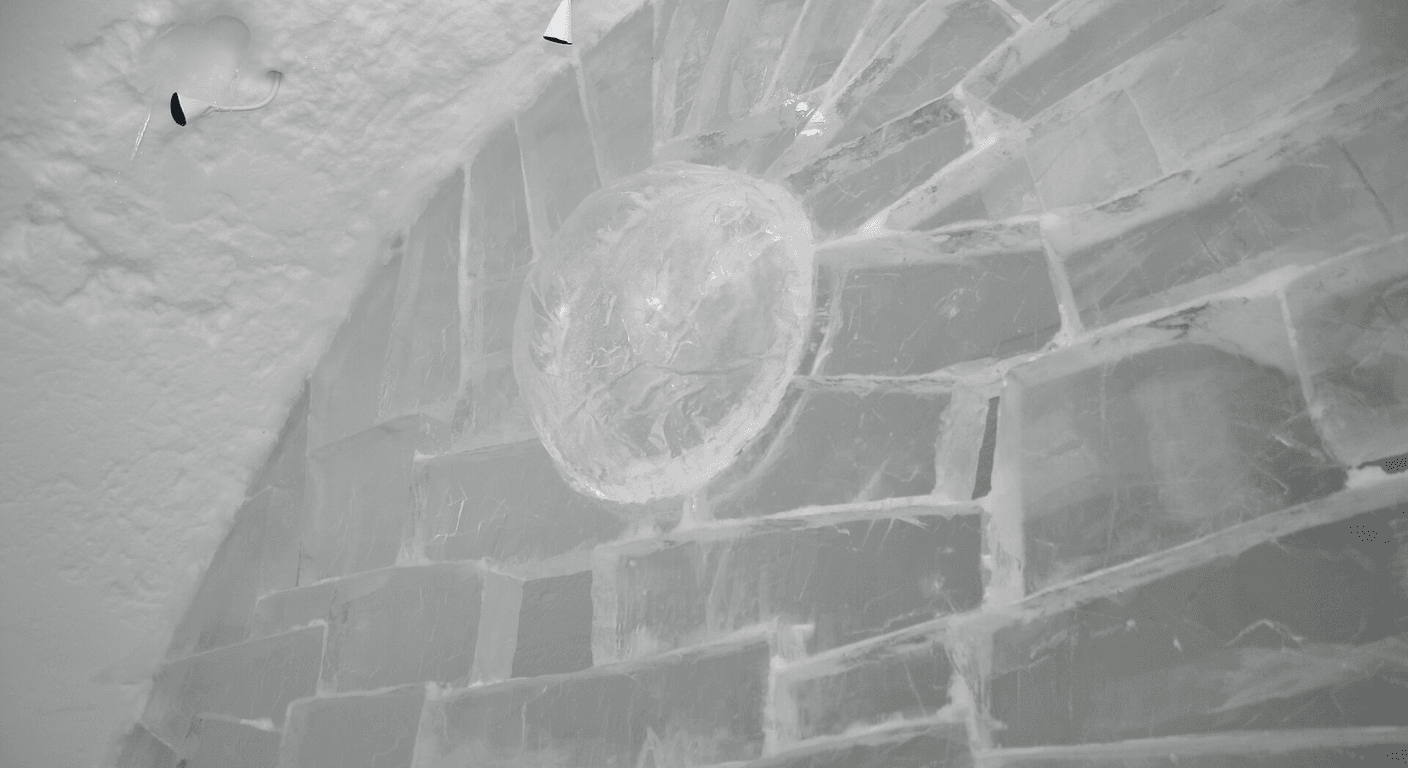
The Icehotel at Jukkasjärvi, roughly 200 kilometres north of the Arctic Circle, is rebuilt every November from blocks of ice harvested from the Torne River. Each of the art suites is designed by a different artist — some Swedish, some international — and carved entirely by hand. The interior temperature of the suites is kept at around minus five degrees Celsius. You sleep in a thermal sleeping bag on a bed of ice covered with reindeer hides. In the morning, a staff member delivers a warm drink to your room before you make your way to the heated changing area.
The one detail that surprises most visitors: you sleep well. The sleeping bags are rated for the temperature, the reindeer hides provide insulation from below, and the complete absence of noise — no heating system hum, no street sounds, no other guests audible through ice-thick walls — creates conditions that are, paradoxically, deeply restful. The experience is not about enduring discomfort. It is about sleeping inside a sculpture.
Alongside the seasonal ice hotel, there is a permanent structure called Icehotel 365, which uses refrigeration to maintain ice suites year-round. For winter visitors, the seasonal building is the more compelling choice — it exists for one season only and is gone by spring. The warm rooms and chalets on the property are genuinely comfortable, with proper beds, heating, and private bathrooms. Booking a warm room for most nights and the ice suite for one night is a sensible and popular approach — the hotel's own staff will tell you the same thing.
Sami culture: what a respectful visit looks like
The Sami are the Indigenous people of northern Scandinavia, and their presence in Swedish Lapland is not a tourism programme — it is a living culture that predates Sweden as a nation. Reindeer herding remains central to Sami identity, and in winter the herds are brought down from the high fells to lower ground. Some Sami families offer guided experiences that allow visitors to meet the reindeer, learn about herding practices, and share a meal in a traditional lavvu tent around an open fire.
The better operators are Sami-owned and led. Ask directly who benefits from the experience economically, and choose accordingly. Visit Swedish Lapland's website (swedishlapland.com) lists operators and can help identify those with genuine community ties. A half-day reindeer experience typically includes transport from Jukkasjärvi or Kiruna, time with the herd, a brief joik (traditional song) demonstration if the host is willing, and a warm meal. Costs run to roughly AUD 200 to AUD 400 per person, indicative only.
A word on expectations: this is not a performance. The families you meet are working herders who have chosen to share part of their day with visitors. Dress warmly, arrive on time, follow the guide's lead on photography, and ask questions with genuine curiosity rather than a checklist. The conversations that happen around a fire in a lavvu, in broken English and gestures, are often the ones travellers remember longest.
Seeing the aurora borealis: honest odds and practical tips
The aurora borealis is caused by charged particles from the sun interacting with the Earth's atmosphere — it is a natural phenomenon, not a scheduled event. Swedish Lapland sits within the auroral oval, which means the conditions for aurora are present on most clear nights between late September and late March. Whether you actually see it depends on solar activity, cloud cover, and luck. Jukkasjärvi has low light pollution, which improves your odds considerably.
The practical approach is to book at least four or five nights in the region and check aurora forecast apps (the Swedish Space Weather Centre at rymdvaeder.se provides reliable local data) each evening. Go outside between 9pm and 2am on clear nights — this is when activity tends to peak. The Icehotel's staff monitor conditions and will often alert guests when something is happening. A guided aurora snowmobile or snowshoe tour gets you away from any ambient light around the property; most operators depart from Kiruna or Jukkasjärvi and return within two to three hours.
One honest note for those with high expectations: even a faint aurora — a pale green wash across the sky — is genuinely moving when you are standing in minus 20 degrees Celsius silence on a snow-covered riverbank. It does not need to be the full curtain-and-corona display to feel significant. That said, the 2025–26 season falls near the peak of Solar Cycle 25, which means solar activity is elevated and aurora frequency is higher than average — a fact worth knowing, though not a guarantee.
Dressing for genuine cold: what you actually need
Minus 20 degrees Celsius is not the same as a cold Melbourne morning, and the layering system required is specific. The base layer is merino wool or a synthetic thermal — cotton holds moisture and should be avoided entirely. Mid-layer is a heavy fleece or down jacket. Outer layer is a windproof, waterproof shell. For the legs: thermal leggings, insulated trousers, and if you are doing outdoor activities, a snow pant over the top. Extremities are where most people underestimate: proper Arctic mittens (not gloves), a balaclava or neck gaiter, goggles for snowmobile activities, and boots rated to at least minus 30 degrees.
The Icehotel and most guided operators provide Arctic overalls and boots for outdoor activities, which is a significant practical help. You do not need to purchase specialist outer gear for a week's visit — hire it on arrival and save the luggage weight for the extra merino layers you will wear constantly. Merino base layers, thermal socks (three pairs minimum per day of activity), a quality beanie, and your own gloves as a back-up layer are the items worth bringing from Australia.
A specific note for travellers with arthritis, Raynaud's syndrome, or circulatory conditions: extreme cold can aggravate these significantly. Speak with your GP before booking, and be honest with your travel insurer. Hand warmers (the disposable chemical packs) are cheap, available at Kiruna's outdoor shops, and genuinely useful. Take them.
Getting there from Australia: flights, stopovers and the Kiruna connection
There is no direct flight from Australia to Swedish Lapland. The standard routing is Sydney or Melbourne to a Middle Eastern or Asian hub — Dubai, Doha, Singapore, or Helsinki are the most common — then onward to Stockholm Arlanda Airport. From Stockholm, SAS and BRA (Braathens Regional Airlines) operate several daily flights to Kiruna Airport, which takes around two hours. Total door-to-door travel from Melbourne is typically 26 to 30 hours, depending on connections. Confirm current routes and schedules directly with airlines, as services change seasonally.
A night in Stockholm on arrival is not an indulgence — it is a practical buffer. The flight from Australia arrives in the late afternoon or evening European time; trying to connect immediately to Kiruna adds fatigue and risk if a delay disrupts the connection. Stockholm itself rewards a day of slow exploration: the Gamla Stan (Old Town) is compact and walkable, the Vasa Museum is flat and wheelchair-accessible, and the city's café culture is a gentle decompression before heading north into the cold.
From Kiruna Airport, the Icehotel operates a shuttle to Jukkasjärvi (17 kilometres away) for arriving guests; confirm this when booking. Kiruna itself is worth a half-day — the town has recently been physically relocated because of an expanding iron ore mine, and the new town centre, including the relocated church, is an unusual piece of living urban history that few visitors think to look for.
Travel insurance, health and practical planning for over-50 travellers
Travel insurance is non-negotiable for Swedish Lapland, and the specifics matter more than usual. Policies must cover extreme-cold activities — snowmobiling, snowshoeing, and dog sledding are typically classified as adventure activities and may be excluded from standard policies. Read the product disclosure statement carefully, or call the insurer and ask directly: 'Does this policy cover snowmobile tours in temperatures below minus 20 degrees Celsius?' Get the answer in writing.
For travellers managing pre-existing conditions — cardiovascular issues, diabetes, respiratory conditions, joint problems — the cold adds a layer of physiological demand that warmer destinations do not. This is not a reason to cancel the trip; it is a reason to have an honest conversation with your GP at least eight weeks before departure, carry a thorough medical summary translated into Swedish (the Kiruna hospital is small but competent), and ensure your insurer is aware of all relevant conditions. The Swedish healthcare system is excellent; the challenge is distance from the major hospitals in Stockholm if something serious occurs.
Australia does not have a visa-on-arrival arrangement with Sweden for stays under 90 days as of 2025 — Australians can generally enter the Schengen Area without a visa for short visits, but the European Travel Information and Authorisation System (ETIAS), expected to come into effect in 2025–26, may require pre-registration. Check the current position at smartraveller.gov.au and the Swedish Migration Agency website (migrationsverket.se) before booking. Currency is the Swedish krona (SEK); most places accept card payment, but carry a small amount of cash for remote areas.
Quick planning guide
| Ideal pace | Slow, with recovery nights in Stockholm on arrival and departure |
|---|---|
| Best months | Late December to March, for deepest cold and strongest aurora odds |
| Suggested stay | At least four to five nights in the Jukkasjärvi/Kiruna region |
| Mobility level | Moderate — extreme-cold conditions and optional adventure activities, but warm-room options and hired Arctic gear ease the physical demand |
| Cost level | Premium — long-haul flights plus guided Sami and aurora experiences run roughly AUD 200–400 per person |
| Comfort level | Warm rooms and chalets sit alongside the ice suites, so comfort can be chosen night by night |
| Best for | Travellers who have done warmer destinations and want a genuinely different, physically immersive winter experience |
| Main planning consideration | Managing extreme cold safely — layering, insurance covering adventure activities, and pre-existing health conditions checked with a GP beforehand |
Key takeaways
- The Icehotel at Jukkasjärvi is rebuilt every winter from Torne River ice — no two seasons, and no two suites, are identical.
- Warm rooms and chalets are available alongside the ice suites; a single night on ice with remaining nights in comfort is the most popular approach.
- Temperatures in Jukkasjärvi regularly reach minus 20 to minus 30 degrees Celsius — proper Arctic layering is essential, and most operators provide outer gear on hire.
- Swedish Lapland sits within the auroral oval, giving genuine aurora borealis chances on clear nights between late September and late March; four to five nights improves your odds considerably.
- Australians fly via a Middle Eastern or Asian hub to Stockholm, then connect to Kiruna — total travel time of roughly 26 to 30 hours; a recovery night in Stockholm is strongly recommended.
- Travel insurance must explicitly cover extreme-cold activities and any pre-existing conditions — confirm in writing before departure and check current entry requirements at smartraveller.gov.au.
Recommended partners and links
Indicative prices only — always confirm with the operator before booking.
Frequently asked questions
Is the Icehotel in Swedish Lapland suitable for travellers over 60?
Yes, with some practical preparation. The ice suites require no special fitness — you sleep in a thermal sleeping bag on a reindeer-hide-covered bed and are woken with a warm drink. The main demands are tolerating the cold (around minus five degrees Celsius inside the suite) and moving carefully on icy surfaces. Warm rooms are available for those who prefer not to sleep on ice. Guided outdoor activities like reindeer experiences and aurora walks are generally low-intensity and suitable for most mobility levels, though uneven snow and heavy clothing slow movement. Speak with your GP if you have cardiovascular, respiratory, or circulatory conditions before booking.
What is the best time of year to visit Swedish Lapland from Australia?
December to February is the peak winter season, offering the darkest skies for aurora viewing, guaranteed snow, and the Icehotel at its most complete. This period coincides with the Australian summer — travellers leave warm weather and arrive in deep Arctic winter, so the seasonal adjustment is significant. Late November and early March are quieter and slightly less extreme in temperature while still offering snow and aurora chances. Confirm the Icehotel's seasonal opening dates directly at icehotel.com, as they vary slightly each year.
How do Australians get from Stockholm to Jukkasjärvi and the Icehotel?
From Stockholm Arlanda Airport, SAS and BRA (Braathens Regional Airlines) operate daily flights to Kiruna Airport, approximately two hours. Jukkasjärvi is 17 kilometres from Kiruna; the Icehotel provides a shuttle for arriving guests — confirm this when booking. Kiruna is also connected to Stockholm by overnight train (roughly 17 to 20 hours), which is a scenic alternative if time allows. Confirm current timetables and book in advance through the SJ (Swedish Railways) website at sj.se.
Do Australians need a visa to visit Sweden?
As of 2025, Australians can generally enter the Schengen Area, which includes Sweden, without a visa for stays of up to 90 days in any 180-day period. However, the European Travel Information and Authorisation System (ETIAS) — a pre-travel authorisation scheme — is expected to come into effect during 2025–26 and may require Australians to register before travel. Always confirm the current entry requirements at smartraveller.gov.au and the Swedish Migration Agency at migrationsverket.se before booking.
Will travel insurance cover snowmobiling and other Arctic activities in Swedish Lapland?
Not automatically. Many standard travel insurance policies classify snowmobiling, dog sledding, and similar activities as adventure or high-risk activities and exclude them from cover. Before purchasing a policy, ask the insurer directly whether it covers snowmobile tours in extreme cold, and request written confirmation. Also declare any pre-existing medical conditions fully — failure to do so can void a claim. Compare policies through a licensed Australian insurance broker or comparison service, and read the product disclosure statement carefully.
- Icehotel Jukkasjärvi – Official Site
- Visit Swedish Lapland
- Smartraveller – Sweden Travel Advice (Australian Government)
- Swedish Migration Agency – Entry Requirements
- Swedish Space Weather Centre – Aurora Forecasts
- SJ Swedish Railways – Stockholm to Kiruna
- SAS (Scandinavian Airlines) – Domestic Sweden Flights