Barnacles Dolphin Centre in Tin Can Bay hosts one of Australia's few sanctioned wild-dolphin feeding programs, with sessions running most mornings from around 7am to 9am. May to October brings the coolest, most reliable conditions. The flat foreshore and gentle concrete ramp make it easy for most over-50 travellers, with foreshore viewing available for those who'd rather not wade. No public transport reaches the town, so a car or a guided tour from Noosa is essential, and an overnight stay nearby is worth building in.
What Actually Happens at Barnacles Dolphin Centre
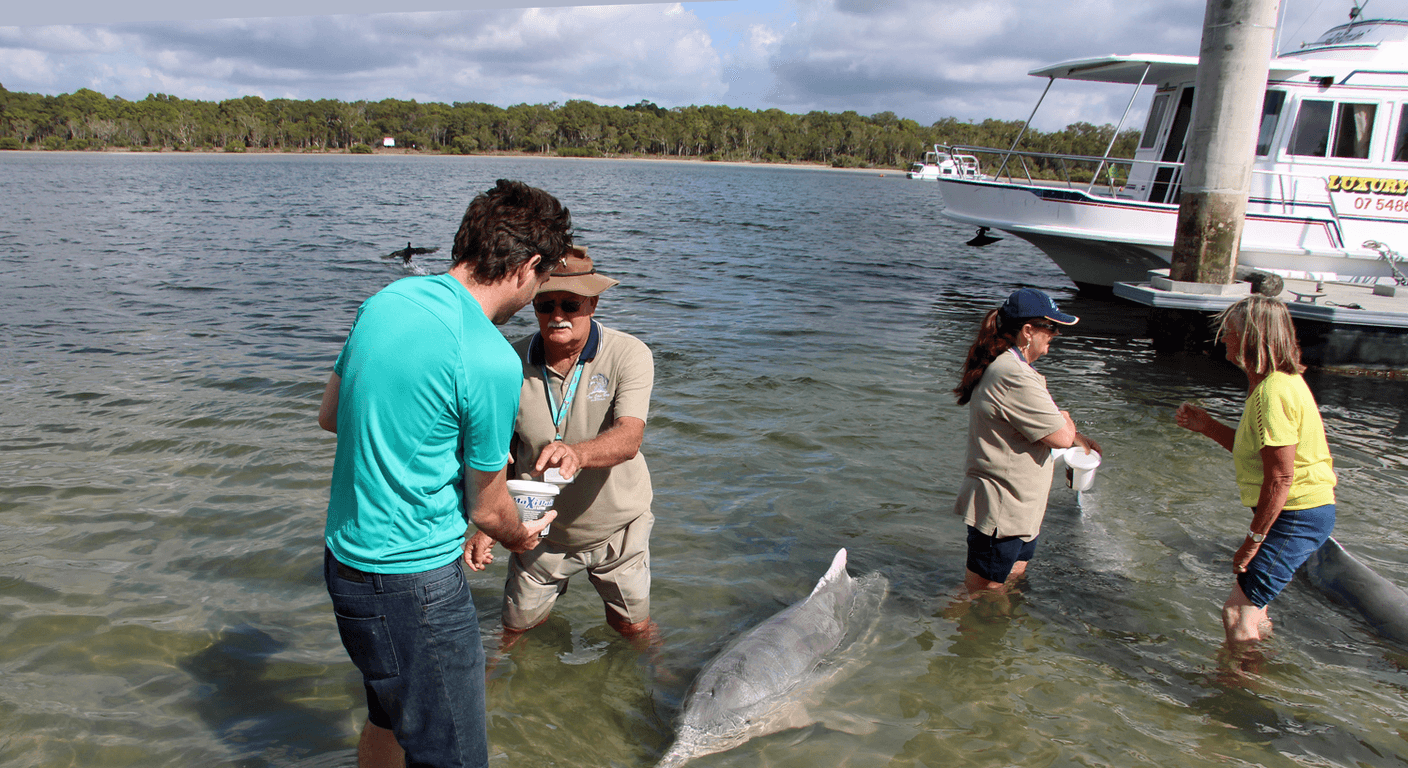
Barnacles Dolphin Centre sits at the end of Gympie Street on the Tin Can Bay foreshore — a modest, volunteer-run operation that punches well above its weight in terms of sheer wildlife intimacy. Most mornings, a small pod of wild Australian humpback dolphins (Sousa sahulensis) arrives in the shallows for a supervised feed conducted by trained volunteers. This is not a performance. The dolphins come of their own accord, on their own schedule, and leave when they choose.
The program operates under strict Queensland wildlife guidelines. Visitors don't grab or chase — you stand quietly on a gently sloped concrete ramp, ankle to knee-deep in warm water, and if a dolphin approaches, a volunteer guides you through a careful hand-feed of a small piece of fish. The whole session typically runs from around 7am and is usually done by 9am. Arrive early: numbers are managed, and latecomers sometimes miss the feeding portion, though they can still observe from the foreshore.
What makes this encounter so affecting, particularly for those who've sat through dolphin shows at marine parks, is the complete absence of spectacle. The dolphins are wild. The water is real. The moment a broad-rostrum nose nudges your hand, it registers somewhere deeper than tourism.
Getting to Tin Can Bay — What You Need to Know
There is no practical public transport to Tin Can Bay. That's not a complaint — it's just the reality of a small coastal town roughly 260 kilometres north of Brisbane. From Noosa Heads, the drive is around 90 minutes via the Bruce Highway and Rainbow Beach Road. From the Sunshine Coast, allow two hours. From Brisbane, budget around three hours, which makes an early-morning arrival feasible if you stay the night before in Gympie or Rainbow Beach.
The car park at Barnacles is flat and close to the foreshore path — no hills, no distance to negotiate. If driving long distances is no longer comfortable or practical, it's worth checking with Noosa-based tour operators about guided day trips that include Tin Can Bay. Availability changes seasonally, so confirm current options through Tourism Noosa or Visit Sunshine Coast before planning.
A word on timing: leaving home in the dark to be somewhere by 7am is the kind of thing that sounds better in theory. Consider arriving the evening before and staying in Tin Can Bay or Rainbow Beach. Both have comfortable motel and cabin accommodation at reasonable rates, and Rainbow Beach itself is worth a quiet afternoon walk.
Is the Ramp and Foreshore Accessible?
The short answer is yes, for most visitors aged 50 and over. The Barnacles foreshore is flat, paved and easy to walk. The dolphin feeding ramp is a gentle concrete slope into very shallow water — ankle to knee depth at most. Sandals with grip, or water shoes, are sensible; thongs (flip-flops) can be slippery on wet concrete, so factor that in.
Those with significant mobility limitations, balance concerns or who prefer not to enter the water can observe comfortably from the foreshore viewing area. The dolphins come close enough to the ramp's edge that the experience remains meaningful even without stepping in. It's worth calling Barnacles ahead of your visit to discuss any specific access needs — the volunteer team is genuinely helpful.
The foreshore walk along Gympie Street is flat and pleasant. There are benches, shade trees and a relaxed pace that suits a morning stroll before or after the session. Tin Can Bay is not a town that rushes anything.
Fees, Timing and What to Bring
Fees at Barnacles are kept deliberately modest. Indicatively, viewing and participation fees have historically been well under $30 per person — but pricing is set by the volunteer organisation and can change. Always confirm current fees directly with Barnacles Dolphin Centre before your visit. Cash has traditionally been accepted; check whether card payment is now available.
The session begins around 7am most mornings, though the dolphins set the actual schedule. Overcast or stormy mornings can affect attendance — both human and dolphin. It's sensible to check the Barnacles website or Facebook page the evening before for any updates. Bring a light jacket: Queensland mornings in winter can be brisk on the water's edge, even when the afternoon is warm.
A small bag with a change of dry clothes (or at least dry socks), a water bottle and a camera with a good zoom is the practical kit. Phones in waterproof cases work well on the ramp. Leave valuables in the car — you'll be focused on the water, not your bag.
After the Dolphins: Spending the Rest of the Morning
By 9am, with the session done and the day warming up, there's a pleasant hour or two to fill before the drive home. The Tin Can Bay foreshore is genuinely lovely in morning light — calm water, pelicans, the odd small fishing boat. The walk along the waterfront from Barnacles toward the town centre takes less than fifteen minutes at a comfortable pace.
Café options in Tin Can Bay are modest but decent. A coffee and breakfast by the water after a wildlife encounter at dawn is a simple pleasure that doesn't require elaboration. Locals tend to be chatty, particularly with visitors who've just come from Barnacles — the dolphins are a point of genuine community pride.
If energy allows, Rainbow Beach is 25 minutes south and worth the detour: the coloured sand cliffs are striking, and the small beach town has good lunch options. Carlo Sandblow, a large open sand dune with sweeping coastal views, is an easy 20-minute walk from the town centre — mostly flat, with some soft sand sections. It's a fitting end to a morning that started at dawn with dolphins.
Planning Ahead: Practical Tips for Over-50 Travellers
The dolphin session operates most mornings but not always every day. Wet weather, rough water or the dolphins simply choosing elsewhere can mean a quiet morning at Barnacles. This is wildlife — it's part of the deal, and experienced travellers know to hold expectations lightly. Building a buffer (an overnight stay, or pairing the trip with Rainbow Beach) means a no-show isn't a wasted journey.
Travel insurance is worth reviewing before any Queensland road trip, particularly for those with pre-existing conditions. Policies vary considerably in what they cover for medical incidents away from home — even a domestic trip. The wading component at Barnacles is low-risk, but wet surfaces deserve care.
Queensland in summer (November to March) is hot, humid and subject to afternoon storms. The dolphin session is early and usually done before the heat builds, but the drive and the rest of the day are more comfortable in the cooler months. May through October is the sweet spot: clear skies, mild mornings and the best chance of a full session.
Why This Experience Resonates
Australia has very few sanctioned wild-dolphin interaction programs. Most have closed over the years as wildlife management standards tightened, which is broadly a good thing. Barnacles operates under Queensland government guidelines, with strict rules about feeding quantities and interaction protocols designed to ensure the dolphins' long-term wellbeing. The fact that it continues is a credit to the local volunteer community.
For travellers who've done a great deal — who've ticked off the obvious landmarks and returned from overseas with full passports — an encounter like this carries a different kind of weight. There's no queue. No souvenir shop of consequence. Just dawn light on the water and a wild animal choosing to be near you. That's rare anywhere in the world, and it's here, a few hours' drive up the Queensland coast.
It's the sort of experience you describe quietly to friends over dinner, not with photographs but with the particular detail of how the water felt at 7am, or the sound the dolphin made. Those are the ones that last.
Quick planning guide
| Ideal pace | Relaxed, early-morning start |
|---|---|
| Best months | May to October for cooler, drier conditions |
| Suggested stay | A morning session, ideally with an overnight stop in Tin Can Bay or Rainbow Beach |
| Mobility level | Easy – flat foreshore and a gentle, shallow ramp |
| Cost level | Budget-friendly – indicatively under $30 per person |
| Comfort level | Casual and hands-on, with dry-clothes and footwear worth packing |
| Best for | Wildlife lovers and well-travelled visitors seeking a genuine, low-key encounter |
| Main planning consideration | No public transport to Tin Can Bay – a car or pre-arranged tour and an early 7am start are essential |
Key takeaways
- Barnacles Dolphin Centre in Tin Can Bay runs one of Australia's very few sanctioned wild-dolphin feeding programs, operating most mornings from around 7am.
- The experience is accessible to most over-50 travellers — flat foreshore, gentle ramp, shallow water — with foreshore viewing available for those who prefer not to wade.
- There is no useful public transport to Tin Can Bay; a car or pre-arranged guided tour is the only practical option.
- Fees are indicatively under $30 per person — confirm current pricing directly with Barnacles before your visit.
- May to October offers the most comfortable conditions: cooler mornings, lower humidity and the most reliable dolphin attendance.
- Building in an overnight stay in Tin Can Bay or Rainbow Beach transforms the experience from a gruelling pre-dawn dash into a genuinely relaxed trip.
Recommended partners and links
Indicative prices only — always confirm with the operator before booking.
Frequently asked questions
What time should you arrive at Barnacles Dolphin Centre to see the dolphins?
Arrive by 7am at the latest. The feeding session typically begins around 7am and is usually finished by 9am. The dolphins arrive on their own schedule, so early arrival gives you the best chance of participating in the feed rather than just observing.
Do you have to wade into the water to see the dolphins at Tin Can Bay?
No. Wading on the ramp is optional. Visitors who prefer to stay on the foreshore can still observe the dolphins clearly from the viewing area. The ramp entry is shallow — ankle to knee depth — and gradual, but it is a wet surface, so grip-soled sandals or water shoes are recommended if you do choose to wade.
How much does it cost to feed dolphins at Barnacles Dolphin Centre?
Fees have historically been well under $30 per person for viewing and participation, but pricing is managed by the volunteer organisation and can change. Always confirm current fees directly with Barnacles Dolphin Centre before your visit at barnaclesdc.com.au or via their Facebook page.
Is there public transport from Noosa or the Sunshine Coast to Tin Can Bay?
There is no practical public transport route to Tin Can Bay. Driving is the standard option — approximately 90 minutes from Noosa Heads. Some Noosa-based tour operators offer guided day trips that include Tin Can Bay; check with Tourism Noosa or Visit Sunshine Coast for current availability.
Is the dolphin feeding guaranteed every morning?
No — the dolphins are wild and come of their own accord. Bad weather, rough water or the pod's own movements can mean a quiet morning. Check the Barnacles Dolphin Centre website or Facebook page the evening before your visit for any updates, and consider pairing the trip with Rainbow Beach to make the journey worthwhile regardless.