Venice rewards travellers who plan around its nearly 400 stepped bridges, packing a soft bag rather than wheeled luggage. April–June and September–October bring the best weather, thinner crowds and lower flood risk. Staying overnight for two or three nights near a vaporetto stop lets Australians enjoy the quiet evenings once day-trippers leave. Mobility is moderate; the journey from Melbourne or Sydney takes 22–26 hours via a stopover, arriving at Marco Polo Airport.
What Venice Actually Asks of You
There are roughly 400 bridges in Venice. Almost every one of them has steps. Not gentle ramps with a handrail at a sensible height — actual stone staircases, often steep, often worn smooth by centuries of foot traffic. This is not a deterrent so much as a fact to plan around. A traveller who walks reasonably well and can manage stairs with a hand free will find Venice entirely do-able. A traveller dragging a hard-shell 23-kilogram suitcase will spend their first hour in the city quietly regretting every item they packed.
The solution is simple and worth stating plainly: travel with a soft bag you can carry over your shoulder or on your back, even briefly. Most hotels in Venice will store luggage if you arrive before check-in, and many are reached by water taxi or vaporetto — but the last hundred metres almost always involves a bridge. Pack light. The city rewards it.
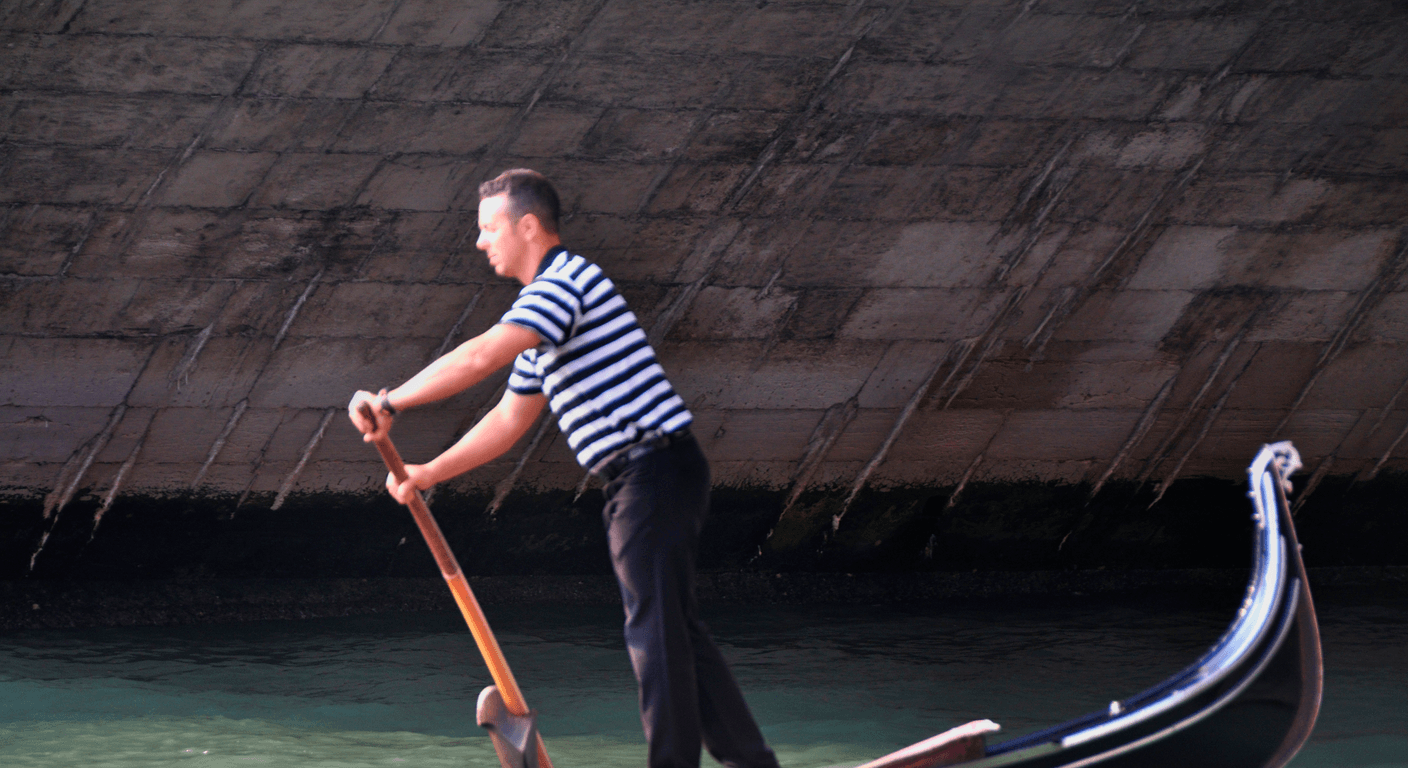
There are no cars. None. The absence of traffic is one of Venice's great gifts — no exhaust fumes, no horn-blaring, no roads to cross. The trade-off is that everything moves by boat or on foot. For anyone with a knee that prefers flat ground, the Dorsoduro and parts of Cannaregio offer longer stretches of relatively level walking between bridges. Sestiere San Marco, the tourist core, tends to funnel pedestrians over more bridges more frequently.
Why Sleeping in Venice Changes Everything
The day-tripper tide is real and it's worth understanding its rhythm. Cruise ships dock at the Stazione Marittima from around 8am; coach tours from Mestre and Padua arrive by 9am; the train from Rome pulls in from mid-morning. By 10am on a summer day, the Rialto Bridge and the lanes around San Marco are genuinely difficult to move through. By 5pm, the tide reverses. By 7pm, Venice is a different city.
Staying overnight — even two or three nights beyond what feels necessary — is the single best decision an Australian traveller can make after flying 22-plus hours to be here. You get the early mornings when light falls across the Grand Canal without a crowd in the way. You get the evening passeggiata, the aperitivo hour, the restaurants filling with Venetians and long-stay guests rather than tour groups on a schedule. The financial logic also holds: a well-located hotel in Venice, while not cheap, is what you came for.
Since 2024, Venice has operated a day-visitor contribution scheme applying to day-trippers arriving on designated peak days — currently a modest fee, though the rules and dates are reviewed regularly. Overnight guests are exempt. Confirm the current arrangements at veneziaunica.it before your trip, as the scheme continues to evolve into 2026. Either way, it's another nudge toward staying rather than arriving by cruise or coach.
The Vaporetto: Your Floating Lift Network
Think of the vaporetto water-bus as the equivalent of a tram or metro — slow by international standards, occasionally crowded at peak hours, but entirely logical once you understand the lines. Line 1 runs the full length of the Grand Canal, stopping at every station, and is the best introduction to the city. Line 2 is the express version, fewer stops, faster. Lines 4.1 and 4.2 circle the city's outer perimeter. The DM line connects directly to Murano.
A rolling 24-hour, 48-hour or 72-hour vaporetto pass is the sensible option for anyone planning to move around regularly — single tickets are expensive relative to the pass. Passes are sold at ACTV booths at the main stops (Ferrovia, Piazzale Roma, San Marco) and via the veneziaunica.it website. Tap on and tap off. Boarding at busy stops like San Marco or Rialto requires a little patience — let passengers disembark before boarding, and move to the centre of the vessel.
For hotel arrivals with luggage, a water taxi from Marco Polo Airport is a genuinely pleasant option — more expensive than the Alilaguna airport boat, but it delivers you directly to your hotel's nearest canal-side stop, and on arrival day with bags in hand, the premium is often worth it. Confirm current fares with your hotel before you land, as they vary by destination within the city.
Where to Stay — and the Neighbourhoods Worth Knowing
Cannaregio, in the north of the city, is a practical and often underrated base. It's where many Venetians actually live, the restaurants are less tourist-inflated, and the walk to the train station at Santa Lucia is manageable. Dorsoduro, in the south, is calmer than San Marco, has the Peggy Guggenheim Collection and the Accademia gallery on its doorstep, and the vaporetto connections are reliable. San Marco is expensive and central — convenient, but you're paying for the postcode.
The non-negotiable is proximity to a vaporetto stop. Before confirming any booking, check the walking route from the nearest stop to the hotel entrance — specifically, how many bridges are on that route and whether they have steps. Most hotel websites will tell you; if they don't, ask directly. A hotel that is technically 'five minutes from San Marco' can involve three bridge crossings that feel considerably less than five minutes with luggage after a long-haul flight.
A recovery night on arrival is not indulgence — it's logistics. Flying from Melbourne or Sydney to Venice typically involves one stopover, usually in Dubai, Doha, Singapore or a similar hub, and somewhere between 22 and 26 hours of travel. Jet lag runs east-to-west in a particular direction; the body clock shift from Melbourne to Venice is around eight to nine hours. Build in a quiet first evening, a slow first morning, and resist the urge to sprint to San Marco on day one.
Burano, Murano and the Quieter Lagoon
Murano is the island of glass — a short vaporetto ride from the Fondamente Nove stop, and a place where the furnace demonstrations are genuinely impressive rather than merely touristy, provided you time your visit for a weekday morning before the cruise-ship excursions arrive. Murano has its own canals, its own bars, and its own slower pace.
Burano is the one with the brightly painted houses — not a secret, but far enough from the main island (roughly 40 minutes on the vaporetto line 12 from Fondamente Nove) to thin the crowds considerably by the time you arrive. The lace-making tradition is real and the museum documenting it, the Museo del Merletto, is small and absorbing. The island also has a handful of good seafood restaurants that operate at something approaching a human scale. Go on a Tuesday or Wednesday if possible.
Torcello, the ghost island further into the lagoon, is the quietest of all — and the oldest, with a Byzantine cathedral that predates Venice itself. Few people make it out there. It rewards the effort with silence, mosaic floors, and a strange melancholy that the more visited islands have lost.
Acqua Alta: The Honest Conversation About Flooding
Acqua Alta — high water — is Venice's periodic flooding, driven by a combination of tides, wind and atmospheric pressure. It happens most frequently between October and March, with November and December historically the peak months. The city now has MOSE, its long-delayed flood barrier system, which has been operational since 2020 and has significantly reduced the frequency and severity of flooding in the historic centre. It has not eliminated acqua alta entirely.
When flooding does occur, it's typically 60–80 centimetres deep in the lowest-lying areas — San Marco is particularly vulnerable. The city deploys raised walkways (passerelle) and most residents pull on rubber boots. It's manageable if you're prepared, but it's not the atmospheric inconvenience some travel writing suggests. Wet feet are wet feet. If you're travelling October through January, pack waterproof overshoes or lightweight rubber boots, and download the Città di Venezia app, which gives tide forecasts.
The honest advice for travellers over 50 who want Venice without flood anxiety: April through June and September through October are the sweet spots. Shoulder season pricing is more reasonable, the light is excellent, and the acqua alta risk is lower. Summer (July–August) is hot, very crowded, and carries its own discomforts. January and February bring the famous Carnevale crowds. There is no perfect month — only better-informed choices.
Practicalities: Costs, Entry, Insurance and Getting There
Venice is an expensive city by any measure. A sit-down coffee in a café on or near Piazza San Marco will cost considerably more than the same coffee two streets away — that's not a complaint, it's the pricing reality of one of the world's most visited squares. A mid-range hotel in a decent location runs roughly €200–€350 per night in shoulder season as an indicative figure, though prices shift significantly by season and availability. Confirm all current pricing before booking. Eating at a bacaro — a Venetian wine bar serving cicchetti, the small snacks that function as the local equivalent of tapas — is both cheaper and more interesting than a sit-down tourist restaurant.
For entry requirements, Australians should check smartraveller.gov.au for current advice on Italy, including any ETIAS electronic travel authorisation requirements that may apply to Schengen area travel by 2026. Do not rely on this article for visa or entry rules — confirm before booking. Travel insurance is essential and must cover pre-existing medical conditions; read the policy document rather than the summary page. A policy that excludes your most likely health need is not travel insurance.
Getting to Venice from Australia means flying into Marco Polo Airport (VCE), which sits on the mainland about 12 kilometres from the city. From there, the Alilaguna boat service connects directly to various points in the city — slower than a water taxi but considerably cheaper and a pleasant introduction to the lagoon. High-speed trains connect Venice to Rome in under four hours, Florence in around two, and Milan in under three — making Venice a natural anchor point in a broader Italian itinerary.
Quick planning guide
| Ideal pace | Slow-paced, with time built in to sit still |
|---|---|
| Best months | April to early June and September to October |
| Suggested stay | At least two to three nights, overnight rather than a day trip |
| Mobility level | Moderate — nearly every bridge is a stepped staircase, manageable for reasonably fit walkers with light, carryable luggage |
| Cost level | Premium — mid-range hotels run roughly €200–€350 a night in shoulder season |
| Comfort level | Good with planning — a recovery night on arrival is recommended after the long flight |
| Best for | Australians over 50 who plan accommodation, season and luggage carefully |
| Main planning consideration | Choosing a hotel near a vaporetto stop with few or no stepped bridges en route, and packing a soft shoulder bag instead of a wheeled case |
Key takeaways
- Every bridge in Venice has steps — pack a soft bag you can carry, not a hard-shell wheeled case.
- Staying overnight rather than day-tripping transforms the experience; the city quiets dramatically after 6pm.
- The vaporetto water-bus network is the city's public transport system — a multi-day pass is the practical choice for most stays.
- April to early June and September to October offer the best balance of weather, crowds and flood risk for Australian travellers.
- Flying from Melbourne or Sydney to Venice takes roughly 22–26 hours with a stopover; build in a genuine recovery night on arrival.
- Check smartraveller.gov.au for current Italy entry requirements and ensure travel insurance covers pre-existing conditions before booking.
Recommended partners and links
Indicative prices only — always confirm with the operator before booking.
Frequently asked questions
Is Venice accessible for travellers with mobility limitations?
Venice is challenging for anyone with significant mobility limitations. The city has approximately 400 bridges, almost all with steps, no cars, and extensive uneven stone paving. Travellers who walk reasonably well and can manage stairs can navigate Venice comfortably. Those using a wheelchair or rollator will find access severely limited; some vaporetto stops have ramps and some hotels are step-free, but the city overall cannot be described as accessible. Contact your hotel directly to confirm their specific access arrangements before booking.
Do day visitors to Venice have to pay an entry fee?
Venice introduced a day-visitor contribution scheme in 2024 that applies to day-trippers arriving on designated peak days. Overnight guests staying in the city are exempt. The scheme continues to be refined into 2026, so confirm the current dates, amounts and exemptions at veneziaunica.it before your visit, as the details change regularly.
What is the best time of year for Australians to visit Venice?
April to early June and September to October are generally the best months for Australian travellers over 50. These shoulder seasons offer milder temperatures, manageable crowd levels, lower flood risk compared to winter, and better hotel availability than peak summer. July and August are very hot and extremely crowded. November to January carries the highest risk of acqua alta flooding, though the MOSE barrier system has reduced the frequency of significant flood events since 2020.
How do Australians get from the airport to central Venice?
Marco Polo Airport (VCE) is on the mainland, roughly 12 kilometres from the historic centre. The Alilaguna boat service runs directly from the airport into various points in the city and is the most cost-effective water transfer — confirm current timetables and fares at alilaguna.it. A private water taxi is faster and more direct, delivering you close to your hotel's canal-side entrance, but costs significantly more. Confirm current fares with your hotel before you travel.
Do Australians need a visa or special authorisation to visit Venice in 2026?
Italy is part of the Schengen Area. Australians have historically been able to visit Schengen countries without a visa for stays up to 90 days, but the European Union's ETIAS electronic travel authorisation system may apply to Australian passport holders by 2026. Check the current requirements at smartraveller.gov.au and the official ETIAS website before booking — do not rely on any single article for entry rule confirmation, as requirements can change.
- Venezia Unica — official Venice transport and access passes
- Smartraveller — Australian Government travel advice for Italy
- ACTV — Azienda del Consorzio Trasporti Veneziano (vaporetto operator)
- Alilaguna — airport boat service to Venice
- Trenitalia — Italian national rail, including Venice routes
- Museo del Merletto, Burano — Fondazione Musei Civici di Venezia