Yarrangobilly Caves, tucked in northern Kosciuszko National Park off the Snowy Mountains Highway, pair a self-guided marble cave circuit with a thermal pool that holds a constant 27 degrees year-round, even under winter snow. Autumn offers the clearest air and quietest crowds, though the pool is arguably most memorable in winter. A half-day to full day suits most visitors. Mobility is moderate — cave floors are uneven and the pool's 700-metre return path is a genuinely taxing climb. There's no public transport; it's private-vehicle access only via a sealed, winding road.
Why Yarrangobilly Deserves the Detour
There is a particular pleasure in turning off a highway and immediately feeling like you have left the modern world behind. The Yarrangobilly Caves turnoff sits roughly 100 kilometres south of Tumut on the Snowy Mountains Highway, and the sealed access road drops you into a limestone gorge that operates on entirely different logic to the alpine meadows above. The caves have been open to visitors since 1884 — one of the oldest continuous tourist operations in inland NSW — yet the site never feels overrun.
For travellers based in Victoria, the honest driving reality is this: Melbourne to Yarrangobilly is around six to seven hours, making an overnight stay in Cooma, Tumut, or Jindabyne the sensible approach rather than a punishing return day. From Canberra, it's a far more manageable 2.5 hours each way, and the national capital makes an excellent base for a relaxed day trip. Sydney travellers sit at around four to four-and-a-half hours. Whichever direction you're coming from, the winding final access road rewards patience — take it slowly and the karst scenery does the rest of the work.
Inside the Caves: What to Expect
Yarrangobilly has several cave systems, and the choice between a self-guided experience and a guided tour is one worth thinking about before you arrive. The South Glory Cave is the self-guided option — a well-lit circuit that lets you set your own pace, pause where the formations catch your eye, and not feel rushed by a group timetable. For anyone who finds it easier to move slowly through uneven terrain, or simply prefers to linger over a particularly fine stalactite formation, this is the sensible starting point.
The guided tours — including the larger Jersey Cave and the more challenging Glory Cave — offer a ranger's interpretation that brings the geology and history to life in ways a printed panel cannot. Cave temperatures hold at a constant 8 to 10 degrees Celsius year-round, which is cold enough to warrant a proper layer regardless of the season. Wear closed shoes with grip; the cave floors are uneven and can be slippery. National park entry fees and cave tour fees apply separately — confirm current rates with NSW National Parks before you go, as pricing does change.
What the caves actually look like matters more than any general description. Yarrangobilly's limestone is a white marble type, unusually pale, and the formations have a translucent quality under the lighting that sets them apart from the orange-tinted caves you might have seen elsewhere in Australia. One of the quietly memorable moments is simply standing in the dark and listening to the silence, which is absolute.
The Thermal Pool: The Honest Version
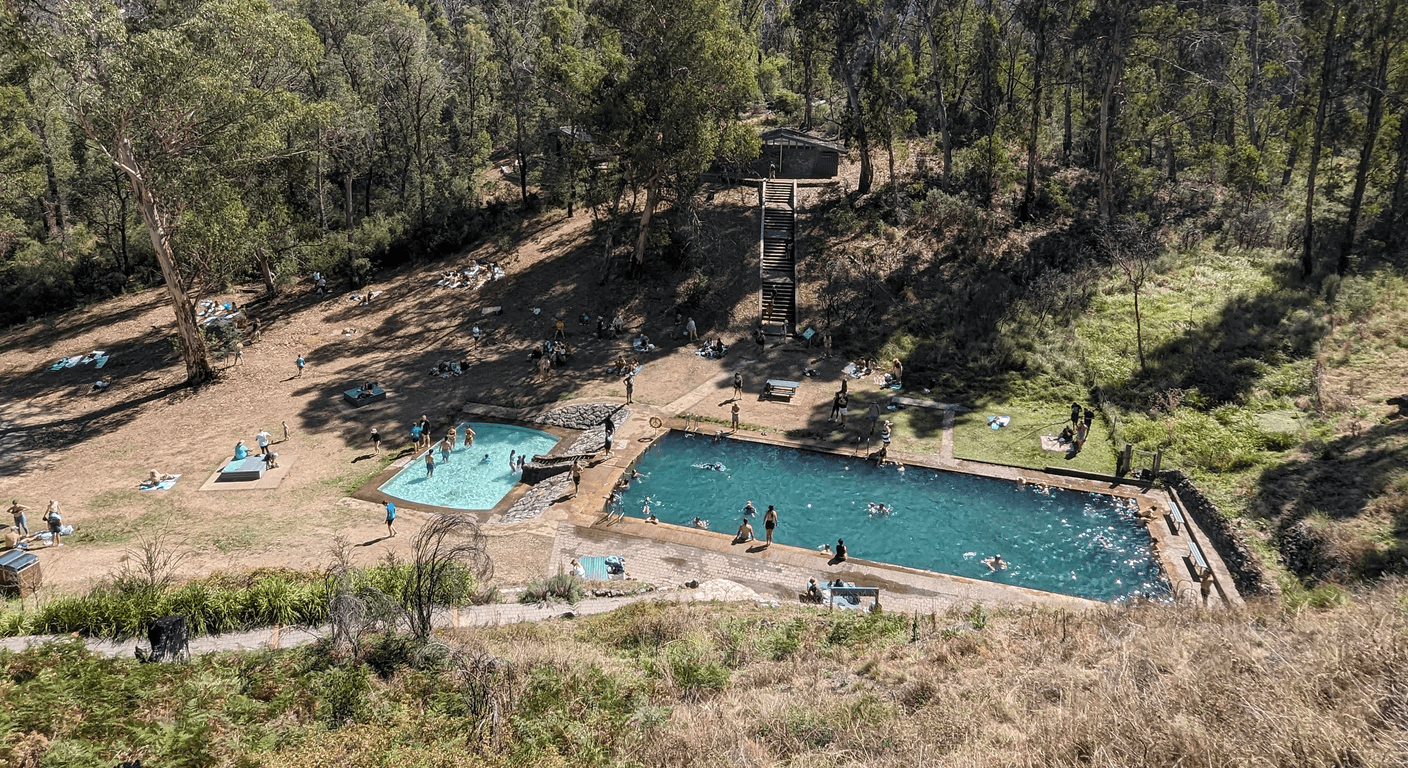
The 27-degree thermal pool is the detail that makes Yarrangobilly genuinely unusual. Fed by a geothermal spring, the pool maintains its temperature year-round regardless of air temperature above — which means that on a mid-winter day when the surrounding ridgeline carries snow, you can be standing in warm water watching steam rise against gum trees. It is a strange and rather wonderful sensation.
Here is the honest catch, and it deserves plain language: reaching the pool requires descending a steep, 700-metre path from the cave precinct. The path is sealed and manageable on the way down. The return climb is another matter. It gains elevation steadily and, for anyone with knee concerns, hip replacements, or simply the cardiovascular reality of being in their seventies, it is genuinely taxing. Take your time, wear the right shoes, and bring water. There is no shuttle service — it's the path or nothing.
Once you're there, the pool is shallow, clear, and enclosed by a simple but functional facility: change sheds, a nearby picnic area, and enough space to feel unhurried. Swimwear is required. The experience is less a spa and more a natural warm rock pool that happens to sit in a national park gorge — which is precisely what makes it worth the descent. Give yourself at least 30 to 40 minutes at the pool before beginning the climb back.
Planning the Day: Pacing It Right
A well-paced Yarrangobilly day has a natural sequence: arrive mid-morning, do the South Glory self-guided cave first while you're fresh, then take the guided tour if you've booked one, have lunch at the picnic area, and head to the thermal pool in the early afternoon. This spreads the physical effort and gives the pool visit its own unhurried chapter rather than sandwiching it between rushed cave sessions.
Booking cave tours in advance through the NSW National Parks website is strongly recommended, particularly for weekends and school holidays. The site is not enormous, and tour group sizes are managed — turning up and finding the next tour full is a frustrating waste of a long drive. The self-guided South Glory Cave does not require advance booking as of the time of writing, but confirm this when you make your tour reservation.
The picnic area near the cave precinct is genuinely pleasant — shaded, with tables, and quiet enough that you might share it only with a few other visitors and the local gang of kangaroos that treat the cleared area as their own. There is no café or food outlet at Yarrangobilly, so bring your own lunch, snacks, and plenty of water. The nearest town with reliable food options is Kiandra, though it is small; Tumut to the north offers more choice for a pre-drive breakfast or a post-drive dinner.
Getting There: The Road and the Drive
The Snowy Mountains Highway is a good, sealed road and manageable in a standard car. The access road into the cave precinct from the highway turns off clearly and is also sealed, but it winds considerably as it descends into the gorge. Speed limits are low for good reason. If you're driving a larger motorhome or towing a caravan, check current access restrictions with NSW National Parks before departure — the road has tight sections.
For travellers coming from Victoria, the most practical overnight base options are Cooma (around 90 minutes from the caves), Tumut (around 50 minutes to the north), or Jindabyne (around 90 minutes to the south). Jindabyne in particular offers a broader range of accommodation options given its role as the main gateway town for the Snowy Mountains ski season. Booking ahead is sensible from June through September when snow-season visitors fill the region.
There is no public transport to Yarrangobilly — this is firmly private vehicle territory. Fuel up before you leave your overnight base. The area around the caves has no petrol stations, and the Snowy Mountains Highway between Tumut and Cooma has limited stops.
Seasonal Considerations: When to Go
The question of when to visit Yarrangobilly has a more nuanced answer than most day-trip destinations. Summer (December to February) brings warm air temperatures and makes the drive and the pool path more comfortable, with the surrounding national park in full alpine bloom. Autumn offers the crispest air and often the quietest visitor numbers — arguably the best combination. Spring can be unpredictable with late snowfalls still possible in September.
Winter is genuinely worth considering for the thermal pool experience specifically. Seeing steam rise from 27-degree water while snow sits on the ridgeline above is an image that stays with you. The caves are equally compelling in any season since temperature inside is constant. The honest caveat: the access road can be affected by snow and ice in heavy winter conditions — check road conditions through Transport for NSW before departing, and carry chains if travelling in July or August as a precaution.
The caves themselves operate year-round, though hours may vary by season. Confirm opening times directly with NSW National Parks before your visit, particularly if planning a trip on a public holiday or during peak school holiday periods.
Making the Most of the Surrounding Area
Yarrangobilly sits within the broader northern section of Kosciuszko National Park, and a day in this part of the park can be extended with a short detour to the Kiandra historical precinct — the site of a significant 1860s gold rush and the birthplace of Australian skiing. There is little remaining infrastructure, but the interpretive signage and open landscape give a surprisingly affecting sense of what a 19th-century alpine mining settlement actually endured.
Tumut, to the north, is a genuine country town with good bakeries, a pleasant main street, and the Blowering Reservoir nearby for a quiet afternoon. It makes an excellent bookend to the Yarrangobilly visit if you're overnighting in the region. The drive north from Yarrangobilly through the Talbingo area offers views across the Snowy scheme's reservoir country that are worth the pace of the Snowy Mountains Highway done properly rather than hurried.
For those interested in extending the trip into a two-night itinerary, the combination of Yarrangobilly, Tumut, and a drive through to Cooma or Jindabyne covers a section of NSW that rewards slow travel. The Snowy Mountains region is not just a ski destination — in the shoulder seasons, it belongs entirely to travellers who know to look for it.
Quick planning guide
| Ideal pace | Slow-paced, sequenced across a full day |
|---|---|
| Best months | Autumn for clear, quiet conditions; winter for the snow-and-steam contrast at the pool |
| Suggested stay | Half-day to full day, or two nights combined with Tumut and Cooma/Jindabyne |
| Mobility level | Moderate — self-guided cave is easy, but the pool's return climb is genuinely taxing |
| Cost level | Budget-friendly, with separate park entry and cave tour fees |
| Comfort level | Basic but pleasant — picnic area and change sheds only, no café on site |
| Best for | Older travellers who like a self-paced cave visit and a warm, unhurried thermal soak |
| Main planning consideration | Book cave tours ahead and plan for the steep, unshuttled path down to and up from the thermal pool |
Key takeaways
- Yarrangobilly's thermal pool holds a constant 27 degrees year-round — including in winter when surrounding ridges carry snow.
- The self-guided South Glory Cave lets you set your own pace without a group timetable, making it ideal for travellers who like to linger.
- The 700-metre path to the thermal pool is steep — manageable on the way down, genuinely taxing on the return climb.
- Cave temperatures hold at 8–10°C year-round regardless of season, so a warm layer is essential no matter when you visit.
- There is no café or food outlet at the site — bring your own lunch, snacks, and plenty of water.
- From Canberra it's a practical day trip at around 2.5 hours; from Melbourne, an overnight stay in Cooma, Tumut, or Jindabyne is the sensible approach.
Recommended partners and links
Indicative prices only — always confirm with the operator before booking.
Frequently asked questions
Do you need to book Yarrangobilly cave tours in advance?
Booking guided cave tours in advance through the NSW National Parks website is strongly recommended, particularly on weekends and during school holidays, as group sizes are limited. The self-guided South Glory Cave may not require advance booking, but confirm this when making your reservation. Check nationalparks.nsw.gov.au for current booking arrangements.
Is Yarrangobilly thermal pool suitable for older swimmers or those with mobility concerns?
The pool itself is accessible and shallow, but reaching it requires descending a steep 700-metre path from the cave precinct, then climbing back up on return. For anyone with knee, hip, or cardiovascular concerns, this climb is genuinely demanding. Take it slowly, wear supportive shoes, and bring water. There is no alternative route or shuttle to the pool.
What should you wear inside the Yarrangobilly caves?
Cave temperatures at Yarrangobilly hold at a constant 8–10°C year-round, so a warm layer is essential regardless of outside conditions. Closed, grippy shoes are important as cave floors are uneven and can be slippery. If you plan to use the thermal pool on the same visit, bring swimwear and a towel as well.
How far is Yarrangobilly Caves from Canberra and Melbourne?
From Canberra, Yarrangobilly is roughly 2.5 hours by car — a practical day trip. From Melbourne, the drive is around six to seven hours, making an overnight stay in Cooma, Tumut, or Jindabyne the sensible approach. There is no public transport to the site; a private vehicle is required.
Is the access road to Yarrangobilly Caves suitable for motorhomes and caravans?
The sealed access road into the cave precinct winds considerably and has tight sections. Standard cars handle it comfortably at low speed, but larger motorhomes or caravans should check current access restrictions with NSW National Parks before travelling. In winter, snow and ice can affect road conditions — check Transport for NSW road updates before departing.